DIETARY SUPPLEMENTS
Découvrez 08 - Slim
Your ally for a slimmer figure and healthy weight

Journal
We put it in our serums. We inject it into our skin. Hyaluronic acid has become one of the most recognizable ingredients in skincare and aesthetic medicine. But in recent years, it has been taking a third, far less familiar route: we can take it orally, too.
At first, the idea may sound counterintuitive. How could hyaluronic acid taken as a supplement—then exposed to digestion and the gut microbiome—have a measurable effect hours or weeks later on skin hydration, elasticity, or facial wrinkles?
Yet this is no longer a purely theoretical question. Multiple randomized, double-blind, placebo-controlled human trials have investigated oral hyaluronic acid supplements for skin health. And in 2025, a meta-analysis pooling seven randomized controlled trials found statistically significant improvements in skin hydration, elasticity, and wrinkle depth following oral hyaluronic acid supplementation [1].
Oral hyaluronic acid is therefore moving beyond its relatively niche status in nutricosmetics and becoming a serious area of beauty-from-within research.
To understand why, we first need to look at the skin itself.
Despite its ubiquity in the beauty aisle, hyaluronic acid was not invented by the skincare industry. It is a molecule naturally found throughout the human body. It belongs to a family of molecules known as glycosaminoglycans and is present in connective tissues, joints, the eyes, and, importantly, the skin.
Within the skin, hyaluronic acid is found in both the dermis and epidermis. It contributes to the water-rich environment of the extracellular matrix and has a remarkable ability to interact with water. This property helps create the biological environment in which skin cells and structures function [2,3].
But describing hyaluronic acid as nothing more than a molecular “sponge” is an oversimplification. It is involved in a far more complex biology encompassing hydration, extracellular matrix organization, cell migration and proliferation, wound healing, and molecular signaling. Its biological behavior can also vary according to molecular size: high-molecular-weight hyaluronic acid and smaller hyaluronic acid fragments do not necessarily produce the same biological signals [2,3].
So when we talk about the skin benefits of hyaluronic acid, we are not simply talking about a trendy moisturizing ingredient. We are talking about a molecule that is naturally embedded in skin physiology.
Young skin contains a highly hydrated extracellular environment supported by a complex matrix of collagen, elastin, proteoglycans, and glycosaminoglycans. As we age, that architecture changes. The amount, distribution, and interactions of hyaluronic acid within the skin change as well [2,3].
Intrinsic aging is only part of the story. UV exposure contributes to photoaging, progressively damaging the extracellular matrix, activating pathways involved in collagen degradation, and disrupting the biological environment of the dermis. Hormonal changes—particularly around menopause—can also affect glycosaminoglycans and skin hydration.
What we see on the outside—drier skin, reduced plumpness, decreased suppleness, and more visible fine lines and wrinkles—therefore reflects much deeper biological changes.
This is precisely why hyaluronic acid has become so important in dermatology and aesthetic medicine: it sits at the intersection of water, the extracellular matrix, and the biomechanical properties of the skin.
Not all forms of hyaluronic acid work in the same way.
Applied topically, hyaluronic acid primarily acts at the skin’s surface and within the environment of the stratum corneum, with its behavior influenced by factors such as molecular weight and formulation.
Injected as a dermal filler, hyaluronic acid is placed directly into the tissue to locally modify volume, contours, or certain wrinkles.
Taken orally, the scenario is completely different.
A hyaluronic acid supplement is not a filler you can swallow.
The capsule does not simply dissolve, allowing intact hyaluronic acid to cross the intestinal wall, travel directly to your face, and mechanically “fill” a wrinkle. That appealingly simple explanation does not reflect what current research suggests about its metabolism.
The oral route involves digestion, interactions with the gut microbiome, the absorption of certain fragments or metabolites, systemic circulation, and potentially biological signaling at distant sites.
It is a nutritional and systemic mechanism, not a mechanical filling effect.
And that is precisely what makes the clinical findings so interesting.
For years, this was one of the most obvious questions surrounding oral hyaluronic acid.
Hyaluronic acid can reach extremely high molecular weights. Intuitively, the idea that large quantities of intact high-molecular-weight hyaluronic acid simply pass through the intestinal barrier seems unlikely.
Research now suggests a much more sophisticated story.
After ingestion, some hyaluronic acid can be broken down within the gastrointestinal tract. The gut microbiome appears to play an important role in this process: certain bacteria possess enzymes capable of breaking hyaluronic acid into smaller fragments. Those fragments can then enter different metabolic pathways; some may be absorbed, while others can undergo further metabolism by intestinal bacteria [4].
Experimental research using isotopically labeled hyaluronic acid has strengthened this hypothesis, demonstrating an important role for the microbiome in its degradation and metabolic fate [4]. Direct bioavailability of intact hyaluronic acid appears to be relatively low, making another possibility particularly compelling: the effects observed after oral supplementation may depend partly on smaller fragments, metabolites, and signaling pathways rather than on large amounts of intact hyaluronic acid physically traveling from the gut to the skin.
The precise mechanism remains under investigation, particularly in humans. But this changes the way we should think about how oral hyaluronic acid works.
Perhaps the most useful question is not:
“How much of the hyaluronic acid I swallow ends up intact in my skin?”
It may instead be:
“What biological signals does oral hyaluronic acid trigger once it enters the body?”
This hypothesis becomes even more fascinating when viewed through another rapidly expanding field of research: the gut-skin axis.
Certain intestinal bacteria can metabolize complex glycosaminoglycans. Experimental studies have implicated bacteria including species within the Bacteroides genus in the breakdown of ingested hyaluronic acid [4]. The products generated through this metabolism may then enter other biological pathways, including those involved in the production of microbial metabolites.
Caution is important here. It would be premature to claim that one specific microbiome pathway fully explains the skin effects observed in humans. Much of the mechanistic evidence remains preclinical.
But the hypothesis highlights a crucial principle of nutritional science: a compound does not necessarily have to reach a target organ intact in order to produce a biological effect there.
That principle applies throughout nutrition.
And it may help explain an apparent paradox: relatively low direct bioavailability can coexist with measurable skin changes in clinical trials.
This is where the research becomes much more concrete.
Modern skin science does not simply ask participants whether they think their face “feels more hydrated.” Clinical trials can use instruments to objectively quantify the physical and biological properties of the skin.
Stratum corneum hydration can be measured instrumentally. Transepidermal water loss (TEWL) measures the amount of water that passively escapes through the skin and is commonly used when assessing skin-barrier function. Devices such as the Cutometer can evaluate the biomechanical properties and elasticity of the skin. Wrinkles can be assessed using profilometry, skin replicas, or digital imaging. More sophisticated techniques can even investigate epidermal thickness, dermal density, and components of the Natural Moisturizing Factor (NMF).
That distinction matters.
When a clinical trial reports improved hydration, elasticity, or wrinkle depth, it can reflect an objectively measured change, rather than simply a participant saying, “My skin looks better.”
Early human research began with a straightforward question: Can taking hyaluronic acid orally actually change skin hydration?
In a controlled trial involving people with dry skin, daily oral hyaluronic acid supplementation was associated with an increase in stratum corneum water content [5]. Subsequent research began looking beyond hydration and into one of the most commercially—and clinically—interesting areas of skin aging: wrinkles.
In 2017, a randomized, double-blind, placebo-controlled trial investigated 60 men and women with crow’s-feet wrinkles. Participants received 120 mg per day of hyaluronic acid at one of two molecular weights—2 kDa or 300 kDa—or placebo for 12 weeks [6].
Researchers did not simply photograph the participants. Wrinkles were evaluated using skin replicas and objective parameters related to their surface and volume.
After eight weeks, the group receiving 300 kDa hyaluronic acid showed a significant reduction in wrinkles compared with placebo [6].
Conceptually, this was an important development.
Hyaluronic acid was no longer being studied solely as a molecule associated with water retention.
Researchers were beginning to measure the effects of oral supplementation on visible signs of skin aging.
One number appears repeatedly in the research: 120 mg per day.
In 2021, a randomized, double-blind, placebo-controlled trial investigated 40 healthy adults ages 35 to 64 who received either 120 mg of oral hyaluronic acid per day or placebo for 12 weeks [7].
This time, researchers evaluated several aspects of skin physiology simultaneously: wrinkles, stratum corneum water content, TEWL, skin elasticity, and imaging parameters.
After 12 weeks, the hyaluronic acid group showed significant improvements versus placebo in wrinkle assessment, stratum corneum hydration, transepidermal water loss, and elasticity [7]. For several outcomes—including wrinkles, hydration, and elasticity—significant differences were already observed after eight weeks.
Studies like this helped move hyaluronic acid supplements for skin from the realm of beauty promises toward that of measurable nutricosmetics.
Another pattern emerges across several oral hyaluronic acid studies: the effects are not necessarily immediate.
Significant differences in clinical trials often appear after several weeks of supplementation, frequently around eight to twelve weeks for certain skin outcomes [6,7].
That makes sense when we consider the fundamental difference between a dietary supplement and a cosmetic product designed to create an immediate sensory effect. A serum containing humectants may quickly make skin feel more comfortable. A dermal filler can instantly alter volume. A nutritional intervention, by contrast, operates within physiological processes that evolve over time.
Beauty from within is not instant beauty.
It is a biological strategy.
More recent research has strengthened the case considerably.
A larger randomized, double-blind, placebo-controlled trial followed 150 healthy adults for 12 weeks. Participants received one of two daily doses of high-molecular-weight sodium hyaluronate—60 mg or 120 mg—or placebo [8].
The study evaluated a remarkably broad range of skin parameters, including hydration, TEWL, sebum, elasticity, periocular wrinkle depth, epidermal thickness, dermal density, and components of the Natural Moisturizing Factor.
Both doses improved cheek hydration compared with placebo. At 120 mg per day, researchers also reported improved elasticity and reductions in TEWL and periocular wrinkle depth. Changes in epidermal thickness, dermal density, and certain NMF components were also observed [8].
The study has limitations. Participants were Caucasian adults with Fitzpatrick skin types I–III, some of the proposed biological mechanisms remain hypothetical, and several study authors were affiliated with the manufacturer of the ingredient investigated.
Those limitations matter.
But the sophistication of the measurements makes the study particularly interesting because it moves the conversation beyond one simple question:
“Does oral hyaluronic acid hydrate the skin?”
The question is becoming:
“How far can oral hyaluronic acid influence skin physiology?”
That is exactly what we will explore in Part 2: what the 2025 meta-analysis of seven randomized controlled trials actually found; where the evidence is strongest for skin hydration, elasticity, and wrinkles; whether molecular weight matters; what we know about the skin barrier, Natural Moisturizing Factor, and dermal density; and why SKIN N°11, with 179.5 mg of hyaluronic acid, places this ingredient at the heart of its Cellular Nutrition® strategy.
Because hyaluronic acid may no longer be just something we apply to the skin or inject beneath it.
Science is now seriously exploring what happens when we support the skin from within.
One positive study is interesting. Several randomized controlled trials begin to establish a pattern. But in evidence-based medicine, the picture becomes much more compelling when results from multiple trials can be pooled and analyzed together.
That is exactly what has now happened with oral hyaluronic acid for skin. A 2025 meta-analysis pooled seven randomized controlled trials evaluating the effects of oral hyaluronic acid supplementation on multiple skin-aging parameters [1]. The findings were significant: compared with placebo, oral hyaluronic acid was associated with statistically significant improvements in skin hydration, skin elasticity, and wrinkle depth.
Not every outcome improved significantly. When the available data were pooled, the meta-analysis did not find statistically significant improvements in skin firmness, wrinkle volume, or transepidermal water loss [1]. That distinction matters. The scientific literature does not support attributing every conceivable anti-aging benefit to a hyaluronic acid supplement.
What it does support is a much more precise—and more compelling—conclusion: oral hyaluronic acid can improve specific, objectively measurable skin parameters, particularly hydration, elasticity, and wrinkle depth [1].
For an ingredient long associated almost exclusively with topical skincare and injectable fillers, that represents a major shift.
Among the different outcomes studied, improved skin hydration is one of the most consistent findings.
A controlled trial involving 61 people with dry skin found that taking 120 mg of oral hyaluronic acid daily for six weeks increased stratum corneum water content compared with placebo [5]. The study compared two molecular weights—300 kDa and 800 kDa—and in the 300 kDa group, the improvement in skin hydration persisted even after supplementation was discontinued.
In 2021, another randomized controlled trial reported significantly improved hydration after 120 mg per day for 12 weeks [7]. More recently, the larger trial involving 150 participants found improved cheek hydration compared with placebo with both 60 mg and 120 mg per day [8].
In that study, hydration increased from baseline by approximately 9.1% with 60 mg and 11.5% with 120 mg after 12 weeks [8]. Those numbers should not be interpreted as “11.5% more beautiful” or “11.5% plumper skin.” They refer to instrumental measurements of skin hydration.
And that is precisely what makes them meaningful.
We are talking about a measurable change in skin physiology—not simply a subjective impression that the skin feels better.
This is, unsurprisingly, one of the biggest questions surrounding hyaluronic acid supplements for skin aging.
The 2017 randomized controlled trial found that after eight weeks, participants receiving 120 mg per day of 300 kDa hyaluronic acid showed a significant reduction in wrinkles compared with placebo [6]. Wrinkles were evaluated instrumentally using skin replicas rather than relying solely on self-assessment.
The 2021 trial also reported improvements in wrinkle-related parameters following oral supplementation [7]. More recently, the 150-person trial found a significant reduction in periocular wrinkle depth with 120 mg per day compared with placebo [8].
Most importantly, when the available evidence was pooled in the 2025 meta-analysis, wrinkle depth was one of the outcomes that improved significantly [1].
The wording matters. Oral hyaluronic acid does not “fill” wrinkles the way an injectable dermal filler does. It does not create a mechanical pocket of volume beneath a line.
But randomized controlled trials indicate that taking hyaluronic acid orally can reduce certain objectively measured wrinkle parameters over time.
That distinction gets to the heart of inside-out skincare: an injectable changes tissue locally and directly, while an oral supplement appears to work gradually through systemic biological mechanisms.
Skin elasticity depends on multiple factors, including the organization of collagen and elastin, the extracellular matrix, tissue hydration, and the overall biomechanical properties of the skin.
Several oral hyaluronic acid trials have evaluated elasticity using instruments that measure how skin deforms under controlled pressure and how effectively it returns toward its original state. Some of these trials reported improvements after several weeks of supplementation [7,8].
Crucially, the 2025 meta-analysis also found a statistically significant benefit for skin elasticity [1].
That finding expands the conversation beyond simple moisturization. Well-hydrated skin does not merely look or feel less dry. Water content and distribution within the skin also contribute to its physical properties.
Hydration, extracellular matrix biology, and skin biomechanics are deeply interconnected.
Transepidermal water loss, or TEWL, measures the amount of water that passively moves through the skin and evaporates into the surrounding environment. It is widely used as an indicator when evaluating skin-barrier function.
Some individual oral hyaluronic acid trials have reported reductions in TEWL following supplementation [7,8]. This could suggest an improved ability of the skin to retain water.
However, when the available studies were pooled in the 2025 meta-analysis, the overall effect on TEWL was not statistically significant [1].
This is a useful example of how scientific evidence should be interpreted. A positive finding in one clinical trial does not automatically mean that the effect is definitively established across the entire body of evidence.
For skin hydration, elasticity, and wrinkle depth, the aggregated evidence is currently more convincing. For TEWL, more research is needed.
One of the most interesting areas emerging from recent research involves the Natural Moisturizing Factor, or NMF.
NMF refers to a mixture of small, water-attracting molecules found primarily within the stratum corneum, including free amino acids and their derivatives, lactate, urea, and various electrolytes. Together, they help retain water within corneocytes and contribute to the flexibility and hydration of the skin’s outermost layer.
In the recent 150-person trial, researchers observed changes in certain NMF components following oral sodium hyaluronate supplementation [8].
This is intriguing because it suggests that the potential effects of oral hyaluronic acid may extend beyond simply supplying a water-binding molecule. Supplementation may be associated with broader changes in the biological environment involved in maintaining skin hydration.
These findings still need replication. But they point toward an increasingly sophisticated understanding of skin hydration from within: oral supplementation may potentially influence not only how much water the skin contains, but also some of the systems involved in retaining it.
The same clinical trial also investigated more structural parameters, including epidermal thickness and dermal density [8].
Changes were observed following supplementation, but these findings deserve more caution than the evidence surrounding hydration. This is a newer area of research, and there is not yet the same level of replication across independent clinical trials.
Still, the direction of research is important.
The earliest oral hyaluronic acid studies essentially asked:
“Does the skin become more hydrated?”
More recent studies are beginning to ask:
“Does skin structure and physiology change as well?”
That evolution reflects a broader transformation within nutricosmetics and beauty supplements. The field is increasingly moving toward instrumental measurements, biological endpoints, and quantifiable skin outcomes.
Talking about “hyaluronic acid” as though it were one completely uniform ingredient is an oversimplification.
Hyaluronic acid can exist across a very wide range of molecular weights. Some oral trials have investigated forms weighing only a few kilodaltons, others several hundred kilodaltons, while recent research has evaluated high-molecular-weight sodium hyaluronate at approximately 1.8 MDa [6,8].
Molecular weight can affect the physicochemical properties of hyaluronic acid, its interaction with the gut microbiome, its degradation, and potentially its biological activity.
However, current clinical evidence does not allow us to identify one molecular weight as universally “best” for skin when taken orally. Study designs differ too much in terms of formulations, doses, populations, duration, and outcome measurements to support such a simple ranking.
The more scientifically accurate conclusion is also more interesting:
Molecular weight probably matters. We are still learning exactly how.
Here again, the evidence argues against simplistic “more is better” thinking.
A daily dose of 120 mg appears repeatedly across positive clinical trials [5–7]. The larger recent study, however, reported improved skin hydration with just 60 mg per day, while 120 mg was associated with improvements across a broader range of outcomes within that particular trial [8].
That does not establish 120 mg as a universal optimal dose. Nor does it mean doubling the amount will double the effect. Nutritional interventions rarely follow a perfectly linear relationship in which twice the dose produces twice the benefit.
What the research does allow us to say is this:
Measurable skin benefits have been reported in multiple trials using relatively modest oral doses, frequently around 120 mg of hyaluronic acid per day.
And that becomes particularly relevant when we look at SKIN N°11.
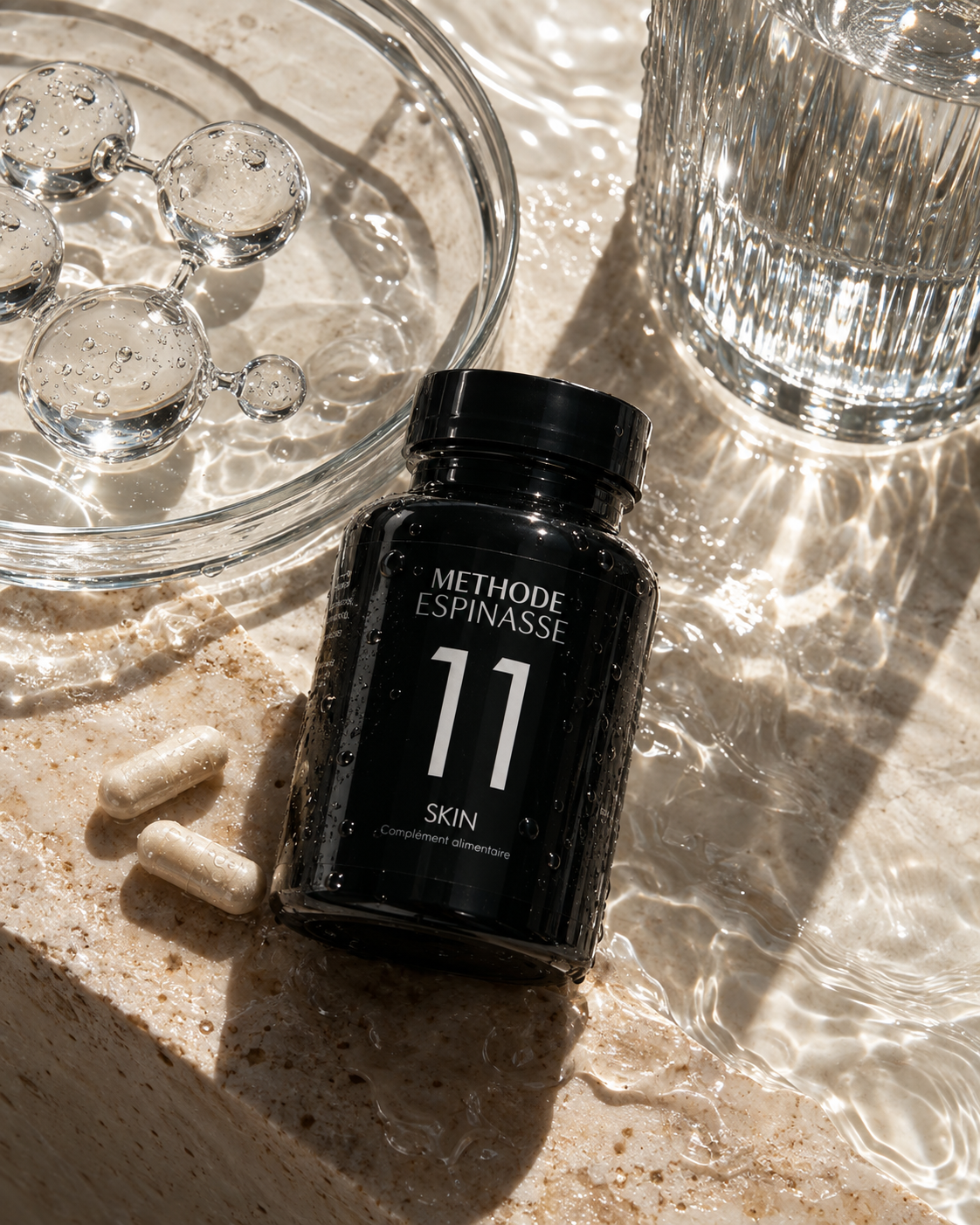
SKIN N°11, formulated by Dr. Valérie ESPINASSE according to the principles of Cellular Nutrition®, provides 179.5 mg of hyaluronic acid from sodium hyaluronate.
That places its daily hyaluronic acid content above the 120 mg per day used in several clinical trials reporting improvements in skin hydration, elasticity, or wrinkle-related parameters [5–7].
Scientific precision matters here. This does not mean that results obtained with the specific hyaluronic acid preparations investigated in those trials can automatically be attributed to SKIN N°11. Nor does 179.5 mg necessarily produce a greater effect than 120 mg. Dose, molecular weight, formulation matrix, supplementation duration, and participant characteristics all matter.
The comparison is nevertheless relevant: the amount of hyaluronic acid provided by SKIN N°11 sits firmly within—and above several commonly studied doses in—the range explored in clinical research on oral hyaluronic acid for skin.
More importantly, SKIN N°11 was not designed around hyaluronic acid alone.
Skin is not made of hyaluronic acid alone. A comprehensive beauty-from-within strategy also needs to consider collagen structure, oxidative stress, micronutrient status, and the gut-skin axis.
That is the logic behind SKIN N°11. Its formula combines hyaluronic acid with hydrolyzed marine collagen, astaxanthin, Centella asiatica, vitamin E, zinc, vitamin A, Bifidobacterium lactis, and Lactobacillus casei.
Each category of ingredients addresses a different aspect of skin biology. Hyaluronic acid sits at the intersection of hydration and the extracellular matrix. Marine collagen brings a structural dimension. Astaxanthin and vitamin E contribute to an antioxidant strategy. Zinc and vitamin A are essential micronutrients involved in normal skin physiology. The probiotics bring the gut-skin axis into the broader formulation strategy.
The idea is not simply to “put hyaluronic acid in a capsule.”
It is to approach skin as living tissue whose visible quality depends on multiple interconnected biological systems.
That is the principle behind Cellular Nutrition®.
For decades, “hydrating your skin” primarily meant putting something on it.
That remains essential. Humectants, emollients, and occlusives play different but complementary roles in maintaining healthy skin and supporting barrier function. Nothing in the research on oral hyaluronic acid suggests abandoning effective topical skincare.
Science is simply adding another dimension.
Skin hydration can also be influenced from within.
Clinical trials of oral hyaluronic acid show that instrumental measurements of skin hydration can change after several weeks of supplementation [5,7,8]. The 2025 meta-analysis strengthens that conclusion by finding a significant hydration benefit across multiple randomized controlled trials [1].
This is not a choice between skincare and supplements.
It is the combination of outside-in and inside-out skincare.
Based on the evidence available today, the answer is yes—for specific, measurable skin outcomes.
We now have multiple randomized, placebo-controlled human trials. We have objective instrumental measurements. And we have a meta-analysis of seven randomized controlled trials showing statistically significant improvements in skin hydration, skin elasticity, and wrinkle depth [1].
That does not make oral hyaluronic acid a filler in capsule form. It does not mean it erases wrinkles. And it does not mean every hyaluronic acid supplement will produce identical results.
It means something scientifically more interesting:
A compound taken orally can, over the course of several weeks, be associated with measurable changes in physical parameters that help determine how skin looks and behaves.
That is the essence of beauty from within.
The skin we see on the outside is a living organ built, nourished, renewed, and regulated from within. Its hydration depends on its barrier, but also on its extracellular matrix. Its firmness depends on its architecture. And the way it ages reflects collagen biology, oxidative stress, inflammation, hormones, the microbiome, and a vast network of interconnected cellular mechanisms.
Supporting skin from within does not replace what we do on its surface.
It adds another dimension to beauty.
More biological. More systemic. More scientific.
SKINCARE FROM THE OUTSIDE. CELLULAR NUTRITION® FROM THE INSIDE.
[1] Oral Hyaluronic Acid Supplement: Efficacy in Skin Hydration, Elasticity, and Wrinkle Depth Reduction. Journal of Drugs in Dermatology, 2025. Meta-analysis of seven randomized controlled trials evaluating oral hyaluronic acid across multiple skin outcomes.
https://pubmed.ncbi.nlm.nih.gov/40911749/
[2] Papakonstantinou E, Roth M, Karakiulakis G. Hyaluronic Acid: A Key Molecule in Skin Aging. Dermato-Endocrinology. 2012;4(3):253–258. Review of hyaluronic acid biology in skin and its role in skin aging.
https://pubmed.ncbi.nlm.nih.gov/23467280/
[3] Fallacara A, Baldini E, Manfredini S, Vertuani S. Hyaluronic Acid in the Third Millennium. Polymers. 2018;10(7):701. Review of the biological, physicochemical, and therapeutic properties of hyaluronic acid.
https://pubmed.ncbi.nlm.nih.gov/30960626/
[4] In vivo metabolic fate of orally administered hyaluronan. Isotope-labeling study investigating the degradation, gut-microbiome involvement, and bioavailability of orally administered hyaluronic acid.
https://pubmed.ncbi.nlm.nih.gov/37182970/
[5] Kawada C, Yoshida T, Yoshida H, et al. Ingested hyaluronan moisturizes dry skin. Nutrition Journal. Controlled trial involving 61 participants with dry skin and comparing 120 mg/day of different molecular-weight forms of hyaluronic acid with placebo.
https://pubmed.ncbi.nlm.nih.gov/25834304/
[6] Oe M, Mitsugi K, Odanaka W, et al. Oral Hyaluronan Relieves Wrinkles: A Double-Blinded, Placebo-Controlled Study Over a 12-Week Period. Clinical Drug Investigation. 2017;37:1155–1162. Randomized controlled trial evaluating 120 mg/day of oral hyaluronic acid and instrumental changes in periocular wrinkles.
https://pubmed.ncbi.nlm.nih.gov/28761365/
[7] Oe M, Sakai S, Yoshida H, et al. Oral Hyaluronan Relieves Wrinkles and Improves Dry Skin: A 12-Week Double-Blinded, Placebo-Controlled Study. Nutrients. 2021;13(7):2220. Trial evaluating wrinkles, skin hydration, TEWL, and elasticity after 120 mg/day of oral hyaluronic acid.
https://pubmed.ncbi.nlm.nih.gov/34203487/
[8] Oral sodium hyaluronate improves skin hydration, barrier function and signs of aging: a randomized, double-blind, placebo-controlled trial in 150 healthy adults. Scientific Reports. Trial comparing 60 mg and 120 mg/day of high-molecular-weight sodium hyaluronate with placebo over 12 weeks, with outcomes including hydration, TEWL, elasticity, wrinkles, NMF, epidermal thickness, and dermal density.
https://pubmed.ncbi.nlm.nih.gov/41422283/
[9] Oral hyaluronan improves skin condition: a randomized, double-blind, placebo-controlled clinical study. Clinical study investigating skin hydration and additional skin-quality parameters following oral hyaluronic acid supplementation.
https://pubmed.ncbi.nlm.nih.gov/34933842/
[10] Efficacy of orally administered hyaluronic acid on skin conditions in healthy Asian women: a randomized, double-blind, placebo-controlled study. Study involving 129 women and evaluating outcomes including skin hydration, skin tone, and epidermal thickness over 12 weeks.
https://pubmed.ncbi.nlm.nih.gov/38009035/