DIETARY SUPPLEMENTS

Découvrez 08 - Slim
Your ally for a slimmer figure and healthy weight

Journal
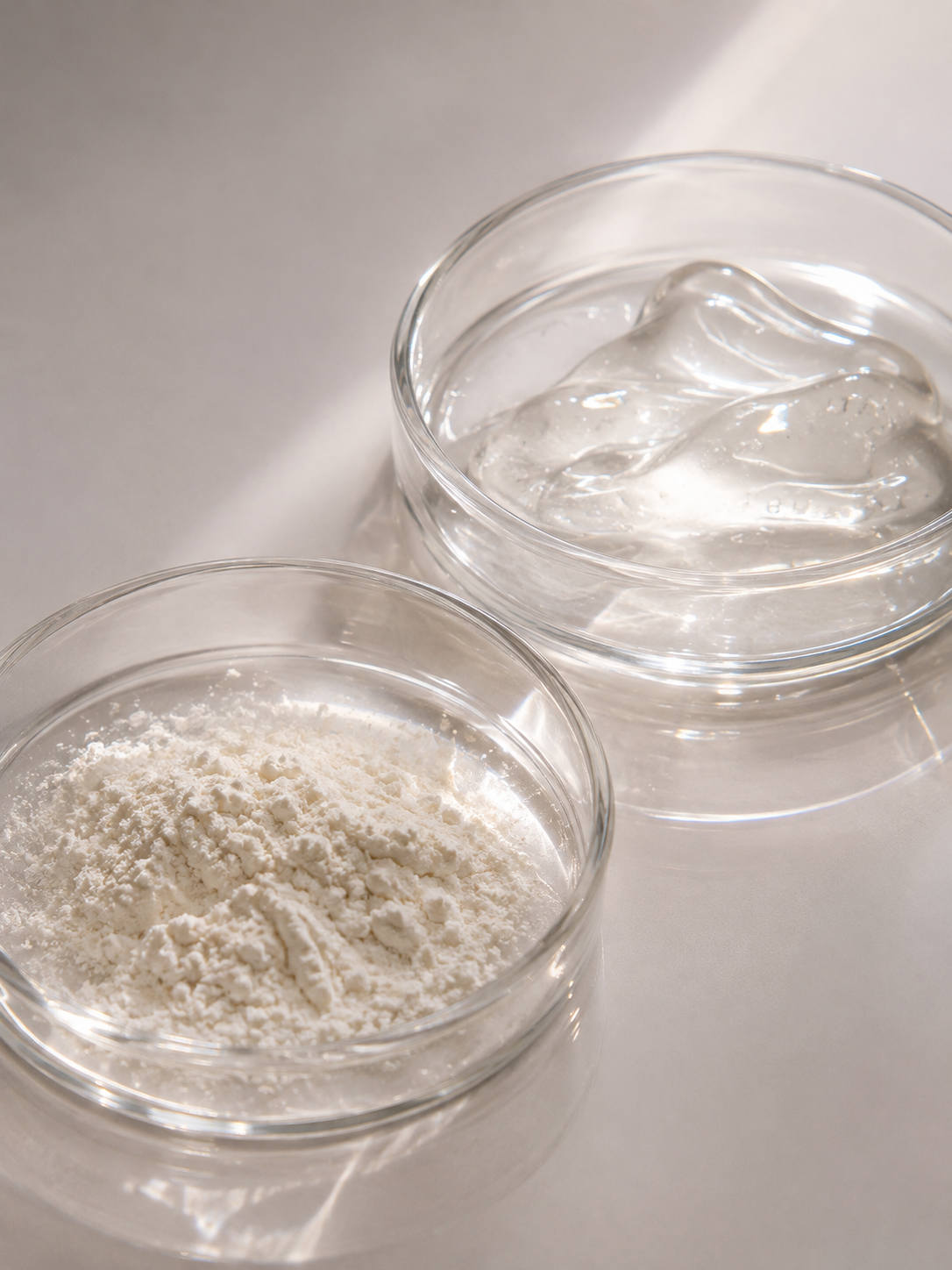
Hydrolyzed collagen, marine collagen peptides, extracellular matrix biology, biomimicry, and eggshell membrane: understanding the differences between collagen technologies, how they work, and the clinical evidence behind their effects on skin firmness, elasticity, and hydration.
Collagen plays a central role in skin aging research and the development of dietary supplements designed to support skin health. As a major structural protein in the dermis, collagen contributes to the skin’s mechanical strength, structural organization, and overall integrity. Its gradual breakdown, together with changes in elastin, glycosaminoglycans, and fibroblast activity, contributes to the loss of firmness, elasticity, and smoothness associated with aging.
Over the past several years, hydrolyzed marine collagen has become one of the most widely studied ingredients in beauty supplements. More recently, biomimetic approaches have expanded the field of research beyond collagen peptides alone, focusing on the biological organization of the extracellular matrix and the interactions among its structural components.
The key distinction is not simply where collagen comes from, but its molecular structure, degree of processing, composition, and the biological mechanisms it may influence.
Clinical studies published between 2023 and 2026 now provide a more detailed understanding of these approaches. While some findings suggest benefits for specific skin parameters, methodological limitations make it impossible to conclude that one category of collagen is universally superior to another [1,2].
These scientific developments reflect a broader shift in how skin nutrition is understood: moving beyond single-ingredient supplementation toward an integrated view of structural proteins, extracellular matrix components, and cellular regulation.
Collagen is one of the body’s most important families of structural proteins. Found in the skin, bones, tendons, ligaments, and numerous connective tissues, it performs different mechanical and biological functions depending on its type, location, and molecular organization.
Collagen proteins are characterized by a triple-helix structure composed of three polypeptide chains. Their amino acid sequences contain a characteristic repeating pattern, generally described as Gly-X-Y, in which glycine occupies every third position and proline and hydroxyproline are frequently present [3].
This molecular arrangement allows collagen to form fibrillar structures capable of withstanding mechanical stress.
Several collagen types perform complementary functions in human skin.
Type I collagen is the predominant form, accounting for approximately 80–85% of dermal collagen. It plays a major role in tensile strength.
Type III collagen, although less abundant, contributes to the organization of collagen fibrils and is involved in tissue repair.
Type V collagen helps regulate collagen fibril assembly and diameter.
Other collagen types, including types IV, VI, and VII, contribute to tissue organization and the dermal-epidermal junction [3,4].
However, skin quality depends on more than collagen content alone.
Collagen fibers exist within a complex extracellular matrix that also contains elastin, proteoglycans, glycoproteins, and glycosaminoglycans, including hyaluronic acid.
Together, these components support mechanical strength, flexibility, water retention, and communication between cells and their surrounding environment.
Skin aging should therefore be understood as a progressive alteration of the entire extracellular matrix, rather than simply a decline in collagen levels.
Skin aging results from interactions between intrinsic biological processes, including chronological aging and hormonal changes, and external factors such as ultraviolet exposure, smoking, and environmental stressors.
Dermal fibroblasts are responsible for producing and organizing many of the extracellular matrix components that maintain skin structure.
As the skin ages, fibroblast function can be affected by several processes, including altered cellular signaling, oxidative stress, changes in the mechanical tension of the extracellular matrix, and increased activity of certain protein-degrading pathways.
Matrix metalloproteinases, or MMPs, are enzymes involved in extracellular matrix remodeling and protein degradation. Although their activity is essential for normal tissue turnover, excessive or dysregulated activity can contribute to the breakdown of collagen fibers.
Chronic ultraviolet exposure also promotes photoaging through mechanisms involving oxidative stress, inflammation, and disruption of the dermal collagen network [3,4].
Hormonal changes, particularly during the menopausal transition, may further affect skin thickness, hydration, and mechanical properties.
Together, these processes contribute to changes in several key skin characteristics:
These characteristics are interconnected, but they are not interchangeable.
An improvement in hydration does not necessarily demonstrate an increase in dermal collagen content. Similarly, a measurable change in elasticity does not, by itself, establish that tissue regeneration has occurred.
This distinction is essential when interpreting clinical studies of collagen supplements.
Marine collagen is typically extracted from fish-derived tissues, particularly skin, scales, and sometimes bones.
In dietary supplements, it is commonly used in hydrolyzed form.
Hydrolysis breaks down collagen proteins into smaller peptides, usually through enzymatic processing.
This transformation substantially changes the properties of the original material.
While native collagen has an organized macromolecular structure, hydrolyzed collagen consists of a mixture of peptide fragments whose lengths, sequences, and properties depend on the raw material and manufacturing process.
Hydrolysis is used, among other purposes, to improve dispersibility and facilitate digestion, while allowing specific collagen-derived peptides to appear in circulation following ingestion.
Hydrolyzed marine collagen should not, therefore, be understood as intact collagen that travels directly from the digestive tract to the dermis.
Following ingestion, proteins and peptides undergo digestive processing. Some of their components are absorbed as free amino acids, while certain dipeptides and tripeptides can be detected in the bloodstream.
Among the peptides investigated in collagen research are prolyl-hydroxyproline, or Pro-Hyp, and hydroxyprolyl-glycine, or Hyp-Gly [5].
These compounds are of particular interest in studies of collagen bioavailability and potential biological activity.
However, detecting collagen-derived peptides in the bloodstream does not automatically demonstrate their accumulation in the dermis or increased collagen synthesis in humans.
Bioavailability is frequently used as a selling point when comparing different collagen sources.
A randomized, double-blind crossover study published in Frontiers in Nutrition in 2024 compared the absorption of collagen hydrolysates derived from fish, pigs, and cattle [5].
Researchers measured plasma concentrations of free hydroxyproline and several characteristic collagen-derived peptides following ingestion.
The findings showed that the different collagen sources produced measurable circulating concentrations of collagen metabolites.
Although some differences in absorption profiles were observed, the study did not establish which source delivered better clinical outcomes for the skin.
This distinction matters.
Greater apparent absorption of a peptide does not necessarily translate into greater improvements in skin firmness, elasticity, or wrinkles.
Biological activity also depends on the specific peptides absorbed, their concentrations, their distribution throughout the body, and their potential interactions with target cells.
Furthermore, the average molecular weight of a collagen hydrolysate does not fully characterize its biological activity.
Two products with similar average molecular weights may contain different peptide sequences.
Conversely, hydrolysates derived from different animal sources may produce overlapping circulating metabolites.
Current evidence therefore does not support the claim that marine collagen is consistently better absorbed or more effective than every other collagen source.
The effects of hydrolyzed collagen on skin health have been investigated in numerous clinical trials, primarily focusing on hydration, elasticity, and wrinkles.
A systematic review and meta-analysis published in Nutrients in 2023 included 26 randomized controlled trials involving 1,721 participants [1].
The authors reported statistically significant improvements in skin hydration and elasticity among participants receiving hydrolyzed collagen compared with control groups.
These findings helped support interest in oral collagen supplementation as a potential approach to improving certain skin characteristics.
However, the researchers also identified important limitations, including differences in formulations, dosages, supplementation periods, study populations, and methodological quality.
A second meta-analysis, published in The American Journal of Medicine in 2025, offered a more critical assessment of the evidence [2].
This analysis included 23 randomized trials involving 1,474 participants.
When all studies were considered together, the authors found statistically significant effects on several skin-aging parameters.
However, subgroup analyses found no statistically significant benefits in studies without pharmaceutical-industry funding or in studies classified as high quality.
The authors therefore concluded that the available clinical evidence was not sufficiently robust to support collagen supplementation for the prevention or treatment of skin aging.
These two meta-analyses highlight a fundamental challenge in nutritional research.
Positive findings across multiple clinical trials do not necessarily establish efficacy when study quality and potential sources of bias are taken into account.
It would be inaccurate to conclude that all hydrolyzed collagen supplements are ineffective. It would be equally inaccurate to suggest that their benefits have been conclusively demonstrated across all formulations and populations.
The evidence suggests potential benefits for certain products, but larger, independent, and methodologically rigorous trials are still needed.
Importantly, these meta-analyses do not establish the specific superiority of marine collagen, as they include hydrolyzed collagen from different sources.
Biomimicry refers to a scientific and technological approach that seeks to reproduce certain structural, functional, or organizational characteristics found in biological systems.
When applied to collagen, the term can describe several distinct approaches.
In biomaterials research, some technologies focus on peptides designed to mimic specific sequences or structural features of natural collagen.
Other approaches investigate complex biological matrices containing multiple extracellular matrix components.
Biomimetic collagen is therefore not a single, universally defined molecular category with one standardized structure or manufacturing process.
Nor does the term itself constitute evidence of clinical effectiveness.
In the context of beauty supplements, a biomimetic approach may seek to consider collagen within its broader physiological environment, including the other molecules that contribute to the skin’s mechanical properties.
This perspective is based on a fundamental biological principle: the properties of the dermis emerge from interactions among several families of macromolecules.
Collagen fibers provide much of the skin’s mechanical strength.
Elastin contributes to tissue flexibility and elastic recoil.
Glycosaminoglycans help organize the extracellular environment and contribute to its water-binding properties.
The extracellular matrix is therefore a dynamic biological system whose components interact with fibroblasts and cellular signaling pathways [3,4].
Biomimicry encourages researchers to examine this organization as an integrated system rather than viewing each component in isolation.
Although this approach has a sound biological rationale, its clinical relevance must be established for each specific ingredient and formulation.
Eggshell membrane is a natural source of extracellular matrix constituents.
It contains structural proteins, including different collagen types, as well as elastin and compounds belonging to the glycosaminoglycan family.
Its precise composition depends on the raw material and the methods used to process it.
Unlike hydrolyzed collagen, which primarily consists of collagen-derived peptide fragments, an eggshell membrane preparation may contain several classes of structural molecules within the same biological material.
This characteristic has attracted growing interest in research on the mechanical properties of skin.
Studies of these matrices have investigated multiple aspects of skin physiology, including firmness, elasticity, hydration, barrier function, and extracellular matrix remodeling.
However, the presence of collagen, elastin, and glycosaminoglycans in an ingredient does not mean these components are absorbed intact or directly rebuild the dermal matrix after ingestion.
Their digestion, bioavailability, and potential mechanisms of action require specific investigation.
The scientific interest in these matrices therefore depends not only on their composition, but also on clinical evidence demonstrating measurable effects.
A clinical study published online on January 14, 2026, in Frontiers in Nutrition directly compared an eggshell membrane preparation, hydrolyzed collagen, and placebo across several biophysical skin parameters [6].
Participants exhibited signs of skin aging.
Three interventions were evaluated:
Assessments were conducted after 28 and 57 days of supplementation.
Researchers used several instrumental measurement techniques, including the Cutometer® to assess skin mechanical properties, the Corneometer® to measure superficial hydration, and the Tewameter® to evaluate transepidermal water loss.
After 57 days, the results showed significant improvements in certain measures of skin firmness and elasticity in the eggshell membrane group compared with both the hydrolyzed collagen and placebo groups.
Findings related to skin barrier function were also noteworthy.
Transepidermal water loss was significantly lower in the eggshell membrane group than in the placebo group at both 28 and 57 days.
However, increases in hydration measured by corneometry were not statistically significant.
Similarly, differences in facial wrinkle counts did not reach statistical significance.
These findings are important because they demonstrate why clinical results should not be presented as uniform improvements across every skin parameter.
The study suggests that a complex biological matrix may produce measurable effects on certain mechanical properties of the skin, even when administered at a lower mass than the hydrolyzed collagen comparator.
Nevertheless, several qualifications are essential.
First, the interventions did not represent equivalent doses of the same substance. They involved two ingredients with different compositions.
Second, the results apply to the specific preparations investigated and cannot be generalized to all hydrolyzed collagen products or eggshell membrane ingredients.
Third, the study did not directly demonstrate increased dermal collagen synthesis or histological skin regeneration.
Finally, the involvement of professionals affiliated with companies associated with the ingredient and clinical assessments should be considered when evaluating the strength of the evidence.
This study provides valuable comparative data, but it does not establish that biomimetic collagen is universally superior to marine collagen.
In April 2025, a randomized, double-blind, placebo-controlled trial was published in the Journal of Functional Foods [7].
The study involved 100 women between the ages of 25 and 60, assigned to receive either 600 mg per day of an eggshell membrane preparation or placebo.
Supplementation continued for 12 weeks, with assessments conducted at baseline, six weeks, and twelve weeks.
Researchers examined several skin parameters, including wrinkles, elasticity, dermal density, sagging, hydration, transepidermal water loss, roughness, and scaling.
After twelve weeks, the results showed statistically significant improvements in several skin parameters among participants receiving the supplement.
Differences in elasticity, dermal density, and skin sagging were already observed after six weeks.
These findings provide additional evidence supporting the potential value of certain eggshell membrane preparations for skin health.
However, they do not demonstrate that all eggshell membrane-derived matrices offer equivalent benefits.
Differences in processing, composition, dosage, and study populations remain important.
Replication in larger, independent clinical trials is still needed.
The two approaches have distinct characteristics, but comparing them requires separating ingredient origin, molecular structure, and strength of clinical evidence.
| Feature | Hydrolyzed Marine Collagen | Biomimetic Eggshell Membrane Matrix |
|---|---|---|
| Source | Fish-derived tissues | Eggshell membrane |
| Composition | Mixture of collagen-derived peptides | Mixture of structural proteins and other matrix constituents |
| Processing | Typically enzymatic hydrolysis | Varies by preparation |
| Structure | Peptide fragments | Composition and structural organization depend on processing |
| Research focus | Peptide absorption and potential effects on skin physiology | Potential effects of a multicomponent biological matrix |
| Clinical research | Numerous trials with heterogeneous findings | Fewer, more recent clinical trials |
| Established superiority | Not established across all sources | Not established as a general category |
This comparison highlights that these are not simply two competing versions of the same molecule.
Hydrolyzed marine collagen is primarily investigated through the properties and biological activity of its peptides.
Eggshell membrane-derived matrices are studied as more compositionally diverse biological materials.
In both cases, outcomes depend on the specific preparation, administered dose, supplementation period, and characteristics of the study population.
A more complex formulation does not automatically guarantee greater effectiveness.
Collagen supplements are frequently compared based on the amount of collagen or raw material provided per serving.
This approach has important limitations.
The total weight of an ingredient does not directly reveal which molecules it contains, how bioavailable they are, or what biological activity they may possess.
A collagen hydrolysate, native collagen protein, and multicomponent biological matrix cannot be considered equivalent based on weight alone.
The comparative trial published in 2026 illustrates this distinction: 300 mg of eggshell membrane was compared with 8,000 mg of hydrolyzed collagen, with different outcomes depending on the skin parameter measured [6].
This does not mean that lower doses are inherently better than higher doses.
Rather, the amount of an ingredient administered is not sufficient to predict its biological effects.
A rigorous scientific evaluation should consider ingredient characterization, consistency of composition, bioavailability, plausible mechanisms of action, safety, and clinical outcomes.
The concept of synergy also requires careful interpretation.
Combining several ingredients with complementary biological functions does not automatically establish a synergistic effect.
True synergy requires evidence that the combined effect exceeds what would be expected from the individual components under an appropriate experimental model.
Functional complementarity may therefore provide a rationale for formulation design, while clinical synergy requires specific experimental demonstration.
These advances in research on biological matrices are reflected in the formulation philosophy developed by Dr. Valérie ESPINASSE.
With N°16 LIFT COLLAGEN, METHODE ESPINASSE introduces a Cellular Nutrition® approach focused on skin firmness, elasticity, and a lifting effect.
At the heart of the formula is a natural biomimetic matrix derived from eggshell membrane, containing native type I, V, and X collagens, elastin, hyaluronic acid, and glycosaminoglycans.
This architecture differs from an approach based exclusively on isolated hydrolyzed collagen peptides.
It brings together several categories of constituents associated with the structural properties of the extracellular matrix.
The formula also includes ingredients selected for their complementary biological functions:
The conceptual value of this formulation lies in its consideration of multiple aspects of skin physiology rather than focusing exclusively on collagen peptide intake.
This approach reflects Cellular Nutrition® by Dr. Espinasse, a formulation philosophy grounded in the understanding of biological mechanisms and the functional complementarity of ingredients.
However, clinical findings obtained with individual eggshell membrane preparations must be distinguished from the evidence required to demonstrate the effectiveness of the complete N°16 LIFT COLLAGEN formula.
Results associated with a particular ingredient cannot automatically be attributed to a multicomponent dietary supplement.
Maintaining this distinction is essential to rigorous scientific interpretation.
Clinical trials use different assessment periods, making the timing of potential results another important consideration.
Studies investigating hydrolyzed collagen and eggshell membrane preparations typically evaluate outcomes over several weeks to a few months.
The comparative study published in Frontiers in Nutrition assessed skin parameters after 28 and 57 days [6].
The trial published in the Journal of Functional Foods evaluated participants after six and twelve weeks [7].
These time points reflect experimental assessment schedules, not universal timelines for visible results.
Different skin characteristics may change at different rates.
Superficial hydration is influenced by skin barrier function and the properties of the stratum corneum.
The mechanical properties of the dermis depend on structures whose biological remodeling may occur over longer periods.
Consequently, an early improvement in hydration should not be interpreted as proof of a rapid increase in dermal collagen content.
Likewise, an improvement in elasticity does not necessarily predict long-term changes in wrinkles or skin sagging.
The appropriate duration of supplementation depends on the ingredient, formulation, and clinical outcomes being evaluated.
Determining the best collagen for skin requires more than identifying whether it comes from marine, bovine, or avian sources.
Several levels of evidence must be considered.
The first is ingredient characterization: composition, molecular structure, processing methods, and stability.
The second is bioavailability: which constituents or metabolites become available to the body after ingestion, and in what quantities.
The third is biological plausibility: whether proposed mechanisms are scientifically supported, without confusing mechanistic findings with demonstrated clinical benefits.
The fourth is human clinical evidence, ideally obtained through adequately powered, independent, randomized controlled trials.
Finally, the fifth is evidence for the finished formulation, which cannot be inferred solely from studies of its individual ingredients.
Meta-analyses of hydrolyzed collagen suggest that some clinical trials have reported improvements in hydration and elasticity, but methodological concerns limit the strength of the conclusions [1,2].
Studies investigating eggshell membrane preparations offer promising findings, particularly regarding the skin’s mechanical properties, but further confirmation is needed [6,7].
At present, the evidence does not establish that one category of collagen is consistently superior to every other.
From a scientific perspective, the best collagen is not defined by a general claim about its source or technology, but by the quality of evidence supporting a specific, well-characterized formulation.
There is currently insufficient clinical evidence to conclude that biomimetic collagen is universally more effective. Some studies of eggshell membrane preparations have reported favorable effects on skin firmness and elasticity, but these findings apply to specific ingredients and study protocols [6,7].
Native collagen retains the characteristic molecular organization of its original structure, while hydrolyzed collagen has been broken down into smaller peptides. Their digestive behavior, composition, and biological properties may therefore differ.
Not necessarily. Bioavailability studies show that collagen hydrolysates from different sources can produce circulating peptides and metabolites. Observed differences in absorption do not automatically establish superior skin benefits from marine collagen [5].
Some clinical trials have reported improvements in skin parameters following collagen supplementation. However, findings remain heterogeneous, and methodological limitations affect the strength of the available evidence [1,2].
These molecules perform distinct but complementary functions within the extracellular matrix. Their combination has a biological rationale, but it does not automatically establish superior effectiveness when taken orally.
Clinical studies typically assess outcomes after several weeks. The timeline varies depending on the formulation, measured parameters, and study population. No universal timeframe for visible results can be guaranteed.
The evolution of oral collagen research reflects a broader shift in our understanding of skin nutrition.
Hydrolyzed marine collagen helped establish the field of beauty supplements by encouraging research into collagen-derived peptides, their bioavailability, and their potential effects on skin characteristics.
More recent investigations into complex biological matrices, particularly those derived from eggshell membrane, have expanded this perspective by considering multiple extracellular matrix constituents.
Studies published in 2025 and 2026 provide encouraging findings regarding certain mechanical properties of the skin, while also highlighting the need for independent and reproducible clinical evidence.
These advances do not establish the universal superiority of one approach over another.
They do, however, encourage a more sophisticated understanding of collagen supplementation—one that considers molecular structure, composition, biological context, and the mechanisms through which ingredients may exert their effects.
This perspective aligns with the approach developed by Dr. Valérie ESPINASSE through Cellular Nutrition®, which considers nutrients in relation to the physiological functions they support and the biological interactions that connect them.
With N°16 LIFT COLLAGEN, this philosophy is expressed through a formulation combining a natural biomimetic matrix with ingredients selected for their complementary functions.
The future of beauty supplements is not simply about delivering more collagen. It is about understanding skin biology more precisely and establishing the clinical benefits of thoughtfully developed formulations.
[1] Pu SY, Huang YL, Pu CM, et al. Effects of Oral Collagen for Skin Anti-Aging: A Systematic Review and Meta-Analysis. Nutrients. 2023;15(9):2080.
https://doi.org/10.3390/nu15092080
[2] Myung SK, Park Y. Effects of Collagen Supplements on Skin Aging: A Systematic Review and Meta-Analysis of Randomized Controlled Trials. The American Journal of Medicine. 2025;138(9):1264–1277.
https://doi.org/10.1016/j.amjmed.2025.04.034
[3] Mini review on collagens in normal skin and pathological scars: current understanding and future perspective. 2024.
https://pmc.ncbi.nlm.nih.gov/articles/PMC11291465/
[4] The Extracellular Matrix in Skin Inflammation and Infection. 2021.
https://pmc.ncbi.nlm.nih.gov/articles/PMC8290172/
[5] Absorption of bioactive peptides following collagen hydrolysate intake: a randomized, double-blind crossover study in healthy individuals. Frontiers in Nutrition. 2024;11:1416643.
https://doi.org/10.3389/fnut.2024.1416643
[6] González-Rodríguez Y, La Nuez-García MA, Jiménez M, Villar-Suárez V, Casado-Santos A. Comparative effects of MKARE® eggshell membrane and hydrolyzed collagen as nutricosmetics on skin biophysical properties: a randomized clinical trial. Frontiers in Nutrition. Volume 12 (2025), published online January 14, 2026.
https://doi.org/10.3389/fnut.2025.1689701
[7] Park M, Won K, Lee JH, et al. Effects of Oral Supplementation with Eggshell Membrane (Ovoderm®-AS) on Skin Health: A Randomized, Double-Blind, Placebo-Controlled Trial. Journal of Functional Foods. 2025;127:106713.
https://doi.org/10.1016/j.jff.2025.106713