DIETARY SUPPLEMENTS

Découvrez 08 - Slim
Your ally for a slimmer figure and healthy weight

Journal
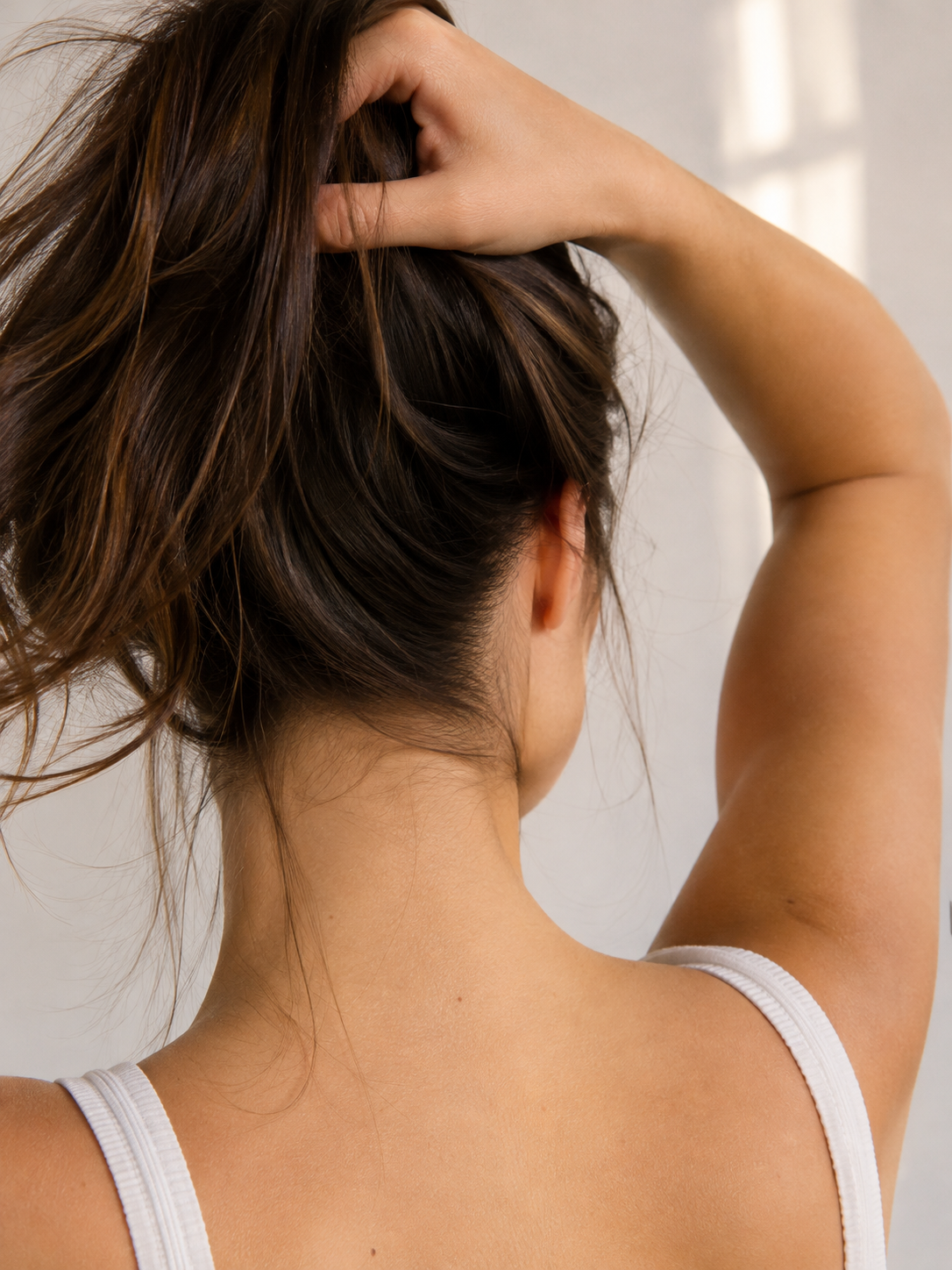
Iron, ferritin, zinc, biotin, vitamin D, hormones, thyroid function, and stress: understanding the biological mechanisms behind female hair loss, identifying imbalances that may disrupt the hair growth cycle, and examining the scientific evidence on nutrition and hair health.
Hair loss in women is a common concern with a wide range of potential causes, including nutritional deficiencies, hormonal changes, genetic predisposition, inflammation, and metabolic disorders. It may appear as sudden excessive shedding, a gradual decrease in hair density, or progressive thinning, particularly along the center part.
Contrary to popular belief, hair loss is not always caused by a vitamin or mineral deficiency. It may result from disruptions in the hair growth cycle, genetically determined sensitivity to androgens, hormonal fluctuations, thyroid dysfunction, or a physiological event that occurred several months earlier.
Nutrition nevertheless plays an essential role in hair follicle function. Hair follicles are among the body’s most metabolically active structures, undergoing continuous cycles of growth and renewal. Producing a hair shaft requires sustained protein synthesis, substantial metabolic activity, and an adequate supply of multiple micronutrients.
Scientific research suggests that certain nutritional deficiencies, particularly iron and zinc deficiencies, may be associated with different forms of hair loss. However, findings vary depending on the populations studied, the underlying diagnoses, and the biological markers assessed [1,2].
A systematic review published in 2024, examining 49 publications on androgenetic alopecia, highlighted the potential relevance of B vitamins, vitamin D, iron, and zinc, while emphasizing inconsistencies across studies [3].
These findings suggest that understanding the underlying mechanisms of hair loss is more useful than automatically turning to supplements.
Hair growth follows a biological cycle in which each follicle moves through several distinct phases.
Unlike most tissues, hair follicles undergo repeated periods of active growth, regression, and rest.
Anagen is the phase during which the follicle actively produces the hair shaft.
On the scalp, this phase can last several years.
During anagen, cells within the hair matrix undergo rapid proliferation. Their activity depends on molecular signaling, energy availability, and the synthesis of the proteins that make up the hair fiber.
Catagen is a relatively short period during which the follicle regresses.
Cell proliferation decreases, and certain follicular structures undergo reorganization.
During telogen, the follicle enters a relatively inactive state.
The previously formed hair may then be shed during the exogen phase as the follicle progresses through its next growth cycle.
In a healthy scalp, hair follicles do not all follow the same schedule. This asynchronous cycling helps maintain relatively stable hair density.
A review published in the Indian Journal of Dermatology in 2015 noted that approximately 85–90% of scalp follicles are typically in the anagen phase, while a smaller proportion are in telogen [4].
Daily hair shedding is therefore a normal physiological process.
Hair loss becomes a concern when shedding increases abnormally, growth cycles become shorter, or follicles progressively produce thinner hair fibers.
These processes may overlap, but they represent distinct clinical conditions.
Two common mechanisms underlying hair loss in women are telogen effluvium and female pattern hair loss.
Telogen effluvium involves increased hair shedding caused by a disruption in the normal follicular growth cycle.
It often becomes noticeable two to three months after a triggering event.
Potential triggers include febrile illnesses, surgery, childbirth, significant weight loss, certain medical conditions, nutritional deficiencies, and periods of physiological or psychological stress.
A review published in the Italian Journal of Dermatology and Venereology in 2023 emphasized the multifactorial nature of telogen effluvium and the difficulty of identifying a single cause in every patient [5].
Telogen effluvium may be temporary, particularly when the triggering factor resolves.
However, some cases persist or overlap with other hair disorders.
Female pattern hair loss, also known as female androgenetic alopecia, is primarily characterized by progressive miniaturization of hair follicles.
Hair shafts become finer, and overall density decreases, often most noticeably along the central scalp.
The condition involves complex genetic and hormonal factors.
It can develop in women whose circulating androgen levels are within the normal range.
A review published in Anais Brasileiros de Dermatologia in 2023 emphasized that female pattern hair loss is a chronic condition requiring appropriate evaluation and management [6].
Telogen effluvium and female pattern hair loss can also occur simultaneously.
Identifying the type of hair loss is therefore an essential first step before considering nutritional strategies or supplementation.
Iron is involved in numerous biological functions, including oxygen transport and the activity of enzymes essential to cellular metabolism.
Hair follicles have high metabolic demands, which helps explain why iron status has attracted considerable attention in hair loss research.
Ferritin is a protein responsible for storing iron. Blood ferritin levels are commonly used to assess the body’s iron reserves.
In women, heavy menstrual bleeding, inadequate dietary intake, restrictive eating patterns, and certain absorption disorders can contribute to depleted iron stores.
A study published in Diseases in 2025 compared several biomarkers in 100 women experiencing hair loss and 100 age-matched controls [7].
Researchers found average ferritin concentrations of 39.34 ng/mL in the hair loss group, compared with 48.09 ng/mL in the control group.
Average hemoglobin and serum iron concentrations were also lower among women experiencing hair loss.
These findings reinforce the importance of considering iron status when evaluating certain types of hair shedding.
However, they do not establish that every decrease in ferritin directly causes hair loss.
Ferritin levels are also influenced by inflammation and other biological factors.
Furthermore, there is no universally accepted ferritin threshold above which normal hair growth is guaranteed.
Current evidence does not support routine iron supplementation for every woman experiencing hair loss [1].
Correcting a documented iron deficiency may be medically appropriate, but taking iron supplements without an identified deficiency is not an established treatment for hair loss.
Zinc is involved in the activity of numerous enzymes and proteins responsible for cell division, protein synthesis, and gene expression.
These functions are particularly important in tissues with rapid cellular turnover.
Hair follicles rely on processes of cell proliferation and differentiation that require an adequate zinc supply.
Severe zinc deficiency can cause skin and hair abnormalities, including alopecia.
However, the relationship between circulating zinc levels and common forms of hair loss is more complex.
A 2019 review by Almohanna and colleagues reported associations between low zinc status and certain types of alopecia, while emphasizing the heterogeneity of the available studies [1].
The 2024 systematic review on androgenetic alopecia also identified zinc as a micronutrient potentially involved in follicular physiology [3].
These findings do not mean that zinc supplementation consistently improves hair growth in people who are not deficient.
Excessive zinc intake can disrupt copper balance and cause adverse effects.
Supplementation should therefore be considered in light of dietary intake, individual risk factors, and clinical circumstances.
Biotin, also known as vitamin B7 in the United States, is a water-soluble B vitamin.
It acts as a cofactor for several carboxylase enzymes involved in fatty acid, amino acid, and glucose metabolism.
Biotin deficiency can cause a range of symptoms, including skin abnormalities and hair loss.
However, true biotin deficiency is relatively uncommon in the general population.
The widespread inclusion of biotin in hair supplements is largely based on its physiological functions and the symptoms associated with deficiency.
A review published in Dermatology and Therapy in 2019 emphasized that evidence supporting biotin supplementation in people without a deficiency remains limited [1].
Two situations must therefore be distinguished.
When a documented deficiency is present, correcting it addresses a genuine physiological need.
In someone with adequate biotin status, however, taking additional biotin does not guarantee improved hair density or growth.
Another important consideration is that high-dose biotin supplementation can interfere with certain laboratory tests, including hormone assays and cardiac biomarker measurements [8].
Biotin is essential for normal metabolism, but its physiological role does not establish its effectiveness against every form of hair loss.
Vitamin D contributes to the regulation of numerous biological processes.
Beyond its established role in calcium and phosphorus metabolism, it participates in several cellular signaling pathways.
Vitamin D receptors are expressed in various tissues, including structures within hair follicles.
Experimental research has highlighted their importance in certain mechanisms regulating the hair growth cycle.
Several observational studies have also reported lower vitamin D concentrations in individuals with certain forms of alopecia.
The 2024 systematic review on androgenetic alopecia identified vitamin D as one of the most frequently investigated micronutrients [3].
However, findings remain inconsistent.
An association between low vitamin D levels and hair loss does not necessarily demonstrate a causal relationship.
Vitamin D concentrations are also influenced by season, sun exposure, individual characteristics, and various health-related factors.
Correcting a confirmed vitamin D deficiency may be medically appropriate.
However, current evidence does not establish that routine vitamin D supplementation prevents or treats all forms of hair loss.
Folate, or vitamin B9, and vitamin B12 contribute to several essential cellular processes.
Folate is involved in one-carbon metabolism, including reactions necessary for nucleotide synthesis.
Vitamin B12 supports various metabolic pathways and normal red blood cell formation.
These functions are particularly important in tissues with high rates of cellular renewal.
However, the relationship between these vitamins and common forms of alopecia remains insufficiently established.
Some observational studies have reported lower folate or vitamin B12 concentrations in individuals experiencing hair loss.
The 2025 comparative study published in Diseases found lower average levels of both nutrients among women experiencing hair loss [7].
These findings nevertheless require careful interpretation.
Differences in biological markers between two groups do not, by themselves, demonstrate that supplementation improves hair growth.
Individual needs should be evaluated according to nutritional status, dietary habits, absorption-related factors, and any associated medical conditions.
Thyroid hormones help regulate metabolism and influence the function of numerous tissues.
Hair follicles are sensitive to these endocrine signals.
Both hypothyroidism and hyperthyroidism may be associated with changes in hair texture and increased shedding.
However, these symptoms are not specific to thyroid disease.
Fatigue, weight changes, altered sensitivity to cold or heat, and certain digestive symptoms may provide additional clues during clinical evaluation.
The study published in Diseases in 2025 identified differences in average thyroid-related biomarkers between women experiencing hair loss and controls [7].
However, the average values remained within reference ranges.
It would therefore be incorrect to interpret these differences as evidence that all participants had thyroid disease.
Measuring thyroid-stimulating hormone, or TSH, with additional testing when clinically indicated, may be appropriate if thyroid dysfunction is suspected.
Hair loss accompanied by symptoms suggestive of an endocrine disorder warrants medical evaluation rather than relying solely on hair supplements.
Sex hormones influence several aspects of hair follicle physiology.
Androgens play an important role in certain forms of alopecia, but their effects also depend on the sensitivity of individual follicles.
Women with female pattern hair loss may have normal circulating androgen levels.
Follicular miniaturization results from complex interactions among genetic factors, hormonal signaling, and local biological mechanisms.
Polycystic ovary syndrome, or PCOS, may be associated with androgen excess and hair-related symptoms in some women.
Other signs, including acne, excessive facial or body hair growth, and irregular menstrual cycles, may warrant endocrine evaluation.
Menopause is another period during which some women notice changes in hair density.
Declining estrogen levels and shifts in the hormonal environment may influence the hair growth cycle, but they do not fully explain every case of hair loss after age 45 or 50.
Genetic predisposition, aging, associated medical conditions, and nutritional status also contribute.
A therapeutic review published in 2023 emphasized the importance of individualized evaluation in women experiencing progressive hair loss [6].
Management depends on the diagnosis and may require specific dermatological treatments.
Stress is one of the most frequently reported factors among people experiencing hair loss.
However, the relationship between stress and the hair growth cycle should not be oversimplified.
Major physiological events, infections, surgery, and certain periods of psychological stress may be associated with telogen effluvium.
The delay between a triggering event and noticeable shedding reflects the dynamics of the follicular growth cycle.
A follicle that leaves the growth phase prematurely may enter a resting phase before the hair is eventually shed.
This explains why increased shedding can appear weeks or months after a stressful event.
The 2023 review by Jimeno Ortega and Stefanato highlighted the diversity of mechanisms and triggers associated with telogen effluvium [5].
However, it would be inaccurate to attribute every case of stress-related hair loss directly to cortisol.
Circulating cortisol levels are not a universal diagnostic marker for stress-related hair shedding.
Likewise, current evidence does not establish that supplements marketed for stress reduction necessarily improve hair density.
Identifying potential triggers, evaluating the medical context, and addressing associated conditions remain the priorities.
Hair follicles require a continuous supply of energy and nutrients to maintain active growth.
Severe dietary restriction, rapid weight loss, and malnutrition can disrupt this balance.
Inadequate protein intake may compromise the availability of amino acids required for hair shaft production.
Highly restrictive diets may also lead to insufficient intake of iron, zinc, and other micronutrients.
Telogen effluvium is one possible manifestation of these nutritional disturbances.
Shedding may begin several months after the period of restriction, making the original trigger difficult to identify.
Reviews of telogen effluvium identify malnutrition and significant weight loss among its potential causes [4,5].
This highlights the importance of reviewing recent dietary history rather than relying exclusively on laboratory measurements taken when hair loss becomes noticeable.
A comprehensive approach to hair health should therefore consider overall energy intake, dietary quality, and recent weight changes.
Hair fibers consist primarily of proteins, with keratins playing a central structural role.
These proteins form organized structures that contribute to the mechanical properties of the hair shaft.
Cysteine, a sulfur-containing amino acid, helps form disulfide bonds that stabilize keratin proteins.
Cystine consists of two cysteine molecules linked by a disulfide bond.
Methionine is another essential sulfur-containing amino acid involved in protein synthesis and several metabolic pathways.
These properties explain why sulfur-containing amino acids are frequently included in hair supplement formulations.
However, their structural role in hair does not demonstrate that supplementation consistently increases hair growth or density.
The body uses dietary amino acids for numerous biological functions.
Their distribution depends on metabolic needs, the availability of other nutrients, and the regulation of protein synthesis.
Targeted supplementation may be relevant in certain nutritional circumstances, but its effectiveness against different forms of alopecia must be established through appropriate clinical trials.
An ingredient’s role in hair structure should not be confused with clinical evidence that taking it as a supplement improves hair growth.
Evaluating hair loss begins with an assessment of its clinical presentation.
Several factors can help guide the diagnosis, including whether hair loss is diffuse or localized, how quickly it developed, changes in the width of the center part, family history, hormonal changes, recent medical events, and dietary habits.
A scalp examination may help identify inflammation, specific patterns of thinning, or follicular miniaturization.
Trichoscopy, performed by a trained clinician, can help distinguish certain forms of alopecia.
Laboratory testing should be selected based on individual circumstances.
A complete blood count and assessment of iron status may be appropriate when iron deficiency is suspected.
TSH testing may be indicated when symptoms suggest thyroid dysfunction.
Other tests, including vitamin D, vitamin B12, or zinc measurements, may be considered according to risk factors and associated symptoms.
However, there is no single laboratory panel that every person experiencing hair loss needs.
Hormonal testing should likewise be reserved for situations in which the clinical presentation supports it.
The 2023 review on female pattern hair loss emphasized the importance of distinguishing among diagnoses before selecting treatment [6].
Sudden hair loss, bald patches, scalp pain or inflammation, persistent shedding, or progressive thinning warrants medical evaluation.
Hair supplements often combine vitamins, minerals, amino acids, and botanical extracts.
Their formulations are generally based on the physiological functions of individual ingredients and their involvement in biological processes.
However, several levels of evidence must be distinguished.
The first is the established biological role of a nutrient.
The second is the consequence of a documented deficiency.
The third is the potential benefit of supplementation in someone with inadequate intake.
The fourth is the clinical effectiveness of a finished formulation in people with a specific type of hair loss.
These are not interchangeable.
The 2019 review by Almohanna and colleagues emphasized the heterogeneous nature of the evidence surrounding vitamins and minerals in hair disorders [1].
The 2024 systematic review on androgenetic alopecia also reached nuanced conclusions, identifying possible associations between certain deficiencies and hair loss while noting conflicting findings across studies [3].
Correcting a deficiency is fundamentally different from giving additional nutrients to someone whose nutritional status is already adequate.
Furthermore, a formula containing multiple ingredients cannot be considered clinically synergistic simply because its components have complementary biological functions.
Demonstrating a benefit requires studies designed around the relevant population, dosage, duration, and clinical outcomes.
Hair follicle physiology illustrates the potential value of a nutritional approach that considers several complementary biological functions.
Hair growth depends on protein synthesis, amino acid availability, cellular metabolism, and regulation of the follicular growth cycle.
This perspective is reflected in the formulation philosophy developed by Dr. Valérie ESPINASSE through Cellular Nutrition®.
With N°13 HAIR, METHODE ESPINASSE brings together several categories of ingredients selected for their physiological roles.
The formula includes:
The combination reflects a formulation strategy based on complementary biological functions.
Saw palmetto, in particular, has been investigated for its potential effects on pathways associated with androgen metabolism. However, the available clinical evidence does not establish it as a proven treatment for female pattern hair loss.
Similarly, the potential effects of probiotics on hair follicle physiology require specific investigation and cannot be inferred solely from their microbiological characteristics.
The conceptual value of N°13 HAIR lies in its multidimensional approach to hair nutrition.
However, this formulation philosophy must be distinguished from clinical evidence demonstrating the effectiveness of the complete product against a diagnosed form of alopecia.
Findings obtained with individual ingredients cannot automatically be attributed to the finished formulation.
Cellular Nutrition® approaches hair nutrition through the biological mechanisms involved in follicle function, rather than reducing hair loss to a single nutrient deficiency.
Hair growth follows a relatively slow biological rhythm.
This explains why changes in hair density and quality generally cannot be evaluated over just a few days.
When telogen effluvium is associated with a temporary trigger, shedding may gradually decrease after the underlying cause has resolved.
Restoring visible density takes longer because of the hair follicle growth cycle.
In female pattern hair loss, the condition is typically more chronic, and specific treatments are generally evaluated over several months.
These timelines cannot be directly applied to dietary supplements.
Correcting a documented deficiency may help restore the physiological conditions necessary for normal hair growth, but it does not guarantee immediate or complete regrowth.
Outcomes depend on the underlying cause, how long it has been present, follicle health, and any contributing factors.
A realistic assessment should therefore distinguish between reduced shedding, new hair growth, and visible improvements in density.
Iron deficiency is among the nutritional deficiencies commonly investigated, particularly in women with heavy menstrual bleeding. However, not all hair loss is caused by a deficiency, and observed associations do not always establish causation [1,7].
Low iron stores may be associated with certain forms of diffuse hair shedding. However, ferritin levels must be interpreted in the appropriate clinical and laboratory context. There is no universal ferritin threshold that guarantees normal hair growth.
No single vitamin is a universal solution. Correcting a documented deficiency may be appropriate, but routine supplementation with biotin, vitamin D, or B vitamins has not consistently demonstrated benefits in people without deficiencies [1,3].
Hormonal changes may influence the hair growth cycle and reveal or worsen a predisposition to female pattern hair loss. Genetic, nutritional, and medical factors should also be considered [6].
Yes. Telogen effluvium may develop approximately two to three months after a triggering event. However, stress is only one of several possible causes [4,5].
Both nutrients support important physiological functions. Zinc contributes to the maintenance of normal hair, but this does not mean that taking more than the body needs will consistently improve growth.
Medical evaluation is particularly important if hair loss develops suddenly, occurs in patches, is accompanied by scalp pain or inflammation, persists over time, or causes progressive thinning.
Hair loss in women is a multifactorial biological process that cannot be explained solely by the presence or absence of a particular micronutrient.
Hair follicle function depends on complex interactions among the growth cycle, protein synthesis, energy metabolism, hormonal regulation, and the surrounding physiological environment.
Scientific research suggests that certain nutritional deficiencies, particularly iron and zinc deficiencies, may contribute to hair disorders in specific circumstances.
However, observational studies cannot always distinguish direct causes from associated factors.
Likewise, the presence of a nutrient in the hair shaft or its involvement in a metabolic pathway does not demonstrate that supplementation improves hair density in every woman.
Distinguishing telogen effluvium, female pattern hair loss, and other forms of alopecia remains fundamental.
This complexity highlights the importance of an individualized approach based on identifying the underlying mechanisms and assessing actual nutritional needs.
It is within this framework that Cellular Nutrition® by Dr. Espinasse has been developed, drawing on the interactions between biological functions and the complementary roles of nutritional ingredients.
With N°13 HAIR, this philosophy takes shape in a formulation combining structural proteins, amino acids, micronutrients, botanical extracts, and microorganisms selected for their respective functions.
However, this formulation approach must be distinguished from the clinical evidence required to establish a dietary supplement’s effectiveness for a specific hair loss condition.
Hair health does not depend on a single nutrient. It depends on the balance of biological mechanisms that allow hair follicles to function normally.
[1] Almohanna HM, Ahmed AA, Tsatalis JP, Tosti A. The Role of Vitamins and Minerals in Hair Loss: A Review. Dermatology and Therapy. 2019;9:51–70.
https://doi.org/10.1007/s13555-018-0278-6
[2] Quantitative Analysis of Selected Circulating Hematological Biomarkers, Essential Minerals, Vitamins, and Thyroid Hormones in Females Affected by Hair Loss. Diseases. 2025;13(11):352.
https://doi.org/10.3390/diseases13110352
[3] Micronutrients and Androgenetic Alopecia: A Systematic Review. Molecular Nutrition & Food Research. 2024.
https://doi.org/10.1002/mnfr.202400652
[4] Malkud S. Telogen Effluvium: A Review. Journal of Clinical and Diagnostic Research. 2015;9(9):WE01–WE03.
https://doi.org/10.7860/JCDR/2015/15219.6492
[5] Jimeno Ortega I, Stefanato CM. Telogen Effluvium: A 360 Degree Review. Italian Journal of Dermatology and Venereology. 2023;158(6):457–466.
https://doi.org/10.23736/S2784-8671.23.07579-5
[6] Ramos PM, Melo DF, Radwanski H, Almeida RFC, Miot HA. Female-Pattern Hair Loss: Therapeutic Update. Anais Brasileiros de Dermatologia. 2023;98(4):506–519.
https://doi.org/10.1016/j.abd.2022.09.006
[7] Quantitative Analysis of Selected Circulating Hematological Biomarkers, Essential Minerals, Vitamins, and Thyroid Hormones in Females Affected by Hair Loss. Diseases. 2025;13(11):352.
https://doi.org/10.3390/diseases13110352
[8] U.S. Food and Drug Administration. Biotin Interference with Troponin Lab Tests — Assays Subject to Biotin Interference.
https://www.fda.gov/medical-devices/in-vitro-diagnostics/biotin-interference-troponin-lab-tests-assays-subject-biotin-interference