DIETARY SUPPLEMENTS
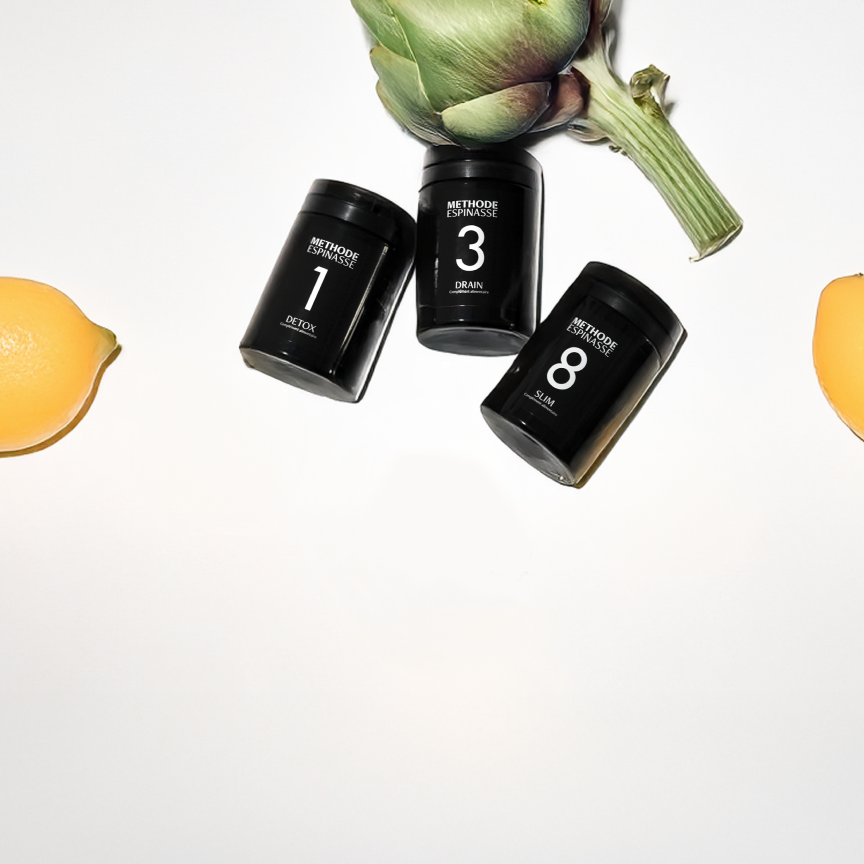
Découvrez 08 - Slim
Your ally for a slimmer figure and healthy weight

Journal
You’re doing everything right.
You’re eating better. You’ve added supplements to your routine. Maybe vitamins, probiotics, something for energy, something for digestion.
You’re consistent. You’re disciplined. And yet… nothing really changes.
You’re still tired. Your digestion still feels off. Your weight won’t budge. The results don’t match the effort.
At some point, you start wondering: do supplements even work? They do. But not in the way most people think.
It’s how your body processes it.
For years, nutrition has been built on a simple idea:
Fix the problem. Add the missing nutrient. Get the result.
Low energy? Take a vitamin.
Poor digestion? Add probiotics.
Stress? Try magnesium.
This model is everywhere. And it’s outdated.
Because your body doesn’t work in isolated inputs.
It works in systems.
Over the past decade, biology has completely changed how we understand health.
The updated Hallmarks of Aging published in Cell (2023) highlights key mechanisms that drive how your body functions: nutrient sensing, mitochondrial activity, inflammation, microbiome balance [1]
These systems are constantly interacting.
Your body isn’t just absorbing nutrients.
It’s interpreting a full biological environment — moment by moment.
Here’s what most people don’t realize: your body doesn’t respond to one input at a time.
Energy isn’t just about vitamins. It’s about mitochondria, inflammation, and metabolic regulation.
Digestion isn’t just about probiotics. It’s about microbiome balance, gut lining integrity, and inflammatory signals.
Weight isn’t just about calories or supplements. It’s about insulin, stress, inflammation, and metabolic flexibility.
Everything is connected. And most supplements are not designed for that reality.
Large-scale studies confirm this.
Research from Harvard shows that long-term health outcomes are driven by overall dietary patterns — not individual nutrients [2].
The PREDIMED trial, published in the New England Journal of Medicine, demonstrated that cardiovascular benefits come from a complete dietary system, not a single compound [3].
The Global Burden of Disease data published in The Lancet further confirms that nutritional risk is always the result of combined exposures, not isolated factors [4].
In other words: your body responds to patterns, not pills.
This is where everything changes.
Modern research introduces a key concept: nutrient synergy.
It means that multiple compounds, when combined, can produce effects that are stronger — or entirely different — than when taken alone [5].
But real synergy goes deeper.
It involves:
your gut microbiome
your inflammatory state
your metabolic context
your cellular energy systems
The food matrix effect reinforces this idea: the way nutrients are structured and delivered changes how your body responds [6].
So no — it’s not just what you take.
It’s how everything works together.
At this point, the issue becomes obvious.
Most supplement routines are built like this:
one ingredient
one benefit
one expected outcome
But your biology doesn’t work like that.
So the result is predictable:
no clear effect
inconsistent results
or short-term improvements that don’t last
It’s not that supplements don’t work.
It’s that they’re not designed for how your body actually functions.
This is where Cellular Nutrition® changes the framework.
Instead of focusing on isolated ingredients, it focuses on biological systems.
Instead of adding more, it organizes better.
The goal is to:
support cellular energy (mitochondria)
regulate inflammation
restore microbiome balance
modulate key signaling pathways like AMPK and mTOR [7]
create functional synergy between ingredients
Each formula is built as a coherent biological system — not a random combination.
If you’re taking supplements and nothing is changing, it’s not because your body is “resistant.”
It’s because your body is responding exactly as it should.
To a fragmented input.
Your biology is waiting for coherence.
It’s about making sense. Modern science doesn’t say supplements don’t work. It says they only work when they are aligned with how your body actually functions.
Health isn’t built on isolated nutrients. It’s built on your body’s ability to process integrated, meaningful signals at the cellular level.
That’s the shift. And that’s where everything starts to change.
[1] López-Otín C. et al. Hallmarks of Aging: An Expanding Universe. Cell, 2023.
https://www.cell.com/cell/fulltext/S0092-8674(22)01377-0
[2] Wang D. et al. Optimal dietary patterns for prevention of chronic disease. Nature Medicine, 2023.
https://pubmed.ncbi.nlm.nih.gov/36914892/
[3] Estruch R. et al. Primary prevention of cardiovascular disease with a Mediterranean diet. NEJM, 2013.
https://www.nejm.org/doi/full/10.1056/NEJMoa1200303
[4] GBD 2017 Diet Collaborators. Health effects of dietary risks in 195 countries. The Lancet, 2019.
https://www.thelancet.com/journals/lancet/article/PIIS0140-6736(19)30041-8/fulltext
[5] Townsend N. et al. Nutrient synergy. Nutrients, 2023.
https://pubmed.ncbi.nlm.nih.gov/37899823/
[6] Fardet A. Food matrix effects. Nutrients, 2022.
https://pubmed.ncbi.nlm.nih.gov/35067754/
[7] Fontana L., Partridge L. Diet and longevity pathways. Cell, 2015.
https://pubmed.ncbi.nlm.nih.gov/24698685/