DIETARY SUPPLEMENTS

Découvrez 08 - Slim
Your ally for a slimmer figure and healthy weight

Journal
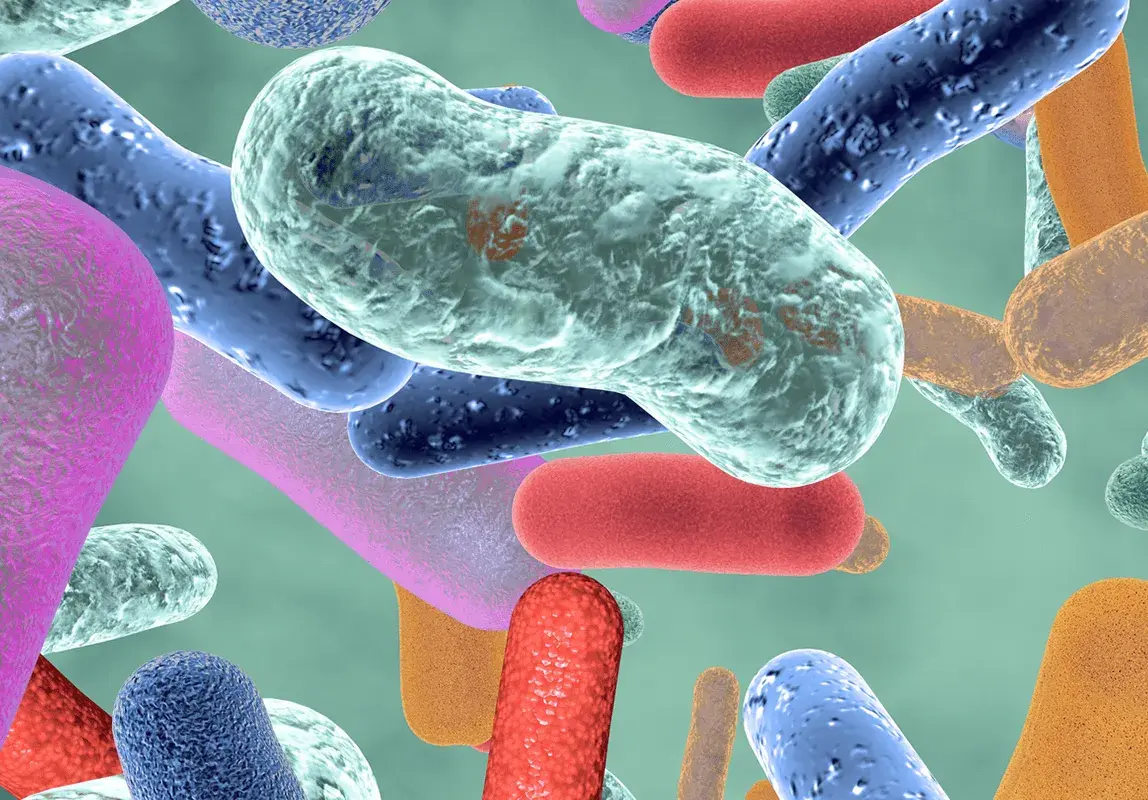
The idea may sound provocative. It is, however, scientifically grounded.
The human body is not composed solely of human cells. It hosts an extraordinarily dense ecosystem of microorganisms — bacteria, viruses, and fungi — that constantly interact with our biological functions. This ecosystem, known as the microbiome, functions as an integrated and dynamic system.
Current estimates suggest that the human body contains approximately 30 trillion human cells and a comparable—if not slightly higher—number of bacteria. Beyond this numerical balance, what truly matters is biological activity: the genetic material of the microbiome vastly exceeds that of human cells and exerts a profound influence on metabolism, immunity, and brain function [1].
In other words, we are not a standalone organism.
We are a hybrid system.
For decades, the microbiome was viewed as a passive digestive component. This perspective is now outdated.
Research published in Nature Reviews Microbiology, Cell, and Science has demonstrated that the microbiome plays a critical role in key biological processes:
— immune system regulation
— energy metabolism
— production of bioactive metabolites (short-chain fatty acids, neurotransmitters)
— communication with the brain via the gut–brain axis
— modulation of chronic low-grade inflammation [2][3]
Certain gut bacteria produce butyrate, a short-chain fatty acid essential for intestinal barrier integrity and immune regulation. Others directly influence insulin sensitivity and fat storage.
The microbiome does not merely support bodily function. It actively regulates it.
Its influence is so extensive that it is now described as a “metabolic organ” capable of interacting with all major biological systems.
Under normal conditions, the microbiome is relatively stable and diverse. This balance is essential for maintaining a functional intestinal barrier, efficient digestion, and an appropriate immune response.
However, multiple factors can disrupt this equilibrium: low-fiber diets, excessive sugar intake, chronic stress, antibiotic use, and environmental exposures.
This imbalance, known as dysbiosis, is now associated with a growing number of chronic conditions.
Research highlights strong links between dysbiosis and:
— chronic low-grade inflammation
— functional digestive disorders
— insulin resistance and weight gain
— mood disorders (anxiety, depression)
— autoimmune and skin conditions [4][5]
A key mechanism underlying this disruption is intestinal permeability. When the gut barrier becomes compromised, certain molecules — particularly lipopolysaccharides (LPS) derived from bacteria — enter the bloodstream and trigger systemic inflammation [6].
This phenomenon, often referred to as “leaky gut,” is now central to understanding the link between gut health and chronic disease.
One of the most significant advances in recent research is the understanding of the gut–brain axis.
The microbiome influences the production of neurotransmitters such as serotonin, dopamine, and GABA. It also modulates the stress response via the hypothalamic–pituitary–adrenal (HPA) axis.
Studies have shown that alterations in the microbiome are associated with mood disorders, increased stress, and impaired cognitive function [7].
At the same time, the microbiome plays a key role in energy metabolism. It determines how nutrients are absorbed, stored, and utilized.
Two individuals consuming the same diet can exhibit markedly different metabolic responses depending on their microbiome composition.
This is a critical point: your microbiome partly determines how your body interprets what you eat.
Given this complexity, the goal is not simply to “take probiotics,” but to restore a functional ecosystem.
This involves three core mechanisms:
— rebalancing microbial populations
— strengthening the intestinal barrier
— optimizing digestion and nutrient absorption
This is precisely the framework behind an integrative approach such as FLORA.
N°4 FLORA has been formulated to address these three essential dimensions of gut function.
Its composition is based on a synergy of scientifically documented actives working in a complementary way.
Multi-strain probiotics (Lactobacillus, Bifidobacterium, Saccharomyces) help restore microbiome balance. Their benefits are well-documented in the scientific literature, particularly for their ability to modulate inflammation, improve digestive disorders, and reinforce intestinal barrier function [8].
Digestive enzymes enhance the breakdown of macronutrients. This reduces intestinal fermentation, a common cause of bloating, gas, and digestive discomfort. Incomplete digestion creates an environment that promotes microbial imbalance.
L-glutamine plays a central role in intestinal barrier repair. It is the primary energy source for enterocytes and helps restore tight junction integrity, thereby reducing intestinal permeability [9].
This triple action — microbiome, digestion, barrier function — addresses the root causes of gut dysfunction.
In practice, this translates into:
— reduced bloating and digestive discomfort
— improved bowel regularity
— modulation of immune response
— reduction of low-grade inflammation
— indirect benefits on skin, metabolism, and energy
N°4 FLORA is part of a Cellular Nutrition® approach: it does not target isolated symptoms, but restores system-wide balance.
Reducing the human body to its human cells alone is an oversimplification.
The microbiome profoundly influences digestion, immunity, metabolism, and even behavior. It acts as an interface between the external environment — diet, stress, lifestyle — and internal biology.
Understanding this fundamentally changes how we approach health.
The objective is no longer simply to correct deficiencies, but to restore biological balance.
In this context, supporting the microbiome means acting at the root of multiple physiological processes.
In other words, it’s not just what you eat that matters.
It’s also — and perhaps more importantly — what lives within you.
[1] Sender R., Fuchs S., Milo R.
Revised Estimates for the Number of Human and Bacteria Cells in the Body
PLOS Biology, 2016
https://doi.org/10.1371/journal.pbio.1002533
[2] Lynch S.V., Pedersen O.
The Human Intestinal Microbiome in Health and Disease
New England Journal of Medicine, 2016
https://www.nejm.org/doi/full/10.1056/NEJMra1600266
[3] Thursby E., Juge N.
Introduction to the Human Gut Microbiota
Biochemical Journal, 2017
https://portlandpress.com/biochemj/article/474/11/1823/49559/Introduction-to-the-human-gut-microbiota
[4] Tilg H., Moschen A.R.
Microbiota and Diabetes: An Evolving Relationship
Nature Reviews Endocrinology, 2014
https://www.nature.com/articles/nrendo.2014.32
[5] Cryan J.F., O’Riordan K.J., Cowan C.S.M. et al.
The Microbiota-Gut-Brain Axis
Physiological Reviews, 2019
https://journals.physiology.org/doi/full/10.1152/physrev.00018.2018
[6] Cani P.D., Amar J., Iglesias M.A. et al.
Metabolic Endotoxemia Initiates Obesity and Insulin Resistance
Diabetes, 2007
https://diabetesjournals.org/diabetes/article/56/7/1761/12947/Metabolic-Endotoxemia-Initiates-Obesity-and
[7] Dinan T.G., Cryan J.F.
Gut-Brain Axis in Health and Disease
Gastroenterology Clinics of North America, 2017
https://www.sciencedirect.com/science/article/abs/pii/S0889855317300603
[8] Hill C., Guarner F., Reid G. et al.
The International Scientific Association for Probiotics and Prebiotics Consensus Statement on Probiotics
Nature Reviews Gastroenterology & Hepatology, 2014
https://www.nature.com/articles/nrgastro.2014.66
[9] Kim M.H., Kim H.
The Roles of Glutamine in the Intestine and Its Implication in Intestinal Diseases
Nutrients, 2017
https://www.mdpi.com/2072-6643/9/5/521