DIETARY SUPPLEMENTS

Découvrez 08 - Slim
Your ally for a slimmer figure and healthy weight

Journal
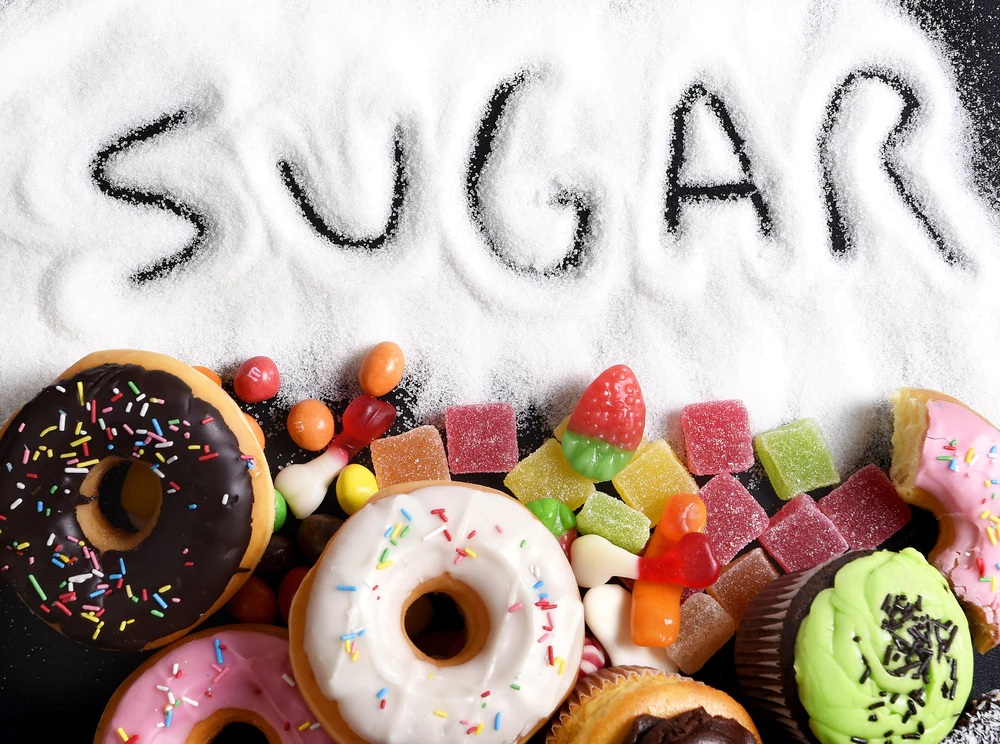
You just finished a meal. You’re no longer hungry. Yet a few minutes later, a craving appears. Maybe it’s chocolate. Cookies. Pastries. Candy. Sometimes the urge feels almost impossible to ignore.
Logically, you know you don’t actually need more energy. And yet your brain seems to be demanding sugar.
This situation is incredibly common. It is not necessarily a sign of poor willpower. More often, it reflects a complex interaction between the brain, hormones, the gut microbiome, sleep quality, and blood sugar regulation.
Modern research shows that sugar cravings are not simply psychological. They have real, measurable biological foundations.
From an evolutionary perspective, our attraction to sugar makes perfect sense.
For most of human history, calorie-dense foods were relatively scarce. Ripe fruit, honey, and certain starchy plants provided valuable sources of rapidly available energy.
As a result, the brain evolved mechanisms designed to encourage their consumption. For thousands of years, these mechanisms improved survival.
The problem is that our food environment has changed dramatically.
Today, sugar is available everywhere, often in highly concentrated forms combined with fats, flavor enhancers, and textures specifically engineered to maximize palatability.
Our biology has not evolved nearly as quickly as our food supply.
When we consume sweet foods, several brain regions involved in motivation, pleasure, and learning become activated.
One of the most important players is dopamine.
Dopamine is often described as the “pleasure molecule,” but its role is far more sophisticated. It is involved in:
When a food produces a pleasurable experience, the brain gradually learns to seek that experience again. The more often the experience is repeated, the stronger the associated neural pathways become [1].
This helps explain why sugar cravings can sometimes feel automatic, even when genuine hunger is absent.
The popularity of ultra-processed foods is not accidental.
Over the past several decades, food manufacturers have learned how to combine multiple characteristics that strongly stimulate the brain’s reward system, including:
This combination powerfully activates neural reward circuits.
Some studies suggest that ultra-processed foods may stimulate these pathways even more intensely than many natural foods [2].
The result is simple:
the stronger the activation, the greater the desire to repeat the experience.
In many cases, they are also driven by blood sugar regulation.
Blood sugar, or blood glucose, refers to the amount of glucose circulating in the bloodstream. It naturally fluctuates throughout the day depending on meals, physical activity, sleep quality, stress levels, and overall metabolic health.
When blood sugar regulation becomes unstable, sugar cravings often increase.
This helps explain why some people feel constantly drawn toward sweet foods despite their best efforts to avoid them.
Imagine a breakfast consisting primarily of sugary cereal, pastries, fruit juice, or other refined carbohydrates.
Blood glucose rises rapidly.
Insulin is released to move glucose into cells.
A few hours later, blood sugar may fall just as quickly.
The brain interprets this decline as a potential energy shortage.
The result may include:
The person reaches for another sweet food to restore energy quickly.
This triggers another glucose spike.
The cycle begins again.
The greater these fluctuations become, the more frequent cravings tend to be [3].
Researchers have identified several factors associated with increased sugar cravings.
Among the most common are:
These factors rarely act in isolation.
Instead, they often reinforce one another.
This is why sugar cravings are usually the result of multiple biological mechanisms rather than a simple lack of discipline.
Insulin resistance is now considered one of the most important biological drivers of recurring sugar cravings.
When cells become less responsive to insulin, blood sugar regulation becomes less stable. Glucose fluctuations increase, and cravings often become more frequent.
Many people with insulin resistance describe:
Research increasingly suggests that these behaviors often reflect underlying metabolic dysfunction rather than a lack of self-control [4].
Afternoon cravings are among the most common patterns reported by adults.
Several factors may contribute:
When several of these factors occur simultaneously, the brain begins searching for a rapid source of energy.
Sugar appears to provide an immediate solution.
Unfortunately, the effect is usually temporary.
Within an hour or two, fatigue and cravings frequently return.
Yes.
Glucose is an essential fuel source for the body and particularly for the brain.
However, when energy intake relies heavily on rapidly absorbed sugars, blood glucose fluctuations become more pronounced.
Energy rises quickly.
Then it falls quickly.
This instability helps sustain the cycle of cravings, fatigue, and repeated sugar consumption.
Understanding this mechanism is often the first step toward building a healthier and more sustainable relationship with sugar.
For many years, sugar cravings were viewed primarily as a matter of psychology or self-control.
Recent scientific discoveries tell a far more complex story.
Today, researchers recognize the gut microbiome as a major regulator of appetite, metabolism, and even food preferences.
The gut microbiome consists of trillions of microorganisms living throughout the digestive tract. Far from being limited to digestion, this ecosystem participates in numerous biological processes involved in:
Some studies even suggest that the microbiome may influence eating behavior far more than scientists previously imagined [5].
The idea may sound surprising.
However, growing evidence indicates that certain gut bacteria produce metabolites capable of interacting with the nervous system and influencing mechanisms involved in hunger and satiety.
Researchers have observed that specific microbiome profiles are associated with:
Conversely, a diverse and resilient microbiome tends to be associated with better metabolic regulation and improved appetite control [6].
The gut and the brain communicate continuously.
Scientists refer to this network as the gut-brain axis.
This communication system involves:
In other words, what happens in the gut directly influences what happens in the brain.
And vice versa.
This discovery represents one of the most important advances in modern metabolic medicine.
Sugar cravings are not driven solely by blood sugar levels.
They also involve several key neurotransmitters.
Among the most important are:
Dopamine helps regulate motivation and reward-seeking behavior.
Serotonin influences:
When these systems become dysregulated, cravings often intensify.
This is particularly common during periods of emotional stress, mental fatigue, or prolonged psychological pressure.
Many people notice that their sugar cravings become stronger during stressful periods.
This observation is not merely psychological.
It is rooted in well-established biological mechanisms.
When the body is exposed to chronic stress, cortisol production increases.
Cortisol plays an essential role in helping the body adapt to challenges.
However, when cortisol remains elevated for extended periods, several consequences may emerge:
The brain begins searching for a fast source of comfort and energy.
Sugar often becomes the easiest solution.
The problem is that the relief provided by sugar is usually short-lived.
The temporary reward is often followed by:
Over time, this cycle may simultaneously promote:
Chronic stress therefore becomes one of the hidden drivers of unhealthy eating behaviors.
Evening cravings are among the most common forms of sugar craving.
Several mechanisms may contribute:
After a demanding day, the brain naturally seeks a reward.
Sweet foods provide an immediate source of comfort, pleasure, and stimulation.
This helps explain why many people maintain healthy eating habits throughout the day but struggle with cravings after dinner.
Absolutely.
Sleep directly influences several hormones involved in appetite regulation.
Even a single night of insufficient sleep can:
Research consistently shows that sleep-deprived individuals consume more sugary and high-fat foods than well-rested individuals [7].
This relationship helps explain why poor sleep is strongly associated with both weight gain and metabolic dysfunction.
The human brain represents roughly 2% of body weight but consumes approximately 20% of total energy expenditure.
After hours of concentration, decision-making, emotional regulation, and stress management, many people experience significant mental fatigue.
In this state, sugar often appears to offer a rapid solution.
The problem is that the relief is usually temporary.
Rather than solving the underlying issue, repeated sugar consumption often perpetuates the cycle of fatigue and cravings.
Understanding the role of the microbiome, stress, sleep, and neurotransmitters allows us to view sugar cravings differently—not as a character flaw, but as the consequence of complex biological processes.
Among all nutritional strategies studied to reduce cravings, increasing protein intake consistently ranks among the most effective.
Unlike rapidly absorbed carbohydrates, protein promotes longer-lasting satiety and helps stabilize blood sugar levels.
Protein also influences several hormones involved in appetite regulation, including:
People who consume insufficient amounts of protein often report:
By contrast, adequate protein intake is consistently associated with improved satiety, better appetite control, and more stable energy levels throughout the day [8].
Yes.
Physical activity influences multiple biological pathways involved in appetite regulation and metabolic health.
Regular exercise helps:
Researchers frequently observe that individuals who exercise consistently experience fewer cravings and better control over their eating behaviors [9].
Importantly, the goal is not necessarily intense training.
Consistency often matters more than intensity.
Increasingly, research suggests that it can.
Chronic low-grade inflammation is now recognized as one of the major drivers of modern metabolic dysfunction.
It influences:
Several studies suggest that chronic inflammation may disrupt the biological systems responsible for hunger and satiety signaling [10].
This may help explain why sugar cravings often coexist with:
The concept of “sugar addiction” remains scientifically debated.
However, there is little doubt that some individuals develop an unusually difficult relationship with sugary foods.
In most cases, this results from multiple overlapping mechanisms, including:
The more these factors accumulate, the more difficult it becomes to resist cravings.
This is why relying on willpower alone rarely provides a lasting solution.
The real objective is to address the biological mechanisms driving those cravings.
The Cellular Nutrition® approach developed by Dr. Espinasse views sugar cravings as the possible expression of multiple interconnected biological imbalances.
Among the most important:
Within this framework, the objective is not simply to suppress cravings.
The objective is to understand why they occur in the first place.
Chronic stress is now recognized as one of the most important biological drivers of sugar cravings.
When cortisol remains elevated for prolonged periods, several consequences may emerge:
Stress also directly influences several neurotransmitters involved in appetite regulation and reward-seeking behavior, including:
Within the Cellular Nutrition® approach, BALANCE was specifically formulated to support these mechanisms.
Its formulation combines:
This combination was selected to help support:
By supporting emotional balance and helping the body adapt to prolonged stress, BALANCE may help address one of the most important biological triggers of sugar cravings: chronic stress itself.
Not all sugar cravings are emotional.
Many are primarily metabolic.
When blood sugar becomes unstable or insulin resistance develops, cravings often become more frequent and more intense.
Within the METHODE ESPINASSE approach, the SLIM protocol was developed to support several biological pathways involved in metabolic health.
Its formulation includes:
These ingredients were selected to support:
SLIM therefore targets the biological mechanisms involved in cravings associated with blood sugar instability and metabolic dysfunction.
Sugar cravings are not simply a matter of willpower.
They are influenced by a complex network of biological mechanisms involving:
Understanding these mechanisms changes the conversation entirely.
Instead of fighting cravings, it becomes possible to address their underlying causes.
This is precisely what allows for more sustainable improvements in appetite control, energy levels, body weight, and overall metabolic health.
Common causes include blood sugar fluctuations, insulin resistance, stress, insufficient protein intake, poor sleep, or established eating habits.
Evening sugar cravings are often linked to mental fatigue, accumulated stress, emotional reward-seeking, poor sleep, or inadequate nutrition earlier in the day.
Yes. Chronic stress increases cortisol levels, which can stimulate appetite and increase the desire for calorie-dense and sugary foods.
Yes. Research shows that the gut microbiome influences appetite regulation, inflammation, neurotransmitter activity, and food preferences.
Yes. Protein improves satiety, stabilizes blood sugar, and helps reduce hunger and cravings throughout the day.
Frequently. Blood sugar instability associated with insulin resistance often contributes to stronger and more frequent cravings.
In many cases, yes. Improving blood sugar control, stress management, sleep quality, gut health, and overall nutrition can significantly reduce cravings over time.
Dr. Valérie Espinasse is a Doctor of Pharmacy, specialist in Predictive and Preventive Medicine, and expert in micronutrition.
For more than twenty years, she has helped patients optimize their health through an evidence-based approach integrating cellular biology, precision nutrition, functional medicine, and preventive healthcare.
Through her proprietary Cellular Nutrition® framework, Dr. Espinasse focuses on the biological mechanisms that influence energy production, low-grade inflammation, gut microbiome health, metabolic resilience, and healthy aging.
Over the course of her career, she has supported more than 20,000 patients and conducted more than 15,000 advanced biological assessments.
Learn more:
https://methode-espinasse.com
[1] Volkow ND et al. Dopamine and Food Reward. Philosophical Transactions of the Royal Society B.
https://pubmed.ncbi.nlm.nih.gov/21885799/
[2] Hall KD et al. Ultra-Processed Diets Cause Excess Calorie Intake and Weight Gain. Cell Metabolism. 2019.
https://pubmed.ncbi.nlm.nih.gov/31105044/
https://www.cell.com/cell-metabolism/fulltext/S1550-4131(19)30248-7
[3] Ludwig DS. The Glycemic Index and Obesity. JAMA.
https://pubmed.ncbi.nlm.nih.gov/11559234/
[4] Petersen MC, Shulman GI. Mechanisms of Insulin Resistance. Physiological Reviews.
https://pubmed.ncbi.nlm.nih.gov/29488814/
https://journals.physiology.org/doi/full/10.1152/physrev.00063.2017
[5] Cryan JF et al. The Microbiota-Gut-Brain Axis. Physiological Reviews.
https://pubmed.ncbi.nlm.nih.gov/31460832/
https://journals.physiology.org/doi/full/10.1152/physrev.00018.2018
[6] Turnbaugh PJ et al. An Obesity-Associated Gut Microbiome. Nature.
https://pubmed.ncbi.nlm.nih.gov/17183309/
https://www.nature.com/articles/nature05414
[7] Spiegel K et al. Sleep Loss and Hormonal Regulation of Appetite. Lancet.
https://pubmed.ncbi.nlm.nih.gov/15541449/
https://www.thelancet.com/journals/lancet/article/PIIS0140-6736(04)17625-1/fulltext
[8] Leidy HJ et al. The Role of Protein in Weight Loss and Appetite Control. American Journal of Clinical Nutrition.
https://pubmed.ncbi.nlm.nih.gov/25926512/
[9] Donnelly JE et al. Physical Activity and Weight Management. Medicine & Science in Sports & Exercise.
https://pubmed.ncbi.nlm.nih.gov/19127177/
[10] Saltiel AR, Olefsky JM. Inflammatory Mechanisms Linking Obesity and Metabolic Disease. Journal of Clinical Investigation.
https://pubmed.ncbi.nlm.nih.gov/28459424/
https://www.jci.org/articles/view/92035