DIETARY SUPPLEMENTS

Découvrez 08 - Slim
Your ally for a slimmer figure and healthy weight

Journal
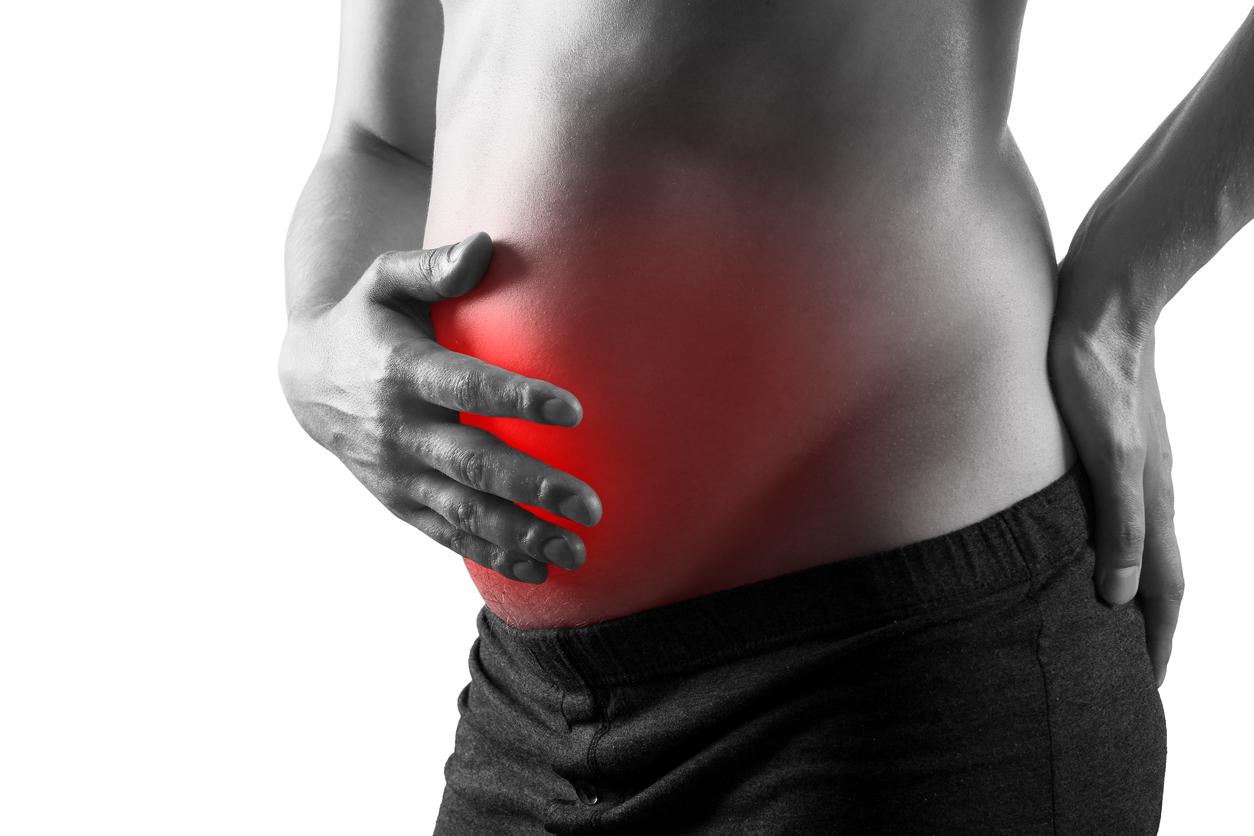
You finish a meal and, a few hours later, your stomach feels noticeably larger.
Sometimes the bloating begins after only a few bites. Other times, it develops gradually throughout the day. Some people even wake up feeling bloated before they’ve eaten anything at all.
Bloating is one of the most common digestive complaints worldwide. Yet contrary to popular belief, it is not always caused by the last thing you ate.
In many cases, chronic bloating reflects a much more complex interaction involving:
Understanding why your stomach feels bloated is often the first step toward solving the problem.
Many people confuse bloating with fat gain.
The two are very different.
Body fat accumulates gradually over weeks, months, or years.
Bloating can appear within hours.
Your stomach may look relatively flat in the morning and significantly more distended by evening.
This rapid fluctuation is one of the strongest signs that a digestive mechanism—not body fat—is responsible.
In most cases, bloating results from excessive gas accumulation within the digestive tract.
Contrary to what many people assume, gas production is completely normal.
Every day, the digestive system naturally produces gas through several physiological processes.
Problems arise when:
Under these circumstances, bloating can become significant even when the actual volume of gas is relatively modest.
The gut microbiome is one of the most important factors involved in chronic bloating.
Trillions of microorganisms live throughout the digestive tract.
Their role extends far beyond digestion.
They contribute to:
When the balance of the microbiome becomes disrupted—a condition known as dysbiosis—fermentation patterns can change.
Excessive fermentation often contributes to:
Not all foods are digested in the same way.
Certain carbohydrates may reach the colon before being completely absorbed.
Once there, they become fuel for gut bacteria.
This fermentation process is normal.
However, excessive fermentation can generate larger amounts of gas.
Foods most commonly associated with bloating include:
This does not mean these foods are unhealthy.
It simply means that some individuals tolerate them better than others.
Researchers now use the term FODMAPs to describe a group of fermentable carbohydrates that can trigger digestive symptoms in sensitive individuals.
FODMAPs are found in many foods that are otherwise considered healthy.
Examples include:
In susceptible individuals, fermentation of these carbohydrates may contribute to:
Research shows that a targeted low-FODMAP approach can significantly improve symptoms in some people with irritable bowel syndrome (IBS) [2].
Absolutely.
And often to a much greater extent than most people realize.
The digestive system contains its own complex nervous system.
Researchers sometimes refer to it as the “second brain.”
During periods of stress, several physiological changes may occur:
These mechanisms help explain why many people experience more bloating during periods of emotional or mental stress.
The gut and the brain communicate continuously.
This communication network involves:
Signals travel in both directions.
Stress influences digestion.
At the same time, the state of the gut microbiome can influence mood, stress resilience, and cognitive function.
This relationship helps explain why digestive disorders and emotional symptoms frequently occur together.
When bloating becomes a daily occurrence, several underlying mechanisms should be considered:
In most cases, the problem is not caused by a single food.
Instead, it reflects a digestive environment that has become increasingly vulnerable.
Understanding and correcting that underlying terrain is often the key to lasting relief.
Irritable bowel syndrome (IBS) is one of the most common digestive disorders worldwide.
Depending on the diagnostic criteria used, studies estimate that between 5% and 15% of adults may be affected [3].
Symptoms can vary significantly from person to person.
The most common include:
For many individuals, bloating is the most troublesome symptom.
Some people report dramatic abdominal distension throughout the day, sometimes despite eating relatively small amounts of food.
For years, researchers believed excessive gas production was the primary explanation.
The reality appears to be more complex.
Today, several mechanisms are thought to contribute:
In some individuals, gas production may not actually be excessive.
Instead, the digestive system becomes unusually sensitive to normal amounts of gas.
The result is a sensation of bloating and abdominal pressure that can feel disproportionate to the actual volume of gas present.
Increasingly, research suggests that it does.
Low-grade intestinal inflammation has been linked to a variety of digestive symptoms, including bloating.
This type of inflammation differs from the severe inflammation seen in inflammatory bowel diseases such as Crohn’s disease or ulcerative colitis.
Instead, it is often subtle and chronic.
Even so, it may influence:
These changes can contribute to bloating, digestive discomfort, and irregular bowel habits [4].
The intestinal lining functions as a highly sophisticated barrier.
Its job is twofold:
When this barrier becomes less efficient, researchers sometimes refer to the condition as increased intestinal permeability.
Under these circumstances, certain molecules may interact more readily with the immune system, potentially promoting inflammatory responses.
Although this remains an active area of research, multiple studies suggest connections between intestinal permeability, inflammation, and digestive symptoms [5].
Absolutely.
The speed at which food moves through the digestive tract has a major influence on bloating.
When intestinal transit slows down, food remains in the digestive system longer.
This gives gut bacteria more time to ferment certain compounds.
The result can be:
At the same time, some forms of chronic diarrhea can also be associated with significant bloating.
The issue is therefore not simply how fast digestion occurs, but whether digestive function remains balanced overall.
Constipation is one of the most common causes of persistent bloating.
When stool remains in the colon for extended periods:
Many people notice that their bloating improves substantially once bowel regularity is restored.
This observation highlights how closely digestive comfort and transit function are connected.
Proper digestion depends on a complex network of digestive enzymes.
These enzymes help break down:
When food is not fully digested, larger quantities of nutrients reach the colon.
Gut bacteria then ferment these compounds more extensively.
Gas production increases.
For this reason, digestive enzymes have been investigated as a potential strategy for improving digestive comfort and reducing bloating in certain individuals [6].
Not necessarily.
Many people automatically assume that bloating must be caused by a food intolerance.
The reality is often more nuanced.
In some cases, a genuine intolerance or sensitivity exists.
In others, symptoms are more closely related to:
Eliminating large numbers of foods without understanding the underlying mechanism is therefore not always the best solution.
Gluten is frequently blamed for digestive symptoms.
However, the science is considerably more complex.
For individuals with celiac disease, strict gluten avoidance is essential.
For many others, symptoms may be driven more by:
This helps explain why some people feel dramatically better after reducing certain gluten-containing foods while others notice little or no difference.
As research continues to evolve, one theme repeatedly emerges.
The gut microbiome influences nearly every major mechanism involved in bloating, including:
This central role explains why restoring a healthy microbiome has become one of the most promising strategies for improving digestive comfort.
As microbial diversity and resilience improve, excessive fermentation and inflammatory processes often decrease.
This concept now sits at the heart of many modern approaches to digestive health.
When people experience chronic bloating, they often search for a quick fix.
The reality is that bloating rarely results from a single cause.
In most cases, it reflects a combination of interconnected factors, including:
This is why a comprehensive approach is often more effective than simply eliminating random foods.
The goal is not merely to reduce symptoms temporarily.
The goal is to create a healthier digestive environment over the long term.
A growing number of studies have examined the role of probiotics in digestive health.
Probiotics are living microorganisms that can positively influence the gut ecosystem when consumed in adequate amounts.
Depending on the strains used, probiotics may help:
Not all probiotics work the same way.
The specific strains selected are critical.
This is one reason why some probiotic products appear highly effective while others provide little noticeable benefit.
Efficient digestion depends on the body’s ability to properly break down food.
When nutrients remain partially digested, larger amounts reach the colon where bacterial fermentation increases.
This excessive fermentation often contributes to:
Digestive enzymes support the breakdown of proteins, fats, and carbohydrates before they reach the lower digestive tract.
For certain individuals, this may help reduce digestive symptoms and improve overall comfort [8].
Glutamine is one of the primary fuel sources for intestinal cells.
It plays important roles in:
Researchers have shown increasing interest in glutamine because of its potential role in supporting digestive health and intestinal resilience [9].
Within the Cellular Nutrition® approach developed by Dr. Espinasse, the gut microbiome occupies a central position in digestive health.
The FLORA protocol was formulated to address several biological mechanisms involved in bloating and digestive discomfort.
Its formulation combines:
This combination was designed to support:
Rather than simply masking symptoms, FLORA aims to help restore a healthier digestive ecosystem and improve long-term gut resilience.
There is no single diet that works for everyone.
However, several nutritional strategies are consistently associated with improved digestive comfort:
The goal is usually not to eliminate as many foods as possible.
Instead, it is to identify the specific factors contributing to symptoms.
Many people focus exclusively on food when trying to solve digestive issues.
Yet stress has profound effects on digestion.
It can:
This is one reason why bloating often becomes more severe during periods of emotional or professional stress.
Modern digestive health strategies increasingly recognize the importance of supporting the gut-brain axis alongside nutrition.
Chronic bloating is not inevitable.
In most cases, it results from a combination of factors involving:
Understanding these mechanisms allows us to move beyond simplistic explanations that blame a single food or ingredient.
Modern research increasingly demonstrates that microbiome health, digestive efficiency, and intestinal resilience play fundamental roles in long-term digestive comfort.
By addressing these underlying mechanisms, lasting improvements often become possible.
Common causes include gut dysbiosis, excessive fermentation, irritable bowel syndrome, digestive dysfunction, constipation, and food sensitivities.
Bloating after eating may be related to excessive fermentation, FODMAP sensitivity, digestive enzyme insufficiency, microbiome imbalances, or intestinal hypersensitivity.
Yes. The gut microbiome plays a central role in fermentation, inflammation, digestion, bowel function, and overall digestive comfort.
Yes. Stress directly affects the gut-brain axis, digestive motility, intestinal sensitivity, and microbiome composition.
Certain probiotic strains have demonstrated benefits for digestive symptoms, particularly in individuals with IBS and microbiome imbalances.
Supporting digestion, improving gut microbiome health, managing stress, maintaining regular bowel movements, and identifying individual food triggers are among the most effective approaches.
No. Outside of celiac disease, bloating is often related to broader digestive mechanisms such as FODMAP sensitivity, gut dysbiosis, or intestinal hypersensitivity rather than gluten itself.
Dr. Valérie Espinasse is a Doctor of Pharmacy, specialist in Predictive and Preventive Medicine, and expert in micronutrition.
For more than twenty years, she has helped patients optimize their health through an evidence-based approach integrating cellular biology, precision nutrition, functional medicine, and preventive healthcare.
Through her proprietary Cellular Nutrition® framework, Dr. Espinasse focuses on the biological mechanisms that influence energy production, low-grade inflammation, gut microbiome health, metabolic resilience, and healthy aging.
Over the course of her career, she has supported more than 20,000 patients and conducted more than 15,000 advanced biological assessments.
Learn more:
https://methode-espinasse.com
[1] Zmora N et al. You Are What You Eat: Diet, Health and the Gut Microbiota. Nature Reviews Gastroenterology & Hepatology.
https://pubmed.ncbi.nlm.nih.gov/29255295/
https://www.nature.com/articles/nrgastro.2017.157
[2] Halmos EP et al. A Diet Low in FODMAPs Reduces Symptoms of Irritable Bowel Syndrome. Gastroenterology.
https://pubmed.ncbi.nlm.nih.gov/24076059/
https://www.gastrojournal.org/article/S0016-5085(13)01369-0/fulltext
[3] Ford AC et al. Global Prevalence of Irritable Bowel Syndrome. Clinical Gastroenterology and Hepatology.
https://pubmed.ncbi.nlm.nih.gov/27815164/
[4] Barbara G et al. Inflammation and Irritable Bowel Syndrome. Gastroenterology.
https://pubmed.ncbi.nlm.nih.gov/17640647/
[5] Camilleri M. Leaky Gut and Gastrointestinal Disorders. Gut.
https://pubmed.ncbi.nlm.nih.gov/36631377/
https://gut.bmj.com/content/73/1/17
[6] Rezaie A et al. Hydrogen and Methane-Based Breath Testing in Gastrointestinal Disorders. American Journal of Gastroenterology.
https://pubmed.ncbi.nlm.nih.gov/32022720/
[7] McFarland LV et al. Efficacy of Probiotics in Irritable Bowel Syndrome. World Journal of Gastroenterology.
https://pubmed.ncbi.nlm.nih.gov/25083060/
https://www.wjgnet.com/1007-9327/full/v20/i24/7888.htm
[8] Suarez FL et al. Digestive Enzymes and Gastrointestinal Symptoms. Digestive Diseases and Sciences.
https://pubmed.ncbi.nlm.nih.gov/11544478/
[9] Kim MH, Kim H. The Roles of Glutamine in the Intestine and Its Implication in Intestinal Diseases. International Journal of Molecular Sciences.
https://pubmed.ncbi.nlm.nih.gov/25785284/
https://www.mdpi.com/1422-0067/18/5/1051
[10] Cryan JF et al. The Microbiota-Gut-Brain Axis. Physiological Reviews.
https://pubmed.ncbi.nlm.nih.gov/31460832/
https://journals.physiology.org/doi/full/10.1152/physrev.00018.2018