DIETARY SUPPLEMENTS
Découvrez 08 - Slim
Your ally for a slimmer figure and healthy weight

Journal
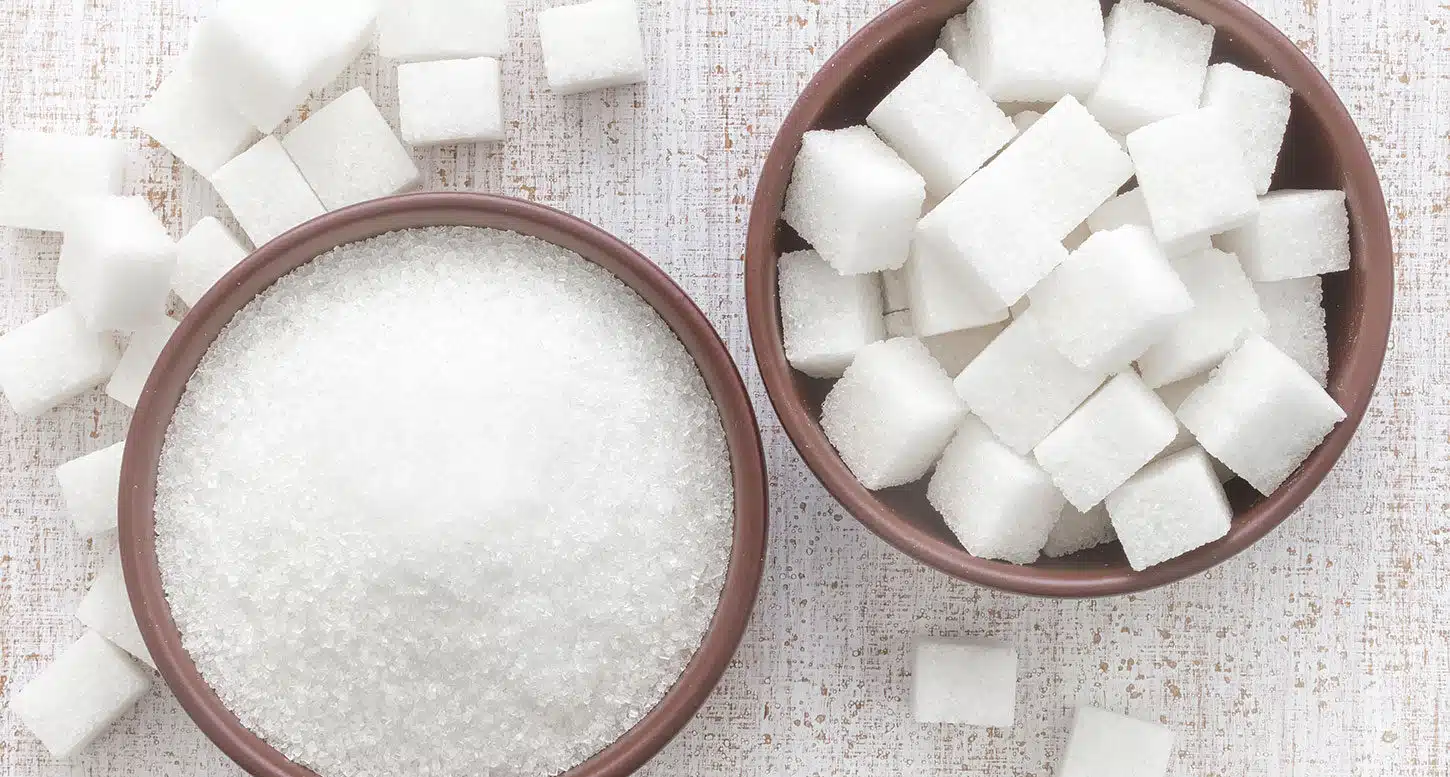
Why do some people constantly think about sugar?
Why do intense cravings often appear in the late afternoon or after dinner?
Why does eating more sugar often seem to create even stronger cravings?
For years, food cravings were viewed as a simple lack of willpower.
That understanding is now largely outdated.
Recent research in neuroscience, metabolism, and microbiome science shows that cravings involve complex biological mechanisms at the intersection of:
— the dopaminergic brain
— blood sugar and insulin regulation
— the gut microbiome
— low-grade inflammation
— and reward circuits activated by ultra-processed foods [1][2].
In practical terms, cravings are not purely psychological.
They often reflect a deeper neurobiological and metabolic dysregulation.
The human brain has highly sophisticated systems that regulate food intake.
Some control actual energy needs:
— physiological hunger
— blood glucose levels
— energy reserves
— metabolic hormones.
But other circuits respond primarily to reward, anticipation, and motivation.
This is where dopamine comes in.
Contrary to popular belief, dopamine is not simply the “pleasure molecule.”
Its primary role involves:
— reward anticipation
— motivation
— stimulus-seeking behavior
— behavioral learning [3].
In other words, the brain does not react only to the taste of sugar.
It progressively learns to seek out foods capable of strongly activating reward pathways.
Foods high in sugar, fat, or ultra-processed ingredients strongly stimulate these dopaminergic circuits [4].
Over time, repeated stimulation may alter the sensitivity of the brain circuits involved in food regulation.
This is one of the most documented mechanisms in modern nutrition neuroscience.
Research from Dr. Nora Volkow, one of the world’s leading addiction neuroscientists, shows that hyperpalatable foods activate brain circuits similar to those involved in addictive behaviors [1][4].
This does not mean sugar acts exactly like a drug.
The topic remains scientifically debated.
However, several overlapping mechanisms have been observed:
— intense activation of the reward system
— repeated stimulus-seeking behavior
— progressive reduction in dopamine sensitivity
— increased compulsive behaviors [5].
The more the brain is exposed to highly stimulating foods, the more it may seek out those same stimuli.
This phenomenon is particularly associated with ultra-processed foods:
— sodas
— industrial pastries
— refined cereals
— sugary snacks
— combinations of sugar + fat + salt [6].
These products are specifically designed to maximize palatability and reward-system activation.
The modern brain is therefore exposed to levels of food stimulation unprecedented in human history.
Cravings are not driven solely by the brain.
Blood sugar regulation also plays a central role.
After consuming foods high in rapidly absorbed sugars:
— blood glucose rises sharply
— insulin is released in large amounts
— blood sugar may then drop quickly.
In some individuals, this drop promotes:
— fatigue
— irritability
— rapid hunger
— renewed sugar cravings.
This phenomenon is often described as the “blood sugar roller coaster.”
Research also suggests that insulin resistance may impair the dopaminergic circuits involved in food reward [7].
Energy metabolism and brain reward pathways are therefore deeply interconnected.
The more unstable blood sugar regulation becomes, the more compulsive eating behaviors may be reinforced.
This is probably one of the most fascinating areas of recent research.
The gut microbiome does far more than support digestion.
It actively participates in:
— inflammation regulation
— production of neuroactive metabolites
— gut-brain communication
— energy metabolism
— and potentially certain eating behaviors [8].
The digestive tract constantly communicates with the brain through:
— the vagus nerve
— neurotransmitters
— gut hormones
— bacterial metabolites.
This network is now known as the “gut-brain axis.”
Certain gut bacteria appear capable of influencing:
— satiety
— glycemic response
— hunger signaling
— and even dopaminergic circuits [9].
Microbiome imbalances — promoted by:
— ultra-processed foods
— chronic stress
— antibiotics
— low fiber intake
— excessive refined sugar consumption
may contribute to metabolic and neurobiological dysregulation.
Cravings are therefore not generated solely in the brain.
The gut also plays a major regulatory role.
Recent research suggests that sugar alone does not explain everything.
Ultra-processed foods often combine:
— rapidly absorbed sugars
— refined fats
— flavor enhancers
— optimized textures
— hyperpalatability.
This combination powerfully stimulates reward pathways.
A major study published in Cell Metabolism showed that sugar and fat activate distinct yet complementary gut-brain circuits capable of independently reinforcing eating behaviors [10].
The brain therefore receives multiple reward signals simultaneously.
This helps explain why certain foods are exceptionally difficult to regulate.
Chronic stress also strongly influences cravings.
Cortisol, the body’s primary stress hormone, affects:
— blood sugar
— insulin sensitivity
— eating behaviors
— reward-seeking patterns.
Sleep deprivation also alters several key hormones:
— ghrelin (hunger)
— leptin (satiety)
— dopamine
— emotional regulation.
This is why sugar cravings often intensify during periods of:
— stress
— fatigue
— mental overload
— insufficient sleep.
The brain then seeks rapid sources of energy and dopaminergic stimulation.
This is probably the most important point.
Cravings are not merely a matter of “discipline.”
They often result from a complex interaction between:
— brain reward circuits
— blood sugar fluctuations
— low-grade inflammation
— the gut microbiome
— chronic stress
— ultra-processed foods
— metabolic dysregulation.
The issue is therefore not purely behavioral.
It also reflects deeper biological mechanisms.
Recent research suggests that a sustainable approach to food cravings cannot simply rely on:
“eating less.”
It becomes essential to address the major biological mechanisms involved:
— blood sugar stability
— inflammation
— gut microbiome balance
— sleep
— chronic stress
— nutritional quality
— dopaminergic regulation.
This is precisely what the Cellular Nutrition® approach seeks to explore:
understanding how nutritional signals influence the biological systems regulating energy, metabolism, inflammation, and eating behaviors.
Compulsive sugar cravings often reflect a loss of regulation between the brain, metabolism, and gut-derived signals.
Modern science now shows that cravings extend far beyond the simplistic notion of indulgence or weak willpower.
[1] Volkow ND et al. The Neuroscience of Drug Reward and Addiction. Nature Reviews Neuroscience.
https://pubmed.ncbi.nlm.nih.gov/31507244/
[2] Harvard T.H. Chan School of Public Health — Cravings.
https://nutritionsource.hsph.harvard.edu/cravings/
[3] Dopaminergic Control of the Feeding Circuit (2021).
https://www.e-enm.org/journal/view.php?doi=10.3803/EnM.2021.979
[4] Volkow ND et al. Reward, dopamine and the control of food intake.
https://pmc.ncbi.nlm.nih.gov/articles/PMC3124340/
[5] Avena NM et al. Evidence for sugar addiction.
https://pmc.ncbi.nlm.nih.gov/articles/PMC2235907/
[6] Ultra-Processed Food Addiction (2024 review).
https://pmc.ncbi.nlm.nih.gov/articles/PMC11150183/
[7] High sugar intake linked to low dopamine release in insulin-resistant patients.
https://www.newswise.com/articles/high-sugar-intake-linked-to-low-dopamine-release-in-insulin-resistant-patients
[8] The effects of gut microbiota on appetite regulation (2024).
https://pmc.ncbi.nlm.nih.gov/articles/PMC11542600/
[9] Gut Microbiota and Dopamine (2025).
https://pmc.ncbi.nlm.nih.gov/articles/PMC12837447/
[10] Separate gut-brain circuits for fat and sugar reinforcement. Cell Metabolism (2024).
https://www.cell.com/cell-metabolism/fulltext/S1550-4131(23)00466-7
[11] Harvard Medical School — Nutritional Psychiatry: Your Brain on Food.
https://www.health.harvard.edu/blog/nutritional-psychiatry-your-brain-on-food-201511168626