DIETARY SUPPLEMENTS

Découvrez 08 - Slim
Your ally for a slimmer figure and healthy weight

Journal
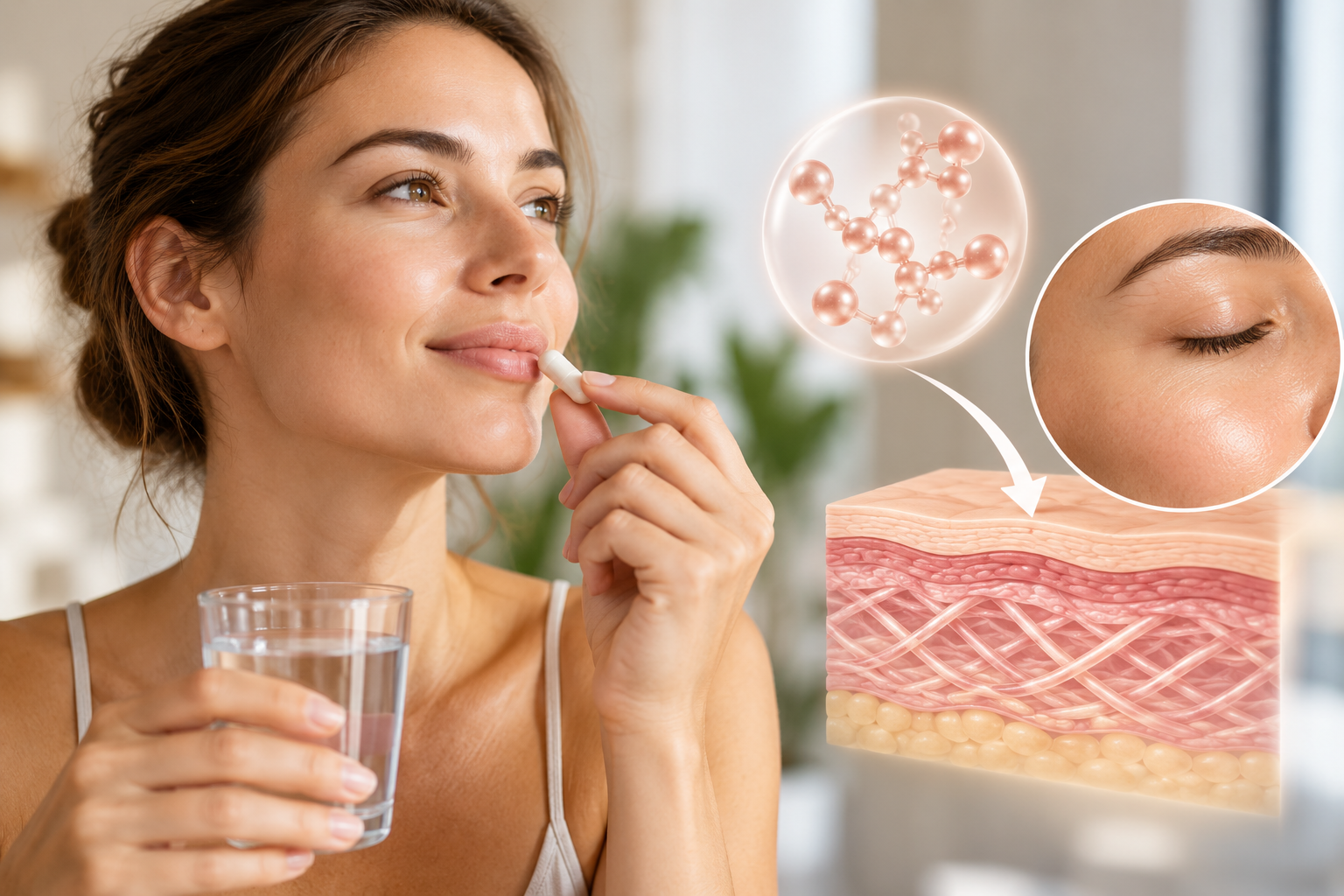
Collagen is everywhere. Powders, capsules, beauty drinks, gummies—and increasingly, throughout the entire beauty-from-within category. The promise is compelling: supplement with collagen from within to support skin that naturally loses collagen as it ages. But one objection comes up again and again: If the collagen we consume is digested, how could it possibly have any effect on the collagen in our skin?
The first part of that argument is absolutely correct. The collagen we ingest does not travel through the digestive system intact and somehow deposit itself underneath a wrinkle. It is broken down into amino acids and smaller peptides. But that is exactly where the story gets much more interesting. Human studies show that after consuming hydrolyzed collagen, certain collagen-derived peptides—including Pro-Hyp (prolyl-hydroxyproline) and Hyp-Gly (hydroxyprolyl-glycine)—appear in the bloodstream [1–3]. Experimental research then suggests that some of these peptides may be more than simple by-products of digestion: they may act as bioactive molecules capable of interacting with fibroblasts, the cells involved in producing and maintaining the skin’s extracellular matrix [3–5].
This mechanism has fundamentally changed how researchers think about oral collagen supplements for skin. The question is no longer simply whether “eating collagen makes collagen.” It is far more sophisticated: Could the peptides generated during collagen digestion both provide building blocks and deliver biological signals to the skin?
To understand why oral collagen has attracted so much scientific attention, we first need to understand what collagen actually does in the skin.
The dermis is not a uniform layer of tissue. It is a living, three-dimensional structure organized around the extracellular matrix, an intricate network containing fibroblasts, collagen and elastin fibers, glycosaminoglycans, and numerous signaling molecules.
Collagen is one of the major structural components of that matrix. In adult skin, type I and type III collagen play particularly important roles in the mechanical strength and organization of the dermis. Fibroblasts produce collagen precursors, which are subsequently assembled and organized within the extracellular matrix.
This microscopic architecture helps determine what we ultimately see in the mirror: skin density, firmness, resilience, and mechanical strength.
The problem is that this architecture does not remain unchanged throughout life.
Skin aging results from a combination of intrinsic and extrinsic mechanisms. As we get older, fibroblast activity changes, the synthesis of certain extracellular matrix components declines, and existing collagen fibers undergo progressive structural changes.
Then there is UV exposure. Photoaging activates pathways involving matrix metalloproteinases, or MMPs, enzymes capable of breaking down proteins within the extracellular matrix.
Oxidative stress, chronic low-grade inflammation, glycation, hormonal changes, and environmental exposures can all contribute to the progressive remodeling of the dermis.
Eventually, those microscopic changes become visible: skin gradually becomes less dense, less elastic, and less resilient, while fine lines and wrinkles become more pronounced.
So the real objective is not simply to “put collagen back” into the skin. It is to understand how we might support tissue in which the balance between extracellular matrix synthesis, organization, and degradation is changing over time.
Not every product labeled “collagen” is biologically identical.
Native collagen is a large protein organized into its characteristic triple-helix structure. When collagen is hydrolyzed, that large protein is broken down into smaller peptides. These are generally referred to as hydrolyzed collagen or collagen peptides.
Hydrolysis matters because it changes characteristics such as solubility and peptide size. But even collagen that has already been hydrolyzed before consumption still encounters digestive enzymes once it reaches the gastrointestinal tract.
Some of it is broken down into individual amino acids. But some can persist as smaller peptides that are sufficiently resistant to digestion to be absorbed.
And this is where two names become particularly important: Pro-Hyp and Hyp-Gly.
Collagen has an unusual amino-acid composition compared with many other dietary proteins. It is particularly rich in glycine, proline, and hydroxyproline. Hydroxyproline is especially interesting because it acts as a kind of biochemical signature of collagen.
After hydrolyzed collagen is consumed, hydroxyproline does not appear in the bloodstream solely as a free amino acid. Hydroxyproline-containing peptides can also be detected in human circulation [1–3].
Among them, Pro-Hyp is one of the most extensively studied. A randomized crossover study comparing different collagen hydrolysates derived from fish, porcine, and bovine sources confirmed an increase in several collagen-derived peptides in the bloodstream after ingestion. Pro-Hyp was the most abundant of the peptides analyzed in circulation following hydrolyzed collagen consumption [2].
That finding is fundamental.
It means digestion does not necessarily reduce collagen to nothing more than an indistinguishable pool of individual amino acids.
Specific collagen-derived peptides can survive digestion and become systemically available.
And some appear to be biologically active.
This is arguably one of the most fascinating areas of collagen research.
Experimental studies have shown that Pro-Hyp and Hyp-Gly can influence fibroblast behavior. These peptides have been investigated for their effects on dermal fibroblast migration and proliferation [3,4]. Pro-Hyp has also been experimentally associated with increased expression of hyaluronan synthase 2 and increased hyaluronic acid production in skin fibroblasts [4].
Researchers continue to identify additional collagen-derived peptides. Studies have detected an hydroxyproline-containing tripeptide, Gly-3Hyp-4Hyp, in human blood following collagen hydrolysate ingestion. In experimental models, this peptide also demonstrated chemotactic activity toward skin fibroblasts [5].
This introduces a much more sophisticated hypothesis than simply providing extra amino acids.
Collagen peptides could potentially work along two complementary dimensions:
The second mechanism is still supported primarily by mechanistic and preclinical evidence. It would be an overstatement to claim that it alone explains the clinical effects observed in humans.
But it provides compelling biological plausibility for why researchers continue to investigate oral collagen for skin health.
Not in the way many people imagine.
It would be inaccurate to describe the process like this:
COLLAGEN SUPPLEMENT → INTACT COLLAGEN IN THE BLOOD → NEW COLLAGEN DIRECTLY DEPOSITED IN THE FACE.
The biology looks more like this:
HYDROLYZED COLLAGEN → DIGESTION → AMINO ACIDS + HYDROXYPROLINE-RICH PEPTIDES → ABSORPTION → CIRCULATION → BUILDING BLOCKS + POTENTIAL BIOLOGICAL SIGNALS.
That distinction is essential.
When clinical trials report improvements in skin parameters following oral collagen supplementation, it does not mean the collagen someone swallowed physically transformed itself into new dermal collagen fibers.
It means a nutritional intervention may influence the biological environment in which the skin maintains and remodels its own extracellular matrix.
And that completely changes the debate around whether collagen supplements can work.
Probably not.
Two supplements can both say “hydrolyzed collagen peptides” on the label while containing substantially different peptide profiles. Raw material, hydrolysis methods, molecular-weight distribution, and the concentrations of specific peptides can all vary [2].
One particularly interesting clinical study compared two collagen hydrolysates containing different concentrations of bioactive peptides, including Pro-Hyp and Hyp-Gly. The hydrolysate with the higher concentration of these peptides produced greater improvements in several facial-skin parameters—including hydration, elasticity, wrinkles, and roughness—than both the lower-peptide hydrolysate and placebo [6].
That study does not prove that Pro-Hyp and Hyp-Gly alone were responsible for the observed benefits. But it raises an important question for the science of collagen supplements and nutricosmetics:
Total grams of collagen may not be the only thing that matters. Peptide composition may matter, too.
That represents a major shift from the way collagen supplements are typically marketed.
The question may no longer simply be:
“How many grams of collagen are in this product?”
It may also become:
“Which peptides can this collagen make biologically available after digestion?”
Marine collagen has become particularly prominent in the beauty industry. But scientifically, it is important to distinguish premium positioning from demonstrated clinical superiority.
Collagen derived from fish skin, porcine skin, and bovine tissues can all generate hydroxyproline-containing peptides following digestion. A human crossover study directly comparing different collagen sources did find differences in the formation and absorption of specific peptides, but those differences do not establish that one source is universally superior to all others [2].
Likewise, a 2023 meta-analysis of 26 randomized controlled trials involving 1,721 participants found overall improvements in skin hydration and elasticity with hydrolyzed collagen but did not identify a significant difference between collagen sources for skin elasticity [7].
Marine collagen is therefore scientifically relevant, and several human clinical trials have investigated marine-derived collagen preparations. But “marine” does not automatically mean “more effective.”
The quality of a collagen supplement may depend on a much broader combination of factors: source, hydrolysis, peptide profile, dosage, bioavailability, and duration of use.
This is the question that ultimately matters.
And the evidence no longer comes from a single small study.
Dozens of randomized trials have now investigated oral collagen supplements using instrumentally measured skin outcomes including hydration, elasticity, transepidermal water loss (TEWL), wrinkles, skin roughness, and, in some studies, dermal density [7,8].
A 2023 meta-analysis pooled 26 randomized controlled trials involving 1,721 participants. In the overall analysis, hydrolyzed collagen supplementation was associated with statistically significant improvements in skin hydration and elasticity compared with placebo [7].
A randomized, double-blind, placebo-controlled study published in 2023 provides a particularly useful example. One hundred women ages 30 to 60 received either 1,650 mg of low-molecular-weight collagen peptides per day or placebo for 12 weeks. Skin hydration improved significantly versus placebo as early as week four. By week 12, researchers also observed significant improvements in skin elasticity and wrinkles, as well as desquamation [9].
That already allows us to answer one important question.
Yes. Certain oral collagen peptide supplements have produced objectively measurable changes in skin parameters in controlled human clinical trials.
But that is not the end of the story.
The timeline of the results is particularly interesting.
In the 100-woman trial, improved skin hydration was detectable after four weeks, while significant differences in elasticity and wrinkles were observed after 12 weeks [9].
That timeline is consistent with findings from a much larger updated meta-analysis incorporating 35 randomized controlled trials and 2,534 participants. In that analysis, oral collagen was associated with improvements in hydration, elasticity, and water retention/skin-barrier function. More importantly, the researchers found that outcomes appeared to depend more strongly on duration of supplementation than on dosage, with benefits for elasticity and barrier function becoming more apparent in interventions lasting at least 12 weeks [8].
That is an important insight into how beauty from within works.
A nutritional intervention is not an Instagram filter. And it is not an injectable. When it works, it operates on a biological timeline.
Hydration may change relatively quickly. Remodeling the properties of living tissue takes longer.
If we stopped here, the story would be remarkably simple: absorbed peptides, plausible biological mechanisms, positive clinical trials, positive meta-analyses.
Science is rarely that straightforward.
More recent analyses have started asking not only whether the studies report positive outcomes, but also how rigorous those studies are, how they were funded, how heterogeneous their results are, and whether a small number of particularly favorable trials are disproportionately influencing the overall findings.
And this is where the science of collagen supplements for skin aging becomes even more interesting.
Because current evidence increasingly suggests that we need to separate two questions that are often treated as though they were identical:
Can oral collagen improve skin hydration, elasticity, and certain aspects of skin-barrier function?
And:
Can oral collagen actually rebuild the dermis, meaningfully increase dermal density, and reduce wrinkles?
Science does not yet provide exactly the same level of certainty for both questions.
That is where Part 2 begins: with the strongest clinical trials on wrinkles and photoaged skin, the evidence specifically surrounding marine collagen, the 2023, 2025, and 2026 meta-analyses, the important issue of industry funding, the collagen dosages actually studied, why 12 weeks keeps emerging as a meaningful timeframe, and what science currently allows us to say—and not say—about oral collagen as a genuine inside-out skin-aging strategy.
This is, unsurprisingly, the most attention-grabbing claim surrounding collagen supplements for skin. And several randomized controlled trials have reported measurable improvements.
In one study involving 64 participants, taking 1 gram per day of low-molecular-weight collagen peptides for 12 weeks significantly improved skin hydration, several wrinkle parameters, and certain measures of skin elasticity compared with placebo [10]. In another trial involving 100 women ages 30 to 60, 1,650 mg per day improved hydration as early as week four, followed by improvements in elasticity and wrinkles at week 12 [9]. Another study involving 100 participants with dry, photoaged skin also reported improvements in wrinkles, hydration, transepidermal water loss, and elasticity after 12 weeks of low-molecular-weight collagen peptides [11].
These findings matter because they are based on instrumental measurements rather than participants simply reporting that their skin “looked better.”
But they do not mean oral collagen physically “fills” wrinkles. As with oral hyaluronic acid, this is fundamentally different from an injectable. Collagen peptides appear to act gradually within the biological environment of the skin rather than mechanically creating volume beneath a wrinkle.
Marine collagen has become one of the most prominent ingredients in the nutricosmetics and beauty-supplement market. Fortunately, several clinical trials allow us to look beyond marketing claims.
In a randomized, triple-blind, placebo-controlled trial, women ages 45 to 60 took hydrolyzed freshwater marine collagen for 12 weeks. By the end of the study, the supplemented group showed a significant reduction in wrinkle scores from baseline, with a greater reduction than placebo on one side of the face. Improvements in skin elasticity were also observed in a subgroup of women ages 45 to 54 [12].
Another randomized trial studied 36 postmenopausal women who took 5 grams per day of hydrolyzed marine collagen for four weeks. Cheek elasticity improved significantly compared with placebo and, notably, the difference was still detectable four weeks after supplementation ended [13].
Other research using fish-derived ingredients has reported structural skin changes as well. In 46 women ages 45 to 59, 90 days of supplementation with hydrolyzed fish cartilage was associated with reduced wrinkles and increased dermal echogenicity compared with placebo [14].
These trials do not establish that marine collagen is inherently superior to every other collagen source. In fact, the 2023 meta-analysis did not find a significant difference between collagen sources for skin elasticity [7].
What they do show is that marine-derived collagen preparations have produced measurable skin outcomes in controlled human clinical trials.
Collagen is typically marketed around firmness and wrinkles. Yet when we look across the clinical literature, skin hydration emerges as one of the more consistent outcomes associated with oral collagen peptides.
A randomized trial involving 99 Japanese women provides a particularly interesting clue as to why. Participants received either 1 gram, 5 grams, or placebo daily for 12 weeks. Collagen supplementation increased water content in the stratum corneum and epidermis, reduced transepidermal water loss (TEWL), and increased certain components of the Natural Moisturizing Factor (NMF) [15].
Skin elasticity and thickness, however, did not significantly change in that study.
That finding is important because it suggests we should not think about oral collagen exclusively as a precursor for new dermal collagen. Its effects may also involve the skin’s water environment and its ability to retain moisture.
The 2023 meta-analysis of 26 randomized controlled trials and 1,721 participants pointed in the same direction, reporting significant overall improvements in hydration and elasticity [7]. A 2025 meta-analysis of ten randomized controlled trials involving 646 participants also found significant improvements in both outcomes [16].
And more recent evidence has further sharpened the picture.
An updated meta-analysis incorporating 35 randomized controlled trials and 2,534 participants used sensitivity analyses, multilevel models, and dose-response analyses to determine which reported benefits remained convincing when the data were examined more rigorously [17].
Three outcomes emerged particularly clearly: skin hydration, elasticity, and water retention/skin-barrier function [17].
Hydration improved significantly. Elasticity improved as well, particularly when supplementation lasted long enough. For skin-barrier function, reductions in TEWL suggested improved water retention.
One of the most interesting findings was that the dose-response analyses did not reveal a simple relationship in which more grams of collagen automatically produced better skin results.
What appeared to matter more was time.
For elasticity and skin-barrier outcomes, benefits became more apparent with supplementation lasting at least 12 weeks [17].
This changes the way we should think about collagen supplements. The most useful question may not be “What is the highest dose I can take?”
It may be:
“Which collagen peptides, in what formulation, and for how long?”
Clinical trials have used remarkably different amounts of collagen: around 1 gram in some studies, 1.65 grams in others, and 2.5 grams, 5 grams, or more in other formulations [9,10,13,15].
That creates an obvious temptation to assume that a powder containing 10 or 20 grams must be more effective for skin than a lower-dose formulation.
Current evidence does not support such a simple conclusion.
The updated meta-analysis suggests that skin outcomes may depend more on supplementation duration than on dose [17]. This fits with the bioactive-peptide research discussed in Part 1: total protein quantity may not be the only biologically relevant variable.
Peptide profile, degree of hydrolysis, bioavailability of compounds such as Pro-Hyp, formulation matrix, and duration of use may all matter.
When it comes to collagen for skin, more is not automatically better.
This is where we need to distinguish between a biologically plausible mechanism and a clinical effect that has been definitively demonstrated.
Some recent trials are genuinely intriguing. One randomized, double-blind study used confocal microscopy and high-resolution ultrasound to directly evaluate aspects of dermal structure after 12 weeks of supplementation. Researchers reported changes consistent with improvements in collagen organization within certain regions of the dermis [18].
Another recent trial involving 77 women investigated 5 grams per day of bioactive collagen peptides for 12 weeks. Researchers reported improvements in dermal density, skin hydration, and TEWL compared with placebo, with some effects still detectable four weeks after supplementation ended [19].
Those findings are encouraging.
But when the full body of evidence is subjected to stricter statistical analysis, the picture becomes less definitive. In the updated meta-analysis, apparent benefits for wrinkles, skin roughness, and dermal density became substantially less convincing after studies exerting disproportionate statistical influence were removed [17].
So yes, we have interesting clinical evidence suggesting potential structural effects within the dermis.
But saying that every collagen supplement “rebuilds the dermis” would go beyond what the evidence currently establishes.
In 2025, a systematic review and meta-analysis published in The American Journal of Medicine introduced an important challenge to the collagen conversation [20].
The researchers analyzed 23 randomized controlled trials involving 1,474 participants.
When all studies were pooled, the results appeared positive: significant improvements were found in skin hydration, elasticity, and wrinkles.
But the researchers then went further.
They separated studies according to funding source and methodological quality.
Among trials that did not receive funding from pharmaceutical companies, they found no significant effects on hydration, elasticity, or wrinkles. Likewise, studies judged to be of higher methodological quality did not show significant benefits for those outcomes [20].
The authors therefore concluded that the available evidence was not sufficiently robust to establish that collagen supplements prevent or treat skin aging.
This meta-analysis does not “prove that collagen doesn’t work.”
It demonstrates something more nuanced—and scientifically important:
The apparent magnitude of collagen’s benefits changes depending on which studies are included and how study quality and funding are accounted for.
This is exactly where the science becomes interesting.
We now have several bodies of evidence that do not tell precisely the same story.
The 2023 meta-analysis found benefits for skin hydration and elasticity [7]. The 2025 American Journal of Medicine analysis also found those benefits when all studies were pooled, but they disappeared in analyses restricted to certain independently funded or higher-quality studies [20]. The larger updated analysis, using different sensitivity methods, found a more robust signal for hydration, elasticity, and skin-barrier function, while becoming substantially more cautious about wrinkles, roughness, and dermal density [17].
Rather than forcing the evidence into a simplistic “yes” or “no,” the most current interpretation is more precise.
The evidence is particularly compelling for skin hydration. There is also supportive evidence for elasticity and water retention, especially after approximately 12 weeks of supplementation. Evidence for wrinkle reduction exists but is more heterogeneous. And true structural rebuilding of the dermis remains a promising area of clinical research that requires larger, high-quality, independent trials.
That hierarchy of evidence is far more useful than the simplistic promise that “collagen erases wrinkles.”
Based on the totality of the evidence available today, the most scientifically defensible answer is: yes, certain oral collagen peptides can influence measurable skin parameters—but not every claimed benefit is supported by the same level of evidence.
Skin hydration currently represents one of the most consistent signals. Elasticity and skin-barrier function also have supportive evidence, particularly when collagen is taken consistently over a sufficient period of time [7,16,17]. Multiple randomized trials have reported improvements in wrinkles as well [9–12], although the most stringent meta-analyses suggest greater caution around that endpoint [17,20].
Most importantly, we now know that the argument “collagen is digested, therefore it cannot do anything for skin” is biologically incomplete.
Collagen-derived peptides appear in the circulation after ingestion, and some demonstrate biologically interesting activity in experimental models.
Digestion does not necessarily eliminate collagen’s biological relevance.
It may actually generate some of the peptides we are most interested in.
This distinction is particularly relevant to SKIN N°11, formulated by Dr. Valérie ESPINASSE according to the principles of Cellular Nutrition®.
SKIN N°11 is not built around the idea that a single ingredient can reverse every mechanism involved in skin aging. Its formula combines hydrolyzed marine collagen, hyaluronic acid, astaxanthin, Centella asiatica, vitamin E, zinc, vitamin A, Bifidobacterium lactis, and Lactobacillus casei.
The marine collagen provides the peptide and structural dimension. Hyaluronic acid addresses hydration and the extracellular matrix. Astaxanthin and vitamin E are incorporated into an antioxidant strategy. Zinc and vitamin A are essential micronutrients involved in normal skin physiology. The probiotics extend the formulation toward another rapidly developing field of skin science: the gut-skin axis.
That multi-target approach is particularly consistent with what modern research is revealing about skin aging:
Skin never ages through a single mechanism.
Collagen remodeling, hydration, oxidative stress, low-grade inflammation, hormonal changes, the microbiome, and cellular renewal continuously interact.
Beauty from within therefore becomes less about searching for one miracle ingredient and more about understanding integrated skin biology.
That is the rationale behind Cellular Nutrition®.
The debate surrounding oral collagen perfectly illustrates how the field of nutricosmetics is evolving.
Not long ago, the conversation was often reduced to two opposing claims:
“Collagen rebuilds your skin.”
Or:
“Collagen gets digested, so it does nothing.”
Research now shows that reality is considerably more sophisticated.
Yes, collagen is digested. But collagen-derived peptides can reach the circulation. Yes, mechanisms involving fibroblasts are biologically plausible. Yes, multiple randomized controlled trials have documented instrumentally measurable changes in skin. And yes, several meta-analyses have found benefits, particularly for skin hydration and elasticity [7,16,17].
At the same time, research is teaching us to distinguish robust evidence from premature claims.
And that may be the most important development for the entire beauty-from-within category.
Because as clinical trials become larger, longer, and more sophisticated, we no longer have to choose between marketing and skepticism.
We can measure.
Hydration. TEWL. Elasticity. Wrinkle depth. Natural Moisturizing Factor. Dermal density. Circulating collagen peptides.
Beauty is becoming a field of measurable biology.
And that fundamentally changes how we think about skin: not simply as a surface to treat, but as living tissue that can also be supported from within.
SKINCARE FROM THE OUTSIDE. CELLULAR NUTRITION® FROM THE INSIDE.
[1] Iwai K, Hasegawa T, Taguchi Y, et al. Identification of Food-Derived Collagen Peptides in Human Blood After Oral Ingestion of Gelatin Hydrolysates. Journal of Agricultural and Food Chemistry. Foundational research demonstrating the presence of hydroxyproline-containing peptides in human blood following oral collagen hydrolysate intake.
https://pubmed.ncbi.nlm.nih.gov/?term=Identification+of+food-derived+collagen+peptides+in+human+blood+after+oral+ingestion+of+gelatin+hydrolysates
[2] Postprandial Absorption of Collagen-Derived Peptides Following Ingestion of Different Collagen Hydrolysates. Human crossover study comparing the bioavailability of collagen-derived peptides from different collagen sources, including circulating Pro-Hyp.
https://pubmed.ncbi.nlm.nih.gov/?term=collagen+hydrolysate+Pro-Hyp+absorption+fish+porcine+bovine
[3] Shigemura Y, et al. Effect of Prolyl-Hydroxyproline (Pro-Hyp), a Food-Derived Collagen Peptide in Human Blood, on Growth of Fibroblasts From Mouse Skin. Mechanistic research investigating the biological activity of Pro-Hyp on fibroblasts.
https://pubmed.ncbi.nlm.nih.gov/?term=Pro-Hyp+fibroblast+collagen+peptide
[4] Ohara H, et al. Collagen-Derived Dipeptide, Proline-Hydroxyproline, Stimulates Cell Proliferation and Hyaluronic Acid Synthesis in Cultured Human Dermal Fibroblasts. Experimental research on Pro-Hyp, dermal fibroblasts, and hyaluronic acid synthesis.
https://pubmed.ncbi.nlm.nih.gov/?term=proline-hydroxyproline+hyaluronic+acid+dermal+fibroblasts
[5] Identification of Hydroxyproline-Containing Tripeptides in Human Blood After Oral Ingestion of Collagen Hydrolysate and Their Biological Activity. Research investigating circulating hydroxyproline-containing peptides and their activity on fibroblasts.
https://pubmed.ncbi.nlm.nih.gov/?term=Gly-3Hyp-4Hyp+collagen+fibroblast
[6] Clinical Effects of Collagen Hydrolysates Containing Different Amounts of Pro-Hyp and Hyp-Gly on Facial Skin. Comparative clinical study investigating whether different peptide profiles influence skin hydration, elasticity, wrinkles, and roughness.
https://pubmed.ncbi.nlm.nih.gov/?term=Pro-Hyp+Hyp-Gly+skin+collagen+clinical
[7] Pu SY, Huang YL, Pu CM, et al. Effects of Oral Collagen for Skin Anti-Aging: A Systematic Review and Meta-Analysis. Nutrients. 2023. Meta-analysis of 26 randomized controlled trials involving 1,721 participants, reporting overall improvements in skin hydration and elasticity.
https://pubmed.ncbi.nlm.nih.gov/37432180/
[8] Oral Collagen Peptides and Skin Rejuvenation: A Systematic Review and an Updated Meta-Analysis of Randomized Controlled Trials. Updated analysis of 35 RCTs and 2,534 participants incorporating sensitivity and dose-response analyses.
https://pmc.ncbi.nlm.nih.gov/articles/PMC13370842/
[9] Oral Intake of Collagen Peptide NS Improves Hydration, Elasticity, Desquamation, and Wrinkling in Human Skin: A Randomized, Double-Blinded, Placebo-Controlled Study. Trial involving 100 women receiving 1,650 mg/day for 12 weeks.
https://pubmed.ncbi.nlm.nih.gov/36916504/
[10] Oral Intake of Low-Molecular-Weight Collagen Peptide Improves Hydration, Elasticity, and Wrinkling in Human Skin: A Randomized, Double-Blind, Placebo-Controlled Study. Trial involving 64 participants taking 1 g/day of low-molecular-weight collagen peptides for 12 weeks.
https://pubmed.ncbi.nlm.nih.gov/29949889/
[11] Kim J, et al. Oral Supplementation of Low-Molecular-Weight Collagen Peptides Reduces Skin Wrinkles and Improves Biophysical Properties of Skin: A Randomized, Double-Blinded, Placebo-Controlled Study. Journal of Medicinal Food. 2022. Twelve-week trial involving 100 participants with dry, photoaged skin.
https://pubmed.ncbi.nlm.nih.gov/36516059/
[12] Evans M, Lewis ED, Zakaria N, et al. A Randomized, Triple-Blind, Placebo-Controlled, Parallel Study to Evaluate the Efficacy of a Freshwater Marine Collagen on Skin Wrinkles and Elasticity. Journal of Cosmetic Dermatology. 2021;20(3):825–834.
https://pubmed.ncbi.nlm.nih.gov/32799362/
[13] Four-Weeks Daily Intake of Oral Collagen Hydrolysate Results in Improved Skin Elasticity, Especially in Sun-Exposed Areas: A Randomized, Double-Blind, Placebo-Controlled Trial. Trial involving 36 postmenopausal women taking 5 g/day of hydrolyzed marine collagen.
https://pubmed.ncbi.nlm.nih.gov/32009486/
[14] Oral Supplementation With Hydrolyzed Fish Cartilage Improves the Morphological and Structural Characteristics of the Skin: A Double-Blind, Placebo-Controlled Clinical Study. Ninety-day study involving 46 women ages 45 to 59.
https://pubmed.ncbi.nlm.nih.gov/34443468/
[15] Oral Supplementation of Collagen Peptides Improves Skin Hydration by Increasing the Natural Moisturizing Factor Content in the Stratum Corneum: A Randomized, Double-Blind, Placebo-Controlled Clinical Trial. Trial involving 99 women comparing 1 g, 5 g, and placebo over 12 weeks.
https://pubmed.ncbi.nlm.nih.gov/33774639/
[16] Effects of Collagen-Based Supplements on Skin Hydration and Elasticity: A Systematic Review and Meta-Analysis. Meta-analysis of ten RCTs and 646 participants reporting significant improvements in skin hydration and elasticity.
https://pubmed.ncbi.nlm.nih.gov/40826844/
[17] Oral Collagen Peptides and Skin Rejuvenation: A Systematic Review and an Updated Meta-Analysis of Randomized Controlled Trials. Analysis of 35 RCTs showing a more robust signal for hydration, elasticity, and skin-barrier function, with less robust findings for wrinkles, roughness, and dermal density following sensitivity analyses.
https://pmc.ncbi.nlm.nih.gov/articles/PMC13370842/
[18] A Clinical Trial Shows Improvement in Skin Collagen, Hydration, Elasticity, Wrinkles, Scalp, and Hair Condition Following 12-Week Oral Intake of a Supplement Containing Hydrolyzed Collagen. Clinical trial using techniques including confocal microscopy and high-resolution ultrasound to investigate dermal structure.
https://pubmed.ncbi.nlm.nih.gov/39021368/
[19] The Sustained Effects of Bioactive Collagen Peptides on Skin Health: A Randomized, Double-Blind, Placebo-Controlled Clinical Study. Trial involving 77 women evaluating hydration, TEWL, elasticity, skin thickness, and dermal density, including follow-up after supplementation ended.
https://pubmed.ncbi.nlm.nih.gov/41311286/
[20] Myung SK, et al. Effects of Collagen Supplements on Skin Aging: A Systematic Review and Meta-Analysis of Randomized Controlled Trials. The American Journal of Medicine. 2025. Analysis of 23 RCTs involving 1,474 participants, including subgroup analyses according to study funding and methodological quality.
https://pubmed.ncbi.nlm.nih.gov/40324552/
[21] Oral and Topical Peptides for Skin Aging: Systematic Review and Meta-Analysis of Randomized Controlled Trials. Frontiers in Medicine. 2026. Meta-analysis of 19 RCTs involving 1,341 participants evaluating hydration, wrinkles, and other skin-aging parameters.
https://pubmed.ncbi.nlm.nih.gov/41924746/