DIETARY SUPPLEMENTS

Découvrez 08 - Slim
Your ally for a slimmer figure and healthy weight

Journal
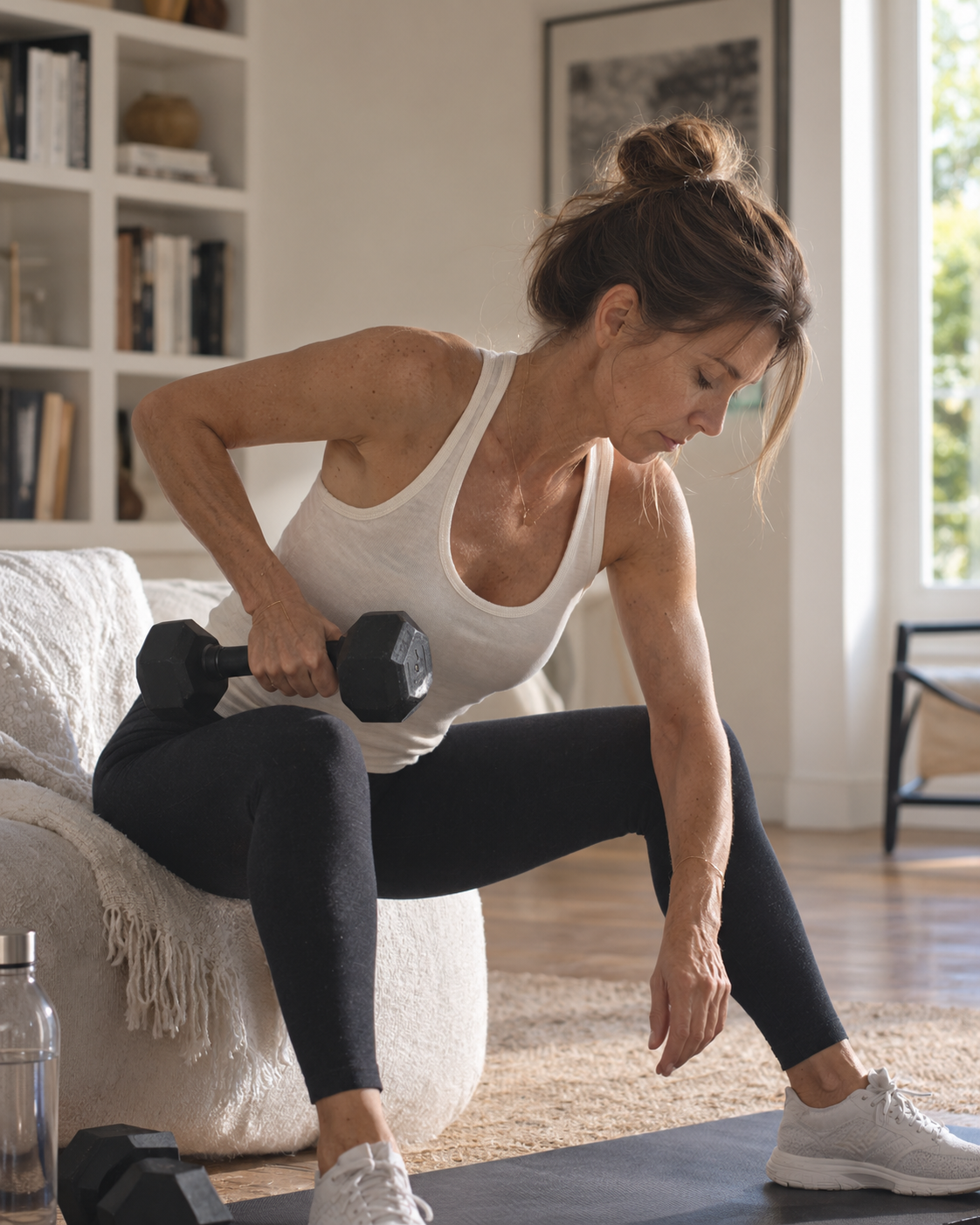
What if one of the simplest signs of how well we’re aging wasn’t hidden in a blood test—but in our ability to get up from a chair?
Walking up two flights of stairs without struggling. Carrying groceries. Getting up from the floor. Walking at a brisk pace. Lifting a suitcase. Maintaining your balance.
All of these everyday activities have one thing in common:
they require muscle.
We still tend to associate muscle mass with fitness, athletic performance, or appearance. But as we get older, muscle becomes much more than an aesthetic concern.
It becomes a question of function, independence, and long-term health.
And research has revealed something even more interesting: when it comes to healthy aging and longevity, how much muscle we have may be only part of the equation.
Muscle strength—and our ability to actually use that muscle—may matter just as much, if not more.
Yes.
Aging is progressively associated with changes in muscle mass, muscle quality, strength, and physical function.
But contrary to popular belief, we don’t suddenly wake up at 60 and start “losing muscle.”
The process is gradual, and the trajectory varies considerably from person to person.
Physical activity, nutrition, health conditions, periods of inactivity, hormonal changes, and body composition can all influence how our muscles age.
Most importantly, we don’t just lose:
muscle size.
We may also lose:
strength, power, and physical function.
And those changes do not necessarily happen at the same rate.
This may be the first—and most important—concept to understand.
You can have a reasonable amount of muscle without being particularly strong.
And two people with similar muscle mass can have very different levels of physical performance.
The landmark longitudinal Health ABC Study followed 1,880 older adults for three years. Researchers found that leg strength declined approximately three times faster than leg lean mass [1].
Even more striking: some participants who maintained—or even gained—lean mass still lost strength.
In other words:
MAINTAINING MUSCLE MASS DOES NOT GUARANTEE MAINTAINING MUSCLE STRENGTH.
Other longitudinal research has found the same general pattern: as we age, strength tends to decline faster than muscle mass [2].
Why?
Because strength is not simply a function of muscle size.
It also depends on muscle quality and architecture, the nervous system’s ability to activate muscle, motor-unit recruitment, and multiple physiological changes associated with aging.
That is why modern geriatric medicine no longer focuses exclusively on:
How much muscle do you have?
It also asks:
What can you actually do with it?
Age-related declines in muscle health can eventually contribute to a condition known as:
sarcopenia.
And the scientific definition of sarcopenia has changed significantly over time.
Historically, sarcopenia was largely viewed as a loss of muscle mass.
Today, the revised European consensus known as EWGSOP2 takes a much more functional approach [3].
Sarcopenia is now considered a muscle disease, with low muscle strength playing a central role.
In simplified terms:
LOW MUSCLE STRENGTH → probable sarcopenia
LOW STRENGTH + LOW MUSCLE QUANTITY OR QUALITY → confirmed sarcopenia
+ LOW PHYSICAL PERFORMANCE → severe sarcopenia [3]
That shift matters.
It means muscle aging can no longer be reduced to:
“How many pounds of muscle have I lost?”
The more meaningful question becomes:
“Can my muscles still easily do what I need them to do every day?”
Because muscle strength is involved in almost every movement that allows us to remain independent.
Take something as ordinary as:
getting out of a chair.
Your legs need to generate enough force to move your body weight against gravity.
The same applies to:
climbing stairs, getting out of a car, getting up from the floor, or carrying a heavy bag.
When you have a large reserve of strength, these movements require only a fraction of your maximum capacity.
As that reserve shrinks, however, the exact same task begins to demand a larger and larger percentage of what you can physically produce.
A staircase that barely registered at 40 can gradually become challenging later in life.
This is why muscle can be thought of as a form of:
FUNCTIONAL RESERVE.
We build more physical capacity than we need for ordinary daily activities.
And that extra capacity becomes particularly valuable when aging, illness, injury, or a period of inactivity temporarily reduces what we can do.
Aging itself is not the only issue.
Another major factor is:
deconditioning.
We move less.
We challenge certain muscles less often.
We gradually avoid activities that feel difficult.
And the body adapts to what we ask of it.
Periods of illness, bed rest, or hospitalization can accelerate this process—particularly in older adults who already have limited muscle reserve.
This is one reason why reaching older age with greater physical capacity may matter:
you have more reserve before everyday movements become difficult.
One of the most surprisingly useful tools in aging research literally fits in your hand.
It measures:
grip strength.
The test is remarkably simple.
You squeeze a device called a:
handgrip dynamometer
as hard as you can.
The device records how much force you produce, usually in kilograms.
But why would researchers measure the hand when they are interested in whole-body aging?
Because grip strength is a simple and relatively reproducible indicator of overall muscle strength and physical function.
More importantly, it has been studied in enormous populations.
And the findings are striking.
A meta-analysis of 42 studies involving more than 3 million participants found that lower grip strength was associated with a higher risk of mortality [4].
In that analysis, every 5-kg decrease in grip strength was associated with approximately a 16% higher relative risk of all-cause mortality.
Associations were also observed with cardiovascular mortality and certain cardiovascular outcomes [4].
But it is essential to understand what this finding does—and does not—mean.
It does not mean:
“Lose 5 kg of grip strength and your risk of dying automatically increases by 16%.”
This is a statistical association observed across populations.
Someone with lower muscle strength may also be:
less physically active, frailer, living with chronic illness, undernourished, or affected by other factors that influence both strength and health.
Grip strength is therefore particularly interesting as:
a marker of overall physical robustness.
It is not a crystal ball that can predict an individual person’s lifespan.
Probably because muscle strength indirectly captures a remarkable amount of biological information.
To generate force, you need:
functional muscle, a nervous system capable of recruiting it, sufficient energy, adequate nutrition, and a certain level of overall physical capacity.
Strength can therefore act as an integrated signal of how well the body is functioning.
That may help explain why such a simple measurement can be associated with far more complex health outcomes.
But one distinction is crucial:
STRENGTH IS A MARKER—NOT A SINGLE EXPLANATION.
Being able to crush a handgrip dynamometer is probably not what directly protects you from disease.
The test is more likely revealing part of your overall physiological and functional state.
Our legs can also tell us a great deal about how well we are aging.
Walking speed has long been used in geriatric medicine as a measure of physical function.
The same is true of extremely simple tests such as:
standing up repeatedly from a chair
or
standing up, walking a short distance, turning around, and sitting back down.
Why use such ordinary movements?
Because they replicate functions that are essential to everyday life.
Someone can have a relatively normal amount of muscle on a scan and still struggle to:
walk quickly, stand up, or maintain balance.
Once again:
MUSCLE MASS ≠ MUSCLE STRENGTH ≠ PHYSICAL FUNCTION.
They are related.
But they are not interchangeable.
Observational research consistently links sarcopenia with poorer health outcomes.
A meta-analysis including 56 studies and more than 42,000 participants found that sarcopenia was associated with a substantially higher risk of mortality [5].
More recent analyses have also found associations with:
mortality and functional decline.
But again, context matters.
This does not mean that:
sarcopenia alone causes all of these deaths.
People with sarcopenia may also have more chronic disease, poorer nutrition, lower levels of physical activity, or greater frailty.
The relationship between muscle and longevity is therefore complex.
What we can say with much greater confidence is that:
maintaining adequate muscle strength and physical function directly supports our ability to remain independent as we age.
And that alone is enormously important.
It is an appealing phrase.
It has also become extremely popular in the longevity space.
Scientifically, however, a more precise way to describe muscle may be:
MUSCLE IS A RESERVE OF PHYSICAL CAPACITY.
It gives us a margin.
A margin for walking.
A margin for carrying.
A margin for standing up.
A margin for recovering from inactivity.
A margin for continuing to live independently.
The goal is therefore not necessarily to build:
as much muscle as possible.
It is to maintain:
enough muscle, for as long as possible—and, above all, the ability to use it.
No.
Aging changes muscle physiology.
But that does not mean our muscular trajectory is completely predetermined.
Among the interventions studied for maintaining muscle strength and physical function with age, one consistently stands out:
resistance training—in other words, strength training.
Randomized controlled trials show that older adults can still respond meaningfully to resistance exercise.
A meta-analysis of 22 randomized trials in older adults with sarcopenia, for example, found substantial improvements in muscle strength following resistance training, while changes in muscle mass were more modest [6].
Another systematic review similarly found that exercise produced larger improvements in:
physical performance and strength
than in:
muscle mass itself [7].
More recent meta-analyses of randomized trials continue to show the same general pattern: resistance training consistently improves strength and several measures of physical function, while gains in muscle mass tend to be more modest and can vary depending on the population and measurement method [8].
In other words, you can become meaningfully more functional:
without undergoing a dramatic physical transformation.
And that is very good news.
Absolutely not.
The goal of strength training for healthy aging does not have to be aesthetic.
It can be intensely practical:
being able to push, pull, carry, squat, stand up, and move your own body with confidence.
A 70-year-old does not need the physique of a 30-year-old to experience major improvements in strength and physical function.
And contrary to another common misconception:
it is not too late to start.
Trials in older adults show that resistance training can still improve strength, physical function, and—in the right conditions—muscle mass [6–8].
Aging muscle remains:
adaptable.
That may be even more interesting.
Because the strategy is no longer simply about:
rebuilding what has already been lost.
It becomes about:
building physical reserve before you need it.
Imagine two people who gradually lose some muscular capacity as they age.
The first starts with relatively little strength.
The second begins with a much larger reserve.
Even if both experience age-related decline, they may not reach the point at which:
standing up, climbing stairs, or carrying groceries becomes difficult
at the same time.
That may be one of the simplest ways to understand the relationship between:
muscle and healthy aging.
The goal is not to build a body that somehow remains forever young.
It is to build:
more reserve.
For years, we looked at muscle aging primarily through the lens of:
muscle loss.
Modern research tells a more interesting story.
Muscle mass matters.
But muscle strength matters enormously.
And the ability to translate that strength into useful everyday movement may matter even more.
So the real goal is probably not:
MORE MUSCLE AT ALL COSTS.
It is:
MORE CAPACITY FOR LONGER.
Which leads to the practical questions.
How do you actually preserve muscle strength as you age?
Should you strength train two or three times a week?
Do you need to lift heavy weights?
Can lighter weights work?
How much protein do you really need after 40, 50, or 60?
Should protein be spread throughout the day?
Is creatine actually worth taking after 50?
And can you still build muscle after 70?
The good news is simple:
aging muscle can still be trained.
Even later in life, resistance training can improve muscle strength, physical function, and, under the right conditions, muscle mass [6–8].
That completely changes the way we should think about age-related muscle loss.
The goal is not to fight every birthday.
It is to maintain enough:
STRENGTH + MUSCLE + MOBILITY + RESERVE
to keep doing what we want to do for as long as possible.
So what does that actually look like?
Probably, yes.
The World Health Organization recommends that adults perform muscle-strengthening activities involving all major muscle groups on at least two days per week [9].
For adults 65 and older, multicomponent physical activity emphasizing functional balance and strength training is also recommended several days per week to help preserve physical capacity and reduce the risk of falls [9].
That does not necessarily mean:
going to the gym five days a week.
Resistance training can take many forms:
machines, dumbbells, resistance bands, bodyweight exercises, or functional movements.
What matters most is regularly giving your muscles enough resistance to create a reason for them to adapt.
For many people, it is an excellent starting point.
International guidelines recommend training the major muscle groups at least twice a week [9].
And research suggests that you do not need to spend endless hours lifting weights to benefit.
A large network meta-analysis involving 151 randomized trials and 6,306 participants compared different resistance-training prescriptions in older adults [10].
The overall message is reassuring:
many different approaches work.
Different frequencies, intensities, and training volumes can improve strength, lean mass, or physical function.
Higher training volumes may help maximize certain adaptations, particularly strength, but the evidence does not suggest that you need an extraordinarily complicated training program to benefit [10].
For most people, the first goal can therefore be much simpler:
STRENGTH TRAIN CONSISTENTLY.
Then worry about optimizing the details.
Not necessarily.
This is one of the most common questions around strength training and aging.
If your goal is to maximize strength, relatively heavy resistance has clear advantages.
But lighter weights can also stimulate muscle growth when the exercise is sufficiently challenging.
Meta-analyses comparing lower- and higher-load resistance training generally find that:
HEAVIER LOADS → better for maximizing strength
while:
MUSCLE GROWTH → can occur across a much broader range of loads
when the sets provide a sufficient training stimulus [11].
In practical terms, you do not necessarily need to lift extremely heavy weights to protect your muscles as you age.
That gives people who are new to resistance training—or who simply do not want to lift very heavy—far more options.
No.
You do not need to end every set physically incapable of performing another repetition.
Training to failure can be a tool.
It is not a requirement.
Current evidence does not show that reaching momentary muscle failure is systematically necessary to increase strength or muscle size [12].
For healthy aging, that leads to a much more sustainable principle:
exercise needs to be challenging enough to trigger adaptation without turning every workout into an ordeal.
Consistency over years is likely far more valuable than one heroic workout followed by ten days of doing nothing.
Rather than searching for one particular “longevity muscle,” the goal should be maintaining whole-body physical capacity.
The legs are obviously crucial.
They allow us to:
walk, stand up, climb stairs, and maintain balance.
But upper-body strength also matters for:
carrying, pulling, pushing, gripping, and moving objects.
A strength-training program for healthy aging should therefore work the major muscle groups and maintain several basic physical abilities:
PUSH
PULL
CARRY
SQUAT / STAND
STABILIZE
You do not need to memorize 50 different exercises.
Your body simply needs to remain capable of:
producing force in different situations.
Yes.
And after 70.
A meta-analysis examining muscle hypertrophy in adults 65 and older found that resistance training can still increase muscle size, including changes at the muscle-fiber level [13].
The capacity to adapt is not identical to that of a 20-year-old.
But it does not disappear.
That distinction matters:
AGING MAY REDUCE OUR CAPACITY TO ADAPT.
It does not mean:
AGING ELIMINATES OUR CAPACITY TO ADAPT.
Skeletal muscle remains remarkably plastic throughout life.
Even very old muscle can respond to training.
One of the classic studies in this field was published in 1990.
Maria Fiatarone and colleagues studied frail nursing-home residents of very advanced age.
Their average age was approximately:
90 years old.
After eight weeks of high-intensity resistance training, participants significantly increased their strength, and muscle size increased as well [14].
The study was small—only nine participants completed the exercise program—so it should obviously not be generalized to every 90-year-old.
But it helped establish an important principle:
very old muscle can still respond to resistance training.
Exercise provides the stimulus.
Nutrition provides, among other things:
the amino acids required to build muscle proteins.
That is why protein intake becomes particularly relevant as we age.
The standard adult protein recommendation is often discussed around:
0.8 grams of protein per kilogram of body weight per day.
But several expert groups have suggested that higher intakes may be appropriate for older adults to help preserve muscle mass and function.
The PROT-AGE Study Group, for example, proposed approximately:
1.0–1.2 g/kg/day
for most healthy adults over 65 [15].
For someone weighing 70 kg—or about 154 lb—that would equal approximately:
70–84 grams of protein per day.
Requirements may be higher in certain situations, including higher levels of physical activity or illness [15].
These numbers should not be treated as a universal prescription, however.
Individual health status—including certain kidney conditions—can change protein recommendations.
No.
The useful question is not:
“At what birthday should I start eating more protein?”
It is:
“Am I eating enough protein for my body weight, activity level, age, health, and goals?”
A physically active 45-year-old obviously does not have the same nutritional context as a sedentary person of the same age.
And increasing protein is not automatically beneficial when someone is already getting enough.
More is not always better.
One reason is a phenomenon known as:
anabolic resistance.
In simple terms, aging muscle may become somewhat less responsive to anabolic stimuli, including protein intake.
That does not mean older muscle stops responding.
It means that providing a sufficient nutritional and training stimulus becomes increasingly important.
This is why the combination of:
RESISTANCE TRAINING + ADEQUATE PROTEIN
is more useful than thinking about:
strength training
or
protein intake
in isolation.
Probably not ideally.
Muscle protein synthesis responds to protein intake at different points throughout the day.
Yet many Western diets have a highly uneven protein distribution:
very little at breakfast, some at lunch, and a large amount at dinner.
Researchers have therefore investigated whether spreading protein more evenly across meals might be beneficial.
The idea makes physiological sense:
stimulate muscle protein synthesis several times throughout the day rather than concentrating most of your protein into a single meal.
Some studies support this strategy, although the long-term evidence is less definitive than the highly specific protein-timing rules often promoted online.
In practical terms, a reasonable strategy is simply to include:
a meaningful source of protein at multiple meals
rather than obsessing over a narrow “anabolic window.”
No.
Chicken, fish, eggs, dairy, legumes, soy, and other foods can all contribute to an adequate protein intake.
Protein powder has one major advantage:
convenience.
It makes it easy to consume a meaningful amount of protein without preparing another meal.
But it does not have a mysterious ability to bypass normal human physiology.
Trials suggest that protein supplementation alongside resistance training can provide additional benefits for some outcomes, but the effect is generally modest, particularly when dietary protein intake is already adequate [16].
So:
PROTEIN POWDER = A TOOL
not:
PROTEIN POWDER = A LONGEVITY TREATMENT.
Leucine is an essential amino acid with an important role in regulating muscle protein synthesis.
Among other mechanisms, it acts as a nutritional signal involved in activating:
mTORC1.
That is one reason leucine-rich protein sources are often discussed in the context of maintaining muscle with age.
But again, the practical message is simpler than the marketing:
overall protein quality and quantity matter.
Isolating a single amino acid does not replace adequate nutrition or resistance training.
Creatine is probably the supplement that deserves the most attention in this particular conversation.
It has long been used in sports because of its role in the phosphocreatine energy system and its ability to support certain forms of high-intensity performance.
But creatine has also been extensively studied in older adults.
A meta-analysis of 22 studies involving 721 participants found that adding creatine to resistance training in older adults resulted in greater gains in lean mass and strength than resistance training alone [17].
More recent evidence adds some useful nuance.
A 2026 meta-analysis of 11 randomized controlled trials concluded that adding creatine to resistance training probably provides a small additional benefit for muscle strength, while the additional effects on muscle mass and physical performance remain less certain [18].
In other words:
CREATINE → INTERESTING
but not:
CREATINE → GUARANTEED MUSCLE.
Training remains the foundation.
No.
Creatine is not a male hormone.
Creatine metabolism is relevant to both women and men, and supplementation has been studied in women as well, including postmenopausal women.
The idea that creatine is exclusively a bodybuilding supplement for young men is outdated.
That said, as with any supplement, whether it makes sense depends on the individual context.
Both.
That may be the least exciting—and most useful—answer.
Cardio and resistance training do not serve exactly the same purpose.
Aerobic exercise contributes particularly to:
cardiorespiratory fitness, cardiovascular health, and metabolic health.
Resistance training contributes particularly to:
muscle strength, physical function, and preservation of lean mass.
Pitting one against the other therefore makes little sense.
A more comprehensive approach to healthy aging combines:
AEROBIC ACTIVITY + STRENGTH TRAINING + MOBILITY/BALANCE
rather than searching for one perfect form of exercise that does everything.
Walking is excellent.
But walking and strength training are not the same thing.
Walking obviously uses the muscles of the legs, increases overall physical activity, and can help maintain physical function.
But when the specific goal is to preserve or increase muscle strength, an additional resistance stimulus is generally needed.
This becomes particularly relevant when normal daily activities become:
too easy to force the muscle to adapt.
The body adapts to the demands we place on it.
If we want to preserve the ability to generate meaningful force:
we occasionally have to ask our muscles to generate meaningful force.
There is no single at-home test that perfectly measures muscle health.
But everyday abilities can tell us a great deal.
Ask yourself:
Can you stand up easily from a chair without using your arms?
Can you climb several flights of stairs without major difficulty?
Can you carry your groceries?
Can you get up from the floor?
Has your walking speed noticeably slowed down?
In clinical settings, more standardized tools can be used, including:
grip strength, chair-stand testing, walking speed, and the Short Physical Performance Battery.
The goal is not to turn everyone into a walking laboratory.
It is to notice:
a progressive loss of physical capacity.
The chair-stand test is particularly useful because it reproduces one of the most fundamental movements of daily life.
One version used in sarcopenia screening measures how long it takes to:
stand up from a chair five times without using your arms.
In the EWGSOP2 consensus, taking more than 15 seconds to complete five chair stands is one of the thresholds used to identify low muscle strength [3].
But that number needs to be interpreted in the appropriate clinical context.
It is not:
an at-home diagnosis.
What it shows is something much more interesting:
an activity as ordinary as:
standing up from a chair
can provide useful information about muscle function.
It can be useful, particularly in a clinical or longitudinal context.
EWGSOP2, for example, uses low grip-strength thresholds of:
<27 kg for men
<16 kg for women [3].
But these thresholds are designed for sarcopenia screening in a specific clinical framework.
They do not mean:
26 kg = unhealthy
and
28 kg = healthy.
Strength varies with sex, body size, anatomy, testing technique, and many other factors.
What can also be informative over time is:
the trajectory.
A substantial, unexplained decline in physical capacity deserves more attention than obsessing over a single number.
Age is only one factor.
Muscle loss can be accelerated by:
physical inactivity, immobilization, certain diseases, inadequate calorie or protein intake, and various inflammatory or metabolic conditions.
Hospitalization or prolonged bed rest can be particularly challenging for an older adult.
Why?
Because that person may already be starting with:
less reserve.
Losing part of that reserve can be enough to push someone from independent living toward functional difficulty.
Once again, this highlights why building and preserving strength before you desperately need it matters.
In the context of normal aging, the much larger public-health concern is generally:
too little strength, too little activity, and loss of physical function
rather than physiologically excessive muscle mass.
But that does not mean:
more muscle always equals greater longevity.
Observational research does not demonstrate that continually accumulating more and more muscle indefinitely extends lifespan.
And some practices used to artificially maximize muscle mass can obviously introduce entirely different health risks.
The healthy-aging goal is therefore not:
MAXIMUM MUSCLE.
It is:
ENOUGH MUSCLE. ENOUGH STRENGTH. FOR AS LONG AS POSSIBLE.
There is no single age at which muscle loss suddenly begins. Changes occur gradually and vary considerably depending on physical activity, nutrition, health, and other individual factors. Muscle loss generally becomes more significant as we get older.
Yes. Resistance-training trials show that older adults can still increase strength and, under the right conditions, muscle mass [10,13].
Yes. The capacity to adapt may decline with age, but it does not disappear. Strength gains have been documented even in very old populations [14].
International guidelines recommend muscle-strengthening activities involving the major muscle groups on at least two days per week [9].
Not necessarily. Relatively heavy loads are particularly effective for maximizing strength, but lighter loads can also stimulate muscle growth when the exercise is sufficiently challenging [11].
Several expert groups recommend approximately 1.0–1.2 g/kg/day for healthy older adults, although individual requirements vary according to physical activity and health status [15].
No. They can be convenient, but they are not required if your diet already provides enough protein.
Evidence suggests that creatine combined with resistance training may provide a small additional benefit, particularly for muscle strength [17,18]. It does not replace exercise.
Walking is excellent for overall health and physical function, but it does not necessarily replace resistance training when the specific goal is to preserve or increase strength.
No. Research shows that older adults retain the ability to adapt to resistance training [10,13,14].
Strip away the complicated training programs, supplements, and fitness trends, and the scientific literature brings us back to a few surprisingly simple principles:
USE YOUR MUSCLES REGULARLY.
GIVE THEM ENOUGH RESISTANCE TO KEEP ADAPTING.
EAT ENOUGH—INCLUDING ENOUGH PROTEIN.
KEEP WALKING AND MAINTAIN YOUR CARDIORESPIRATORY FITNESS.
AVOID LONG PERIODS OF INACTIVITY WHENEVER POSSIBLE.
And perhaps most importantly:
START BEFORE LOSING STRENGTH BECOMES A PROBLEM.
Not in the sense that it can stop aging.
We are going to age, with or without dumbbells.
But maintaining strength can change something far more tangible:
what we remain capable of doing as we get older.
Walking briskly.
Carrying a suitcase.
Climbing stairs.
Getting up from the floor.
Traveling.
Exercising.
Living independently.
Continuing to do ordinary things without having them become extraordinary challenges.
Muscle mass matters.
But modern aging research encourages us to look beyond the mirror—and beyond the scale.
The more meaningful question may not be:
“How much muscle do I have?”
It may be:
“How much physical capacity will I still have 10, 20, or 30 years from now?”
Because when it comes to healthy aging, building muscle today may ultimately be about building:
reserve for tomorrow.
[1] Goodpaster BH, Park SW, Harris TB, et al. The loss of skeletal muscle strength, mass, and quality in older adults: the Health, Aging and Body Composition Study. J Gerontol A Biol Sci Med Sci. 2006;61(10):1059–1064.
URL: https://pubmed.ncbi.nlm.nih.gov/17077199/
[2] Mitchell WK, Williams J, Atherton P, Larvin M, Lund J, Narici M. Sarcopenia, dynapenia, and the impact of advancing age on human skeletal muscle size and strength: a quantitative review. Frontiers in Physiology. 2012;3:260.
URL: https://pubmed.ncbi.nlm.nih.gov/22934016/
[3] Cruz-Jentoft AJ, Bahat G, Bauer J, et al. Sarcopenia: revised European consensus on definition and diagnosis. Age and Ageing. 2019;48(1):16–31.
URL: https://pubmed.ncbi.nlm.nih.gov/30312372/
[4] Wu Y, Wang W, Liu T, Zhang D. Association of grip strength with risk of all-cause mortality, cardiovascular diseases, and cancer in community-dwelling populations: a meta-analysis of prospective cohort studies. Journal of the American Medical Directors Association. 2017;18(6):551.e17–551.e35.
URL: https://pubmed.ncbi.nlm.nih.gov/28549705/
[5] Xu J, Wan CS, Ktoris K, et al. Sarcopenia is associated with mortality in adults: a systematic review and meta-analysis. 2021.
URL: https://pubmed.ncbi.nlm.nih.gov/34315158/
[6] Vlietstra L, Hendrickx W, Waters DL. Exercise interventions in healthy older adults with sarcopenia: a systematic review and meta-analysis.
URL: https://pubmed.ncbi.nlm.nih.gov/30470872/
[7] Bao W, Sun Y, Zhang T, et al. Exercise programs for muscle mass, muscle strength and physical performance in older adults with sarcopenia: a systematic review and meta-analysis. Aging & Disease. 2020.
URL: https://pubmed.ncbi.nlm.nih.gov/32257534/
[8] Resistance training interventions and outcomes in older adults with sarcopenia: systematic review and meta-analysis of randomized controlled trials. 2025.
URL: https://pubmed.ncbi.nlm.nih.gov/41212331/
[9] World Health Organization. WHO Guidelines on Physical Activity and Sedentary Behaviour. Geneva: WHO; 2020.
URL: https://www.who.int/publications/i/item/9789240015128
[10] Lopez P, et al. Resistance training prescription for muscle strength and hypertrophy in healthy adults: systematic review and network meta-analysis.
URL: https://pubmed.ncbi.nlm.nih.gov/39405023/
[11] Schoenfeld BJ, Grgic J, Ogborn D, Krieger JW. Strength and hypertrophy adaptations between low- vs. high-load resistance training: a systematic review and meta-analysis. Journal of Strength and Conditioning Research. 2017;31(12):3508–3523.
URL: https://pubmed.ncbi.nlm.nih.gov/28834797/
[12] Grgic J, Schoenfeld BJ, Orazem J, Sabol F. Effects of resistance training performed to repetition failure or non-failure on muscular strength and hypertrophy: a systematic review and meta-analysis. Journal of Sport and Health Science. 2022;11(2):202–211.
URL: https://pubmed.ncbi.nlm.nih.gov/33497853/
[13] Skeletal muscle hypertrophy following resistance training in adults aged 65 years and older: systematic review and meta-analysis. 2024.
URL: https://pubmed.ncbi.nlm.nih.gov/39579806/
[14] Fiatarone MA, Marks EC, Ryan ND, Meredith CN, Lipsitz LA, Evans WJ. High-intensity strength training in nonagenarians. Effects on skeletal muscle. JAMA. 1990;263(22):3029–3034.
URL: https://pubmed.ncbi.nlm.nih.gov/2342214/
[15] Bauer J, Biolo G, Cederholm T, et al. Evidence-based recommendations for optimal dietary protein intake in older people: a position paper from the PROT-AGE Study Group. Journal of the American Medical Directors Association. 2013;14(8):542–559.
URL: https://pubmed.ncbi.nlm.nih.gov/23867520/
[16] Cermak NM, Res PT, de Groot LCPGM, Saris WHM, van Loon LJC. Protein supplementation augments the adaptive response of skeletal muscle to resistance-type exercise training: a meta-analysis. American Journal of Clinical Nutrition. 2012;96(6):1454–1464.
URL: https://pubmed.ncbi.nlm.nih.gov/23134885/
[17] Chilibeck PD, Kaviani M, Candow DG, Zello GA. Effect of creatine supplementation during resistance training on lean tissue mass and muscular strength in older adults: a meta-analysis. Open Access Journal of Sports Medicine. 2017;8:213–226.
URL: https://pubmed.ncbi.nlm.nih.gov/29138605/
[18] Creatine supplementation combined with resistance training in older adults: systematic review and meta-analysis of randomized controlled trials. 2026.
URL: https://pubmed.ncbi.nlm.nih.gov/42712402/