DIETARY SUPPLEMENTS

Découvrez 08 - Slim
Your ally for a slimmer figure and healthy weight

Journal
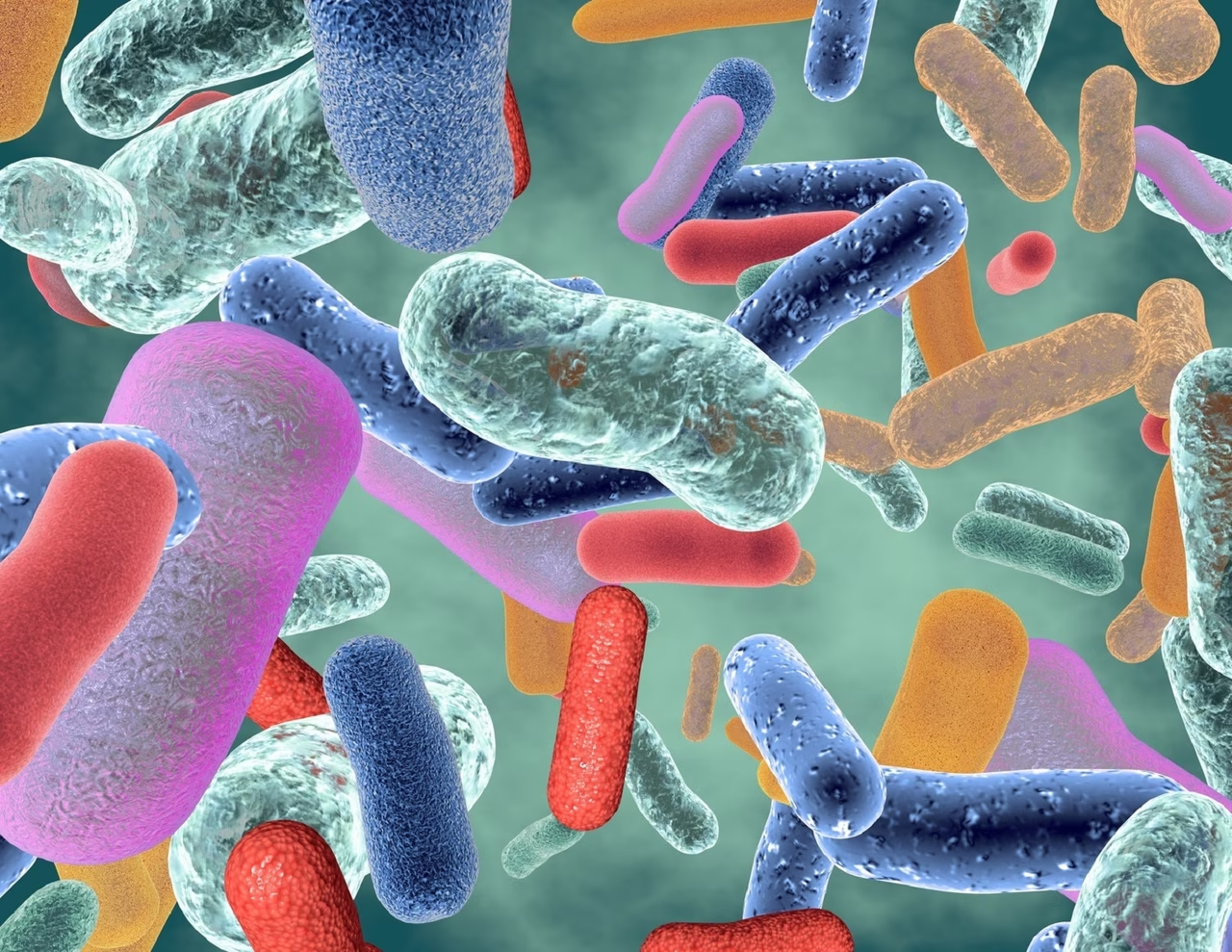
Over the past decade, the gut microbiome has become one of the most important topics in modern medicine.
Once viewed simply as a collection of bacteria living in the digestive tract, the microbiome is now recognized as a major regulator of human health.
Advances in molecular biology, genomic sequencing, systems biology, and microbiome research have fundamentally transformed our understanding of this complex ecosystem.
Scientists estimate that the human gut contains tens of trillions of microorganisms, including bacteria, viruses, fungi, and other microbes that live in constant interaction with the body [1,2].
Together, these microorganisms influence numerous biological functions, including:
Today, a growing body of evidence suggests that disruptions in the gut microbiome—commonly referred to as dysbiosis—are associated with a wide range of chronic conditions, including digestive disorders, metabolic disease, inflammatory conditions, immune dysfunction, and even certain neurological disorders [3,4].
The encouraging news is that the gut microbiome remains remarkably adaptable.
Unlike our genes, the microbiome can change rapidly in response to diet, lifestyle, environment, medications, and targeted interventions.
But how do you know whether your microbiome is out of balance? Can you actually repair it? And what does the science say about the most effective strategies for restoring gut health?
The gut microbiome refers to the collection of microorganisms that inhabit the gastrointestinal tract.
While bacteria receive most of the attention, the microbiome is far more diverse than many people realize.
It includes:
Collectively, these microorganisms contain a vast genetic library known as the microbiome.
This microbial gene pool contains millions of genes—far more than the approximately 20,000 protein-coding genes found in the human genome [2].
Because of its profound influence on physiology, some scientists now describe the gut microbiome as a functional organ in its own right.
The gut is therefore much more than a digestive system.
It serves as one of the body’s most important interfaces between the external environment and internal physiology.
Every day, the microbiome contributes to:
Importantly, microbiome health is not determined solely by the number of bacteria present.
Researchers generally focus on two major characteristics:
A diverse microbiome appears to be more resilient and better able to adapt to environmental stressors [5].
For this reason, diversity is often considered one of the strongest markers of microbiome health.
For many years, scientists viewed the microbiome primarily as a digestive tool.
That perspective has changed dramatically.
Modern research shows that the microbiome influences virtually every major physiological system in the body.
Approximately 70% of the body’s immune cells are located within or around the gastrointestinal tract [6].
The microbiome plays a critical role in educating and regulating the immune system.
Among its many functions, it helps regulate:
When this delicate balance is disrupted, the risk of chronic inflammation and immune dysfunction increases.
Researchers now consider the microbiome one of the most important regulators of immune resilience.
The microbiome also plays a major role in energy metabolism.
Gut microbes influence:
Multiple studies have identified specific microbial patterns associated with obesity, type 2 diabetes, and metabolic syndrome [7].
Researchers now recognize the microbiome as a key contributor to metabolic flexibility—the body’s ability to efficiently switch between carbohydrate and fat utilization.
One of the most fascinating discoveries in modern medicine is the existence of the gut-brain axis.
The gut and the brain communicate continuously through:
The microbiome contributes to the production or modulation of several key neurotransmitters, including:
It also influences multiple biological pathways involved in stress regulation and emotional resilience [8].
This helps explain why disturbances in gut health are often associated with:
The gut is sometimes referred to as the body’s “second brain,” not because it thinks, but because of its extensive communication network with the central nervous system.
Some of the most exciting discoveries in recent years involve the relationship between the microbiome and healthy aging.
Researchers have identified specific microbial characteristics associated with:
The gut microbiome is now considered one of the major biological determinants of healthy aging.
As scientists continue to study centenarian populations around the world, microbiome diversity consistently emerges as one of the most important predictors of long-term health.
Like any ecosystem, the microbiome can be disrupted by environmental pressures.
Several factors have been consistently linked to microbiome deterioration.
Antibiotics have transformed modern medicine and saved countless lives.
However, they do not selectively eliminate harmful bacteria.
In many cases, they also reduce populations of beneficial microbes that support gut health [10].
Some microbial changes can persist for months after antibiotic treatment.
Repeated antibiotic exposure may have cumulative effects on microbiome diversity.
The standard Western diet is characterized by:
This dietary pattern is consistently associated with reduced microbial diversity and a less resilient microbiome [11].
Stress has profound effects on digestive physiology.
Persistently elevated cortisol levels can influence:
Researchers increasingly recognize chronic stress as a major contributor to microbiome dysfunction.
Scientists now describe the existence of a circadian microbiome.
Many bacterial populations follow biological rhythms that are influenced by the sleep-wake cycle.
Sleep deprivation and circadian disruption appear capable of altering microbial composition and metabolic function [13].
Regular physical activity is associated with greater microbial diversity.
Conversely, sedentary behavior has been linked to less favorable microbial profiles [14].
Certain intestinal infections can significantly disrupt the microbiome.
In some individuals, microbial changes persist long after the original infection has resolved.
This may contribute to ongoing digestive symptoms and reduced microbiome resilience.
Because the gut microbiome influences so many biological systems, the symptoms of dysbiosis can extend far beyond digestion.
There is no single symptom that definitively confirms an imbalanced microbiome.
However, researchers have identified several patterns that are frequently associated with reduced microbial diversity and gut dysfunction.
Digestive issues are often the most obvious warning signs.
Common symptoms include:
While these symptoms can have multiple causes, they are frequently associated with microbial imbalances and disruptions in gut function.
Many individuals with poor gut health report persistent fatigue and reduced vitality.
Several mechanisms may contribute to this relationship, including:
Because the microbiome influences multiple systems involved in cellular energy production, disturbances in gut health may indirectly affect mitochondrial function and overall energy levels.
The gut and brain are in constant communication.
As a result, changes in microbiome composition may influence cognitive performance.
Common complaints include:
This phenomenon is commonly referred to as brain fog.
Although many factors contribute to cognitive performance, growing evidence suggests that gut health plays a meaningful role.
The microbiome influences several neurotransmitters involved in emotional regulation.
Alterations in microbial composition have been associated with:
Researchers continue to investigate how microbial metabolites influence brain chemistry and psychological well-being.
Certain gut bacteria influence pathways involved in:
Microbial imbalances may contribute to:
This is one reason why microbiome health has become an important area of research in obesity and metabolic disease.
Scientists now recognize the existence of a gut-skin axis.
Microbiome imbalances have been associated with several inflammatory skin conditions, including:
Although skin health is influenced by many factors, gut health appears to be one of the most important underlying contributors.
A less diverse microbiome may also be associated with:
While none of these symptoms alone proves the presence of dysbiosis, their coexistence often highlights the importance of evaluating gut health as part of a broader health assessment.
One of the most important discoveries in modern medicine is that the microbiome does not operate in isolation.
The gut communicates continuously with virtually every major physiological system.
The microbiome acts as a biological command center, influencing multiple pathways throughout the body.
The gut and brain maintain constant communication.
This dialogue involves:
This communication network helps explain why gut health can influence:
Researchers increasingly view mental and emotional health through the lens of gut-brain interactions.
The microbiome plays a central role in immune education and regulation.
When microbial balance is disrupted, the risk of:
may increase.
A healthy microbiome helps maintain immune balance while preventing excessive inflammatory responses.
Everything absorbed from the intestine travels directly to the liver through the portal circulation.
As a result, the microbiome exerts a direct influence on:
This relationship is now widely recognized as the gut-liver axis.
Gut bacteria produce a wide range of metabolites capable of influencing:
This relationship explains why the microbiome has become one of the most important areas of research in obesity, diabetes, and metabolic health [18].
Current research makes one thing clear:
There is no single supplement, probiotic, or shortcut capable of instantly rebuilding the microbiome.
Long-term microbiome restoration requires creating an environment that supports microbial diversity, resilience, and balance.
Dietary fiber is the primary fuel source for many beneficial gut bacteria.
When fiber reaches the colon, gut microbes ferment it and produce compounds known as short-chain fatty acids, including:
These metabolites play important roles in:
Some of the best sources of fiber include:
A fiber-rich diet consistently ranks among the most effective strategies for improving microbiome diversity.
One of the most influential findings in microbiome research comes from the American Gut Project.
Researchers observed that individuals consuming more than 30 different plant foods per week tended to have significantly greater microbial diversity [20].
Each plant provides unique:
The goal is not simply to eat more vegetables.
The goal is to increase variety.
A diverse microbiome thrives on a diverse diet.
Fermented foods naturally contain microorganisms and fermentation-derived compounds that may support microbial diversity.
Examples include:
A landmark study published in Cell found that a diet rich in fermented foods increased microbiome diversity while simultaneously reducing several inflammatory markers [21].
These findings suggest that fermented foods may support both gut health and systemic immune regulation.
Ultra-processed foods are among the most significant contributors to modern microbiome disruption.
They are typically characterized by:
Multiple studies associate high consumption of ultra-processed foods with reduced microbial diversity and increased inflammation [22].
Reducing their presence in the diet is often one of the fastest ways to create a healthier environment for beneficial microbes.
The microbiome follows circadian rhythms just like many other biological systems.
Sleep disruption has been associated with changes in:
Research suggests that even short-term sleep restriction can negatively affect gut health [23].
For this reason, quality sleep should be viewed as a core component of any microbiome restoration strategy rather than a separate health objective.
Chronic stress is one of the most overlooked threats to gut health.
When cortisol levels remain elevated for extended periods, multiple aspects of digestive physiology can be affected, including:
Research shows that chronic stress can significantly alter the composition of the gut microbiome in a relatively short period of time [24].
Importantly, this relationship works both ways.
Stress influences the microbiome, but the microbiome also influences how the body responds to stress.
This bidirectional communication is one of the defining characteristics of the gut-brain axis.
Strategies that may help improve stress resilience include:
In many cases, restoring the microbiome and managing stress should be viewed as complementary goals rather than separate interventions.
Probiotics are among the most widely used tools for supporting gut health.
However, one of the biggest misconceptions is that all probiotics produce the same effects.
In reality, outcomes depend on:
There is no universal probiotic capable of solving every microbiome-related issue.
Different strains have been studied for different applications, including:
Probiotics should therefore be viewed as one component of a broader microbiome-support strategy rather than a standalone solution.
Without dietary and lifestyle changes, their long-term impact is often limited.
This is one of the most common questions in microbiome science.
The answer depends on several factors, including:
The encouraging news is that the microbiome can begin responding surprisingly quickly.
Studies have shown that meaningful dietary changes can alter microbial composition within just a few days [25].
However, building a diverse and resilient microbiome is a longer-term process.
In most individuals:
The microbiome should be viewed as an ecosystem.
The goal is not a quick fix, but the gradual creation of an environment that allows beneficial microbes to thrive over time.
One of the most exciting developments in longevity science is the growing recognition of the microbiome’s role in healthy aging.
As people age, several changes commonly occur:
Researchers often use the term inflammaging to describe the chronic low-grade inflammation associated with aging [26].
The microbiome is now considered one of the major regulators of this process.
Certain beneficial bacteria produce short-chain fatty acids such as butyrate.
Butyrate has attracted significant scientific interest because it appears to support:
Studies of centenarian populations have revealed distinctive microbial patterns associated with exceptional longevity and healthier aging trajectories [28].
For this reason, many scientists now consider the microbiome one of the foundational pillars of long-term health and lifespan.
The Cellular Nutrition® approach developed by Dr. Espinasse is based on a fundamental principle: health begins at the cellular level.
Within this framework, the gut microbiome occupies a central position.
The intestine serves as one of the body’s primary interfaces with the external environment.
Every day, the microbiome communicates with:
Cellular Nutrition® views the microbiome not simply as a digestive component but as a major regulator of cellular health.
This perspective is supported by a growing body of scientific evidence demonstrating that the microbiome influences:
For this reason, maintaining a healthy microbiome is considered one of the foundations of long-term vitality, resilience, and longevity.
The gut microbiome is now recognized as one of the most influential regulators of human health.
Research over the past two decades has revealed that its effects extend far beyond digestion.
The microbiome influences:
The good news is that the microbiome remains remarkably adaptable.
Even after years of imbalance, it retains a significant capacity for recovery.
Current evidence suggests that restoring gut health depends on a combination of:
Ultimately, rebuilding the microbiome is not about finding a single solution.
It is about creating the conditions that allow microbial diversity, resilience, and balance to flourish.
From a longevity perspective, supporting the microbiome may be one of the most powerful investments we can make in our future health.
Yes. The microbiome is dynamic and continuously responds to diet, lifestyle, environment, medications, and targeted interventions.
Common signs include bloating, digestive discomfort, irregular bowel movements, fatigue, brain fog, food cravings, skin issues, and reduced immune resilience.
Vegetables, fruits, legumes, nuts, seeds, whole grains, and fermented foods are among the most beneficial foods for supporting microbial diversity.
No. Probiotics can be helpful, but they are most effective when combined with dietary and lifestyle changes that support microbial health.
Some microbial changes can occur within days, but meaningful and lasting improvements typically require weeks to months of consistent habits.
There is no single best supplement. The ideal approach depends on an individual’s symptoms, health status, microbiome profile, and goals.
Dr. Valérie Espinasse is a Doctor of Pharmacy, specialist in Predictive and Preventive Medicine, and expert in micronutrition.
For more than twenty years, she has helped patients optimize their health through an evidence-based approach integrating cellular biology, precision nutrition, functional medicine, and preventive healthcare.
Through her proprietary Cellular Nutrition® framework, Dr. Espinasse focuses on the biological mechanisms that influence energy production, low-grade inflammation, gut microbiome health, metabolic resilience, and healthy aging.
Over the course of her career, she has supported more than 20,000 patients and conducted more than 15,000 advanced biological assessments.
Learn more:
https://methode-espinasse.com
[1] Sender R, Fuchs S, Milo R.
Revised Estimates for the Number of Human and Bacteria Cells in the Body.
Cell. 2016.
https://www.cell.com/cell/fulltext/S0092-8674(16)00053-2
https://pubmed.ncbi.nlm.nih.gov/27541692/
[2] Human Microbiome Project Consortium.
Structure, Function and Diversity of the Healthy Human Microbiome.
Nature. 2012.
https://www.nature.com/articles/nature11234
https://pubmed.ncbi.nlm.nih.gov/22699609/
[3] Integrative HMP Research Network Consortium.
The Integrative Human Microbiome Project.
Nature. 2019.
https://www.nature.com/articles/s41586-019-1238-8
https://pubmed.ncbi.nlm.nih.gov/31142853/
[4] Fan Y, Pedersen O.
Gut Microbiota in Human Metabolic Health and Disease.
Nature Reviews Microbiology. 2021.
https://www.nature.com/articles/s41579-020-0433-9
https://pubmed.ncbi.nlm.nih.gov/33208926/
[5] Lozupone CA, Stombaugh JI, Gordon JI, Jansson JK, Knight R.
Diversity, Stability and Resilience of the Human Gut Microbiota.
Nature. 2012.
https://www.nature.com/articles/nature11550
https://pubmed.ncbi.nlm.nih.gov/22972295/
[6] Belkaid Y, Hand TW.
Role of the Microbiota in Immunity and Inflammation.
Cell. 2014.
https://www.cell.com/cell/fulltext/S0092-8674(14)01283-7
https://pubmed.ncbi.nlm.nih.gov/25409805/
[7] Cani PD.
Human Gut Microbiome and Obesity.
Nature Reviews Gastroenterology & Hepatology. 2019.
https://www.nature.com/articles/s41575-019-0157-1
https://pubmed.ncbi.nlm.nih.gov/31068726/
[8] Cryan JF, O’Riordan KJ, Cowan CSM et al.
The Microbiota-Gut-Brain Axis.
Physiological Reviews. 2019.
https://journals.physiology.org/doi/full/10.1152/physrev.00018.2018
https://pubmed.ncbi.nlm.nih.gov/31460832/
[9] Claesson MJ, Jeffery IB, Conde S et al.
Gut Microbiota Composition Correlates with Diet and Health in the Elderly.
Nature. 2012.
https://www.nature.com/articles/nature11319
https://pubmed.ncbi.nlm.nih.gov/22797518/
[10] Dethlefsen L, Relman DA.
Incomplete Recovery and Individualized Responses of the Human Distal Gut Microbiota to Repeated Antibiotic Perturbation.
PNAS. 2011.
https://www.pnas.org/doi/10.1073/pnas.1000087107
https://pubmed.ncbi.nlm.nih.gov/20847294/
[11] Zinöcker MK, Lindseth IA.
The Western Diet–Microbiome–Host Interaction.
Nutrients. 2018.
https://www.mdpi.com/2072-6643/10/3/365
https://pubmed.ncbi.nlm.nih.gov/29570645/
[12] Foster JA, Rinaman L, Cryan JF.
Stress and the Gut-Brain Axis.
Trends in Neurosciences. 2017.
https://www.cell.com/trends/neurosciences/fulltext/S0166-2236(17)30147-8
https://pubmed.ncbi.nlm.nih.gov/28826508/
[13] Voigt RM, Summa KC, Forsyth CB et al.
Circadian Disorganization Alters Intestinal Microbiota.
PLoS One. 2014.
https://journals.plos.org/plosone/article?id=10.1371/journal.pone.0097538
https://pubmed.ncbi.nlm.nih.gov/24848969/
[14] Mailing LJ, Allen JM, Buford TW et al.
Exercise and the Gut Microbiome.
Exercise and Sport Sciences Reviews. 2019.
https://journals.lww.com/acsm-essr/fulltext/2019/01000/exercise_and_the_gut_microbiome__a_review_of_the.3.aspx
https://pubmed.ncbi.nlm.nih.gov/30480578/
[15] Foster JA, McVey Neufeld KA.
Gut-Brain Axis.
Trends in Neurosciences. 2013.
https://www.cell.com/trends/neurosciences/fulltext/S0166-2236(13)00157-1
https://pubmed.ncbi.nlm.nih.gov/24156877/
[16] Salem I, Ramser A, Isham N et al.
The Gut Microbiome as a Major Regulator of the Gut-Skin Axis.
Frontiers in Microbiology. 2018.
https://www.frontiersin.org/articles/10.3389/fmicb.2018.01459/full
https://pubmed.ncbi.nlm.nih.gov/30042740/
[17] Cryan JF, O’Riordan KJ, Cowan CSM et al.
The Microbiota-Gut-Brain Axis.
Physiological Reviews. 2019.
https://journals.physiology.org/doi/full/10.1152/physrev.00018.2018
https://pubmed.ncbi.nlm.nih.gov/31460832/
[18] Cani PD, Jordan BF.
Gut Microbiota-Mediated Inflammation in Obesity and Metabolic Disease.
Nature Reviews Endocrinology. 2018.
https://www.nature.com/articles/s41574-018-0025-1
https://pubmed.ncbi.nlm.nih.gov/29691483/
[19] Koh A, De Vadder F, Kovatcheva-Datchary P, Bäckhed F.
From Dietary Fiber to Host Physiology: Short-Chain Fatty Acids as Key Bacterial Metabolites.
Cell. 2016.
https://www.cell.com/cell/fulltext/S0092-8674(16)30973-X
https://pubmed.ncbi.nlm.nih.gov/27863228/
[20] McDonald D, Hyde E, Debelius JW et al.
American Gut: An Open Platform for Citizen Science Microbiome Research.
mSystems. 2018.
https://journals.asm.org/doi/10.1128/mSystems.00031-18
https://pubmed.ncbi.nlm.nih.gov/29795809/
[21] Wastyk HC, Fragiadakis GK, Perelman D et al.
Gut-Microbiota-Targeted Diets Modulate Human Immune Status.
Cell. 2021.
https://www.cell.com/cell/fulltext/S0092-8674(21)00754-6
https://pubmed.ncbi.nlm.nih.gov/34256014/
[22] Zinöcker MK, Lindseth IA.
Ultra-Processed Foods and the Microbiome.
Nutrients. 2018.
https://www.mdpi.com/2072-6643/10/3/365
https://pubmed.ncbi.nlm.nih.gov/29570645/
[23] Benedict C, Vogel H, Jonas W et al.
Gut Microbiota and Glucose Metabolism During Sleep Restriction.
Molecular Metabolism. 2016.
https://www.cell.com/molecular-metabolism/fulltext/S2212-8778(16)30077-8
https://pubmed.ncbi.nlm.nih.gov/27408719/
[24] Foster JA, Rinaman L, Cryan JF.
Stress and the Gut-Brain Axis.
Trends in Neurosciences. 2017.
https://www.cell.com/trends/neurosciences/fulltext/S0166-2236(17)30147-8
https://pubmed.ncbi.nlm.nih.gov/28826508/
[25] David LA, Maurice CF, Carmody RN et al.
Diet Rapidly and Reproducibly Alters the Human Gut Microbiome.
Nature. 2014.
https://www.nature.com/articles/nature12820
https://pubmed.ncbi.nlm.nih.gov/24336217/
[26] Franceschi C, Garagnani P, Parini P, Giuliani C, Santoro A.
Inflammaging: A New Immune-Metabolic Viewpoint for Age-Related Diseases.
Nature Reviews Endocrinology. 2018.
https://www.nature.com/articles/s41574-018-0059-4
https://pubmed.ncbi.nlm.nih.gov/30046148/
[27] Koh A, De Vadder F, Kovatcheva-Datchary P, Bäckhed F.
Short-Chain Fatty Acids and Host Health.
Cell. 2016.
https://www.cell.com/cell/fulltext/S0092-8674(16)30973-X
https://pubmed.ncbi.nlm.nih.gov/27863228/
[28] Biagi E, Franceschi C, Rampelli S et al.
Gut Microbiota and Extreme Longevity.
Current Biology. 2016.
https://www.cell.com/current-biology/fulltext/S0960-9822(16)30624-9
https://pubmed.ncbi.nlm.nih.gov/27839966/