DIETARY SUPPLEMENTS
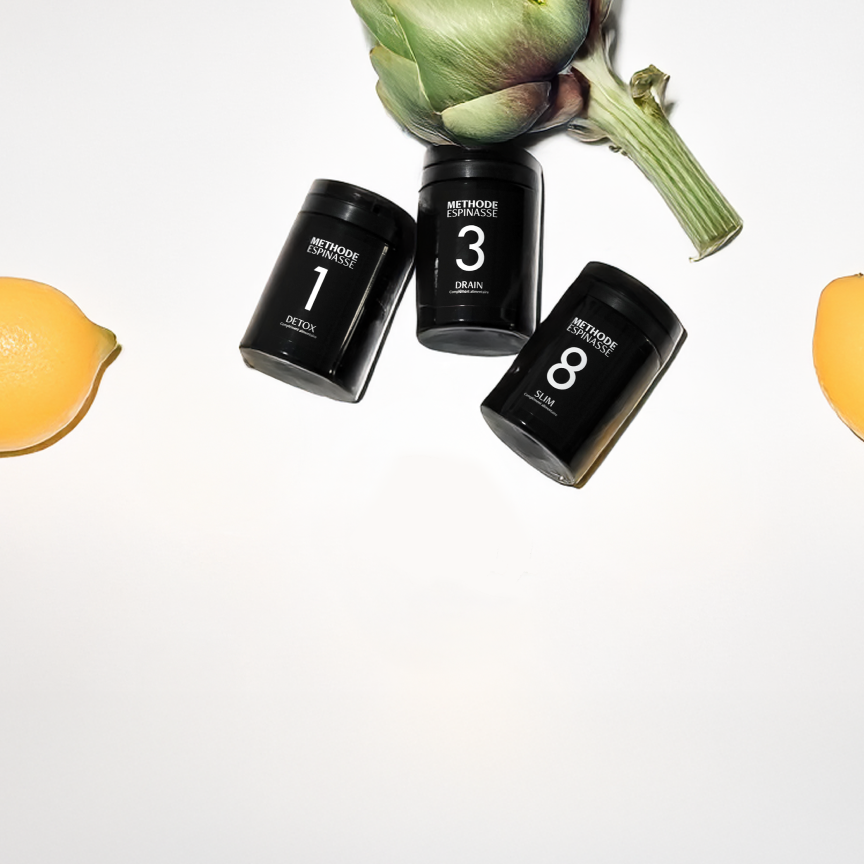
Découvrez 08 - Slim
Your ally for a slimmer figure and healthy weight

Journal
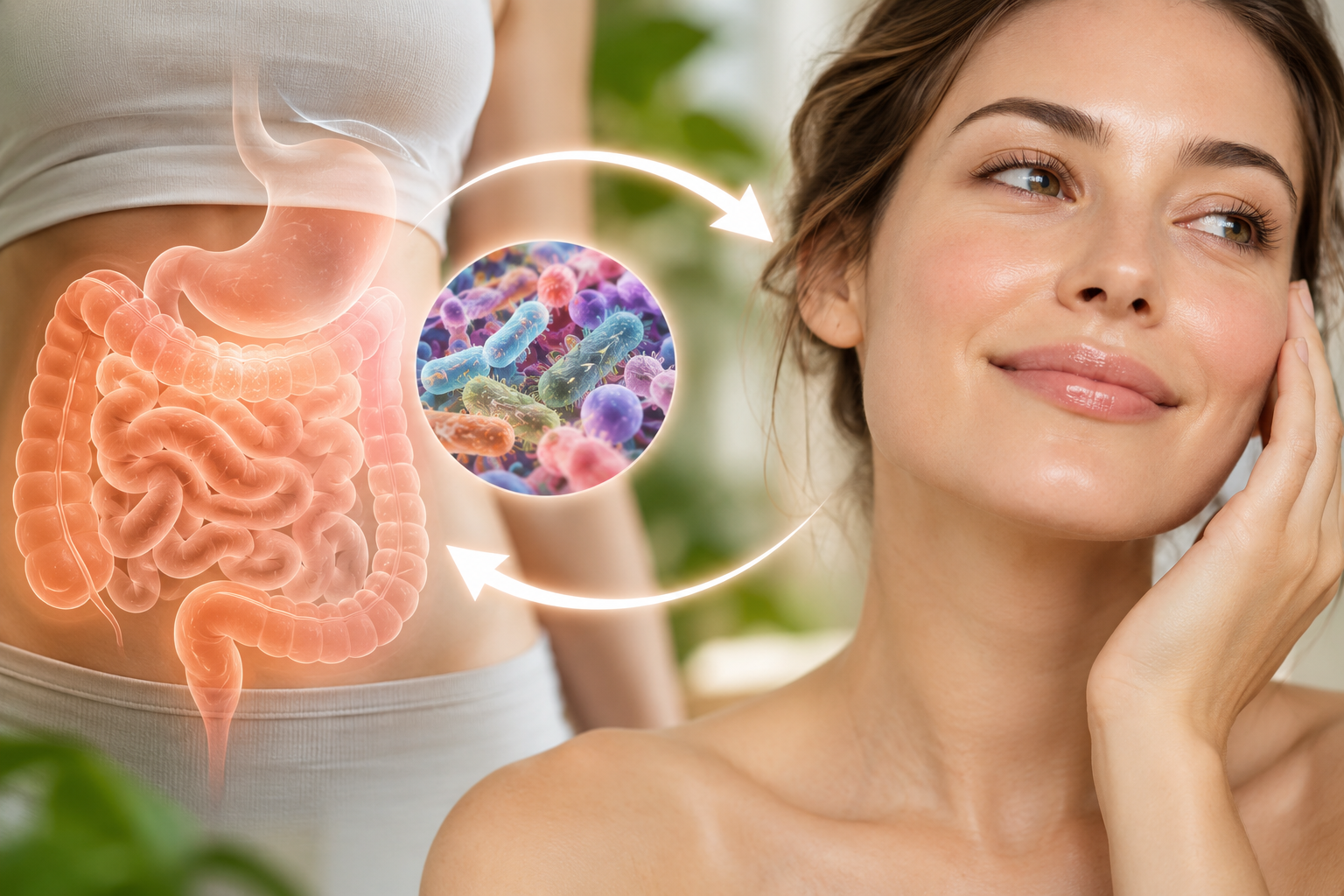
What if the quality of our skin did not depend solely on what happens in our skin? An idea that might have seemed fringe only a few years ago has become a rapidly expanding field of research: the gut-skin axis. Our gut is home to trillions of microorganisms capable of producing metabolites, interacting with the immune system, supporting the intestinal barrier, and influencing multiple inflammatory pathways. The skin, meanwhile, has its own microbiome, its own epithelial barrier, and an extraordinarily active immune system. These two seemingly distant organs communicate through immune, metabolic, endocrine, and potentially neurological pathways [1–3].
This is fundamentally changing the way we think about beauty from within. Dry, reactive, inflamed, or aging skin can no longer be viewed solely as a surface-level issue. Skin is part of a living system in which nutrition, the gut microbiome, metabolism, and immunity are constantly communicating.
The question, then, becomes highly practical: Can targeting the gut actually improve visible and measurable skin parameters? Clinical research is beginning to provide some particularly interesting answers. Certain oral probiotics have already been associated in randomized controlled trials with changes in skin hydration, transepidermal water loss, elasticity, and even wrinkle-related parameters [4]. But to understand how a bacterium living in the gut could potentially influence the skin on your face, we first need to understand that the gut microbiome does far more than help digest food.
The gut microbiome is the extraordinarily complex ecosystem of microorganisms living throughout the gastrointestinal tract—primarily bacteria, but also viruses, fungi, and other microbes. Its composition varies considerably from one person to another and changes under the influence of diet, age, environment, medications—particularly antibiotics—and numerous lifestyle factors.
For years, the gut microbiome was studied primarily through the lens of digestion. We now know its role extends far beyond the digestive system. Gut microorganisms transform components of our diet and generate a wide range of biologically active molecules. They communicate with intestinal epithelial cells and the immune system and contribute to maintaining intestinal-barrier homeostasis [1,2].
Some microbial metabolites can also enter the circulation and exert effects far beyond the gut. Among the most extensively studied are short-chain fatty acids, or SCFAs, particularly acetate, propionate, and butyrate, which are produced when certain gut bacteria ferment dietary fibers. Other important pathways involve tryptophan metabolites, secondary bile acids, and a wide variety of molecules generated through microbial metabolism [2,3].
The gut is therefore much more than a digestive system.
It is a metabolic and immunological ecosystem.
And the skin may receive some of the signals it produces.
The gut-skin axis is not an invisible tube directly connecting the colon to the face. It describes a network of biological communication pathways.
One of the most important involves the immune system. The gut represents an enormous interface between the body and the external environment. Its immune system must constantly distinguish between what can safely be tolerated and what may represent a threat. The microbiome actively participates in that immune education.
Another pathway involves microbial metabolites. SCFAs, tryptophan derivatives, and certain bile-acid metabolites can influence immune cells and signaling pathways. Some interact with receptors involved in regulating inflammation and epithelial-barrier function [1–3].
Communication is also thought to involve neuroendocrine pathways. The gut microbiome can interact with hormonal and neurological systems that themselves influence stress responses and inflammation.
So the gut-skin connection is considerably more sophisticated than “bad gut = bad skin.”
A more accurate model looks like this:
GUT MICROBIOME → MICROBIAL METABOLITES → INTESTINAL BARRIER → IMMUNE SYSTEM → SYSTEMIC SIGNALING → SKIN BARRIER & INFLAMMATION → SKIN QUALITY
This does not mean that every skin concern starts in the gut. It means that skin physiology can be influenced by biological signals generated far beyond the skin itself [1,3].
The term gut dysbiosis is frequently overused, sometimes as though there were one universally “perfect” microbiome that simply needs to be restored. Scientifically, the reality is much more complex. There is no single ideal microbial composition shared by everyone.
Dysbiosis is better understood as an alteration in the microbial ecosystem associated with changes in function, the relative expansion or loss of certain microorganisms, or shifts in the metabolites they produce. It may be associated with diet, antibiotic use, disease, stress, and environmental factors.
Why could that matter for skin health? Because changes within the gut ecosystem may influence both intestinal-barrier function and immune signaling [1–3].
The intestinal epithelium is organized around highly specialized structures, including tight junctions, which help regulate what passes between the intestinal lumen and the rest of the body. When this barrier becomes disrupted, microbial or dietary components may interact more extensively with the immune system and contribute to inflammatory responses [1].
And inflammation does not necessarily stay in the gut.
This is where the gut-skin axis truly begins.
The skin is an immune organ. Keratinocytes, dendritic cells, lymphocytes, macrophages, and many other cell populations contribute to its defense and homeostasis.
That means changes in systemic inflammatory signaling can potentially influence the way skin functions.
Research into the gut-skin axis initially developed rapidly in inflammatory skin conditions. Associations between the gut microbiome and atopic dermatitis, psoriasis, acne, rosacea, and other skin disorders are now widely investigated [5,6]. The mechanisms and strength of evidence vary considerably between conditions, and an association between dysbiosis and disease does not by itself establish causality.
But this research has established one fundamental idea: skin inflammation can be influenced by biological events occurring far away from the skin itself.
This concept may also matter for skin aging. As we age, the body can develop chronic, low-grade inflammation often referred to as inflammaging. In the skin, this inflammatory environment can interact with oxidative stress, cellular senescence, and extracellular matrix remodeling.
The gut microbiome is certainly not the sole cause of inflammaging. But because it participates in immune and metabolic regulation, researchers are increasingly studying it as one of the factors that may influence this systemic inflammatory environment.
Short-chain fatty acids provide one of the most fascinating examples of gut-to-body communication.
When certain gut bacteria ferment fibers that our own digestive enzymes cannot fully break down, they produce compounds including acetate, propionate, and butyrate. These molecules are not simply fermentation waste.
Butyrate, in particular, is an important energy source for cells lining the colon and contributes to intestinal-barrier homeostasis. SCFAs can also interact with receptors on different immune cells and influence the differentiation and activity of populations including regulatory T cells [2,3].
Research into the gut-skin axis is therefore exploring how changes in SCFA production may influence skin inflammation and epithelial-barrier integrity [2,7].
The biological pathway is remarkable:
DIETARY FIBER → GUT BACTERIA → FERMENTATION → SCFAs → IMMUNE & METABOLIC SIGNALING → POTENTIAL DISTANT EFFECTS
Part of what our body does with food may therefore depend on what our microbiome does with it first.
SCFAs represent only part of the microbiome’s chemical vocabulary. Tryptophan, an essential amino acid obtained through diet, can also be metabolized by certain intestinal bacteria into a variety of indole derivatives.
Some of these microbial metabolites can interact with the aryl hydrocarbon receptor, or AhR, a receptor involved in numerous biological processes including immune regulation and epithelial-barrier homeostasis [1–3].
AhR is particularly interesting in dermatology because it is also expressed in the skin and participates in several functions involving keratinocytes and immune cells.
This adds another layer to the gut-skin axis. Gut bacteria may not simply influence how much inflammation exists in the body. They can produce signaling molecules capable of interacting with specific biological receptors.
We are gradually moving from the broad idea that “the gut affects the skin” toward a much more precise molecular map of how that communication may occur.
The gut and the skin may look completely different, but they share one fundamental responsibility: both are barriers.
The intestinal barrier must allow nutrients to be absorbed while limiting the passage of microorganisms, antigens, and potentially harmful substances. The skin barrier must retain water while protecting the body from the outside environment.
In both cases, homeostasis depends on constant interactions among epithelial cells, lipids, structural proteins, the microbiome, and the immune system [1].
This functional similarity helps explain why researchers are so interested in the relationship between these two barriers.
One of the easiest ways to assess skin-barrier function is transepidermal water loss, or TEWL. The more water the skin loses through evaporation, the higher the TEWL. It is therefore widely used as an objective measure of skin-barrier function.
And this is exactly where research into oral probiotics for skin becomes particularly interesting.
The answer cannot be “all probiotics improve skin.” The word probiotic covers an enormous range of microorganisms, and their effects are strain-specific. Results obtained with one particular strain cannot automatically be generalized to every species within the same genus.
But several human studies provide genuine proof of concept.
One of the most interesting randomized, double-blind, placebo-controlled trials involved 110 adults ages 41 to 59 with dry skin and wrinkles. For 12 weeks, participants received either placebo or Lactobacillus plantarum HY7714 at 10 billion CFU per day [4].
Researchers did not simply ask participants whether they thought their skin looked better. They objectively measured several parameters, including skin hydration, TEWL, wrinkle depth, skin gloss, and elasticity.
After 12 weeks, skin water content had significantly increased on the face and hands in the probiotic group. TEWL decreased more in certain areas. Wrinkle depth decreased and skin gloss improved. Most notably, skin elasticity improved by 13.17% versus control after four weeks and by 21.73% after twelve weeks [4].
That finding is particularly important for the science of beauty from within.
An intervention delivered through the gut was associated with objectively measurable changes at the surface of the skin.
Research goes even further. A systematic review and meta-analysis examining probiotics and photoaging evaluated available evidence on skin-barrier function, matrix metalloproteinases, and UV-induced skin damage [8].
Experimental findings suggest that certain probiotics can modulate pathways involving matrix metalloproteinases, or MMPs—the same enzymes we encountered in our discussions of collagen and astaxanthin. Pooled preclinical data have also reported effects involving UV-induced epidermal thickening, TEWL, and skin dehydration [8].
An important distinction is necessary: much of this evidence comes from animal and cellular models. It therefore does not establish that probiotics prevent photoaging in humans.
But it strengthens a fascinating hypothesis: the gut microbiome may influence how effectively the skin maintains its barrier and extracellular matrix when exposed to environmental stress.
When that mechanistic evidence is considered alongside human trials reporting changes in hydration, TEWL, and elasticity, the gut-skin axis starts to look like much more than a beauty trend.
Not literally. But the question is no longer unreasonable.
Our diet directly nourishes the human body, but it also feeds the microorganisms living within us. Those microorganisms transform part of what we eat into biologically active molecules. Those molecules can influence the intestinal barrier, immunity, and metabolism and participate in systemic signaling capable of reaching distant organs [1–3].
Skin is one of those organs.
This is why the gut-skin axis represents such an important shift in skin science. It forces us to move beyond the idea that everything determining skin quality must be located inside the epidermis and dermis.
Skin is also an expression of systemic biology.
Collagen, elastin, hyaluronic acid, and antioxidants remain fundamental to understanding skin health and skin aging. But contemporary research is adding another dimension: the biological environment in which those structures have to function.
Skin continuously exposed to inflammatory signaling does not exist in the same biological environment as skin supported by balanced immune homeostasis. A compromised skin barrier does not retain water in the same way. An inflammatory environment can influence repair mechanisms, oxidative stress, and tissue remodeling.
This is where the gut microbiome, inflammaging, and skin longevity begin to converge.
The goal is no longer simply to apply more active ingredients to the skin. It is also to understand how nutrition, the microbiome, microbial metabolites, and immunity may help create an internal biological environment that supports long-term skin quality.
In Part 2, we move directly into the clinical evidence: Which probiotic strains have actually been tested in humans? Can oral probiotics improve skin hydration and reduce TEWL? What do clinical trials show about wrinkles and skin elasticity? What does the latest research say about probiotics for acne, atopic dermatitis, and sensitive skin? Are all Lactobacillus and Bifidobacterium strains equivalent? How long do probiotics take to affect the skin? And how should we understand the inclusion of Bifidobacterium lactis and Lactobacillus casei in SKIN N°11 alongside hyaluronic acid, marine collagen, and astaxanthin?
This is probably the single most important thing to understand before talking about probiotics for skin health: a probiotic is not one single active ingredient. Lactobacillus, Bifidobacterium, and other genera include numerous species, which are themselves divided into biologically distinct strains. Two bacteria belonging to the same species can produce different metabolites, interact differently with the immune system, and ultimately produce different clinical effects.
In nutrition as in dermatology, probiotic effects therefore need to be considered strain-specific. When a clinical trial shows that one particular strain improves skin hydration or elasticity, it does not mean that every Lactobacillus will produce the same result.
That distinction is fundamental, but it does not make the field any less exciting. Quite the opposite: it moves probiotics toward a model of precision nutrition, where the question is no longer simply whether we should take “good bacteria,” but which strains, at what dose, and for how long may influence a specific biological pathway.
One of the most compelling studies remains the trial of Lactobacillus plantarum HY7714 in 110 adults ages 41 to 59 with dry skin and wrinkles. Participants received either 10 billion CFU of the probiotic strain or placebo every day for 12 weeks [4].
The findings are especially interesting because researchers used objective instrumental measurements. After 12 weeks, skin water content had significantly increased on both the face and hands in the probiotic group. TEWL decreased more in certain areas, wrinkle depth was reduced, and skin gloss improved. Skin elasticity showed an improvement of 13.17% versus control after just four weeks and 21.73% after twelve weeks [4].
This is one strain and one clinical trial, and the results should be replicated in further independent research. But the biological principle it demonstrates is important: an oral intervention targeting the gut microbiome can be associated with objectively measurable changes in the skin.
The gut-skin axis is no longer purely theoretical.
Skin hydration does not simply depend on how much water is present in the body. It depends largely on the ability of the stratum corneum and the skin barrier to retain water.
That is why transepidermal water loss, or TEWL, matters so much. An effective barrier limits water loss. When that barrier is compromised, more water evaporates through the epidermis.
The fact that some probiotic trials report simultaneous changes in hydration and TEWL is therefore particularly interesting [4]. It suggests that the potential effect may extend beyond a superficial cosmetic change: skin-barrier function itself may be involved.
The mechanisms are still being investigated. They may involve immune modulation, microbial metabolites, short-chain fatty acids, and interactions between the gut microbiome and systemic inflammatory signaling.
This is beginning to reshape how we think about skin hydration. Hydration does not depend solely on a moisturizer applied to the epidermis or on hyaluronic acid within the dermis. It also depends on a biological environment capable of maintaining effective barrier function.
The HY7714 study reported a reduction in wrinkle depth after 12 weeks [4]. Preclinical research has also investigated mechanisms connecting certain probiotic strains with MMPs, oxidative stress, and UV-induced skin responses [8].
But it would be premature to conclude that “probiotics reduce wrinkles.”
The number of human randomized controlled trials specifically designed to assess cosmetic skin aging remains limited. The strains used vary considerably, and study protocols are not yet sufficiently standardized to establish a general anti-wrinkle effect across the entire probiotic category.
The biological hypothesis, however, is compelling. Skin aging involves inflammaging, oxidative stress, impaired barrier function, and extracellular matrix remodeling. The gut microbiome can interact with several of these mechanisms.
The potential role of probiotics in skin longevity may therefore extend beyond directly reducing a wrinkle. The more interesting objective may be to influence some of the biological conditions that determine how skin ages in the first place.
Acne is one of the most interesting conditions in which to test the gut-skin hypothesis because it involves multiple overlapping factors: sebum production, keratinization, inflammation, hormones, and the microbiome.
Clinical evidence has expanded considerably. A recent meta-analysis of nine studies involving 623 patients found that after 12 weeks, oral probiotics were associated with significant reductions in acne severity, total lesion counts, inflammatory lesions, and non-inflammatory lesions. The analysis also reported improvements in skin hydration and sebum levels [9].
Another meta-analysis restricted to double-blind randomized trials found a modest effect on inflammatory lesions, although only three RCTs involving 231 participants were available and heterogeneity was substantial [10]. A broader 2026 analysis of 13 studies and 1,453 participants did not find significant pooled reductions across individual lesion counts, but did report a significant improvement in the Global Acne Grading System (GAGS) with oral probiotics, particularly in interventions lasting at least 12 weeks and using Lactobacillus in combination with other strains [11].
These findings do not establish probiotics as a universal acne treatment. But they strengthen the evidence that modulating the microbiome may influence an inflammatory skin condition, with clinical signals becoming particularly interesting after several weeks of supplementation.
Once again, 12 weeks emerges as an important timeframe.
Atopic dermatitis provides another particularly interesting model because it combines skin-barrier dysfunction with immune dysregulation.
A 2023 meta-analysis of nine studies investigating probiotic supplementation in adults found significant improvements in atopic dermatitis severity scores [12]. Results differed according to the microorganisms used: Lactobacillus salivarius, L. acidophilus, and L. plantarum showed favorable results, while L. fermentum did not demonstrate a benefit in that analysis [12].
A 2025 meta-analysis of seven randomized controlled trials also found a significant reduction in SCORAD with probiotics compared with placebo. Researchers additionally reported reductions in IL-4 and TARC, two markers involved in the inflammatory response associated with atopic dermatitis [13].
These findings matter for two reasons.
First, they provide another demonstration that not all probiotic strains are interchangeable.
Second, they suggest that modifying the gut ecosystem can be associated not only with visible changes in the skin, but also with changes in immunological markers.
The gut-skin axis becomes much more tangible:
MICROBIOME → IMMUNITY → INFLAMMATION → SKIN.
This is one area where beauty marketing is currently moving much faster than the science.
It is tempting to extrapolate findings from atopic dermatitis or acne to anyone with sensitive, reactive, or redness-prone skin. But the evidence is not yet strong enough to claim that any oral probiotic will “calm redness” or transform sensitive skin.
What science does support is more interesting: certain probiotics can influence biological mechanisms involving immunity, inflammation, and barrier function—three dimensions that are highly relevant to reactive skin [12,13].
The next step is to determine which strains produce which effects in which populations.
We are gradually entering the era of the precision microbiome.
Available evidence points to a timeline that looks surprisingly similar to other beauty-from-within supplements.
In the HY7714 trial, a difference in skin elasticity was already measurable after four weeks, but the results became more pronounced by twelve weeks [4]. Recent acne meta-analyses also suggest that clinical differences may become more apparent around 12 weeks [9–11].
That does not mean every probiotic needs to be taken for exactly three months. The time required will likely depend on the strain, dose, intended outcome, and the individual’s baseline gut microbiome.
But one point is becoming increasingly clear:
The microbiome is not an ON/OFF switch.
Changing an ecosystem, the metabolites it produces, and the way it interacts with the immune system takes time.
Again, the biggest number is not necessarily the best.
Probiotic doses used in studies are often expressed in CFU—colony-forming units—and can range from millions to billions of microorganisms. But a supplement containing 50 billion CFU is not automatically five times more effective than one containing 10 billion.
Strain identity, viability, stability, formulation, and the ability of the microorganisms to interact meaningfully with the gut ecosystem may matter more than simply maximizing the CFU count.
The reasoning is similar to what we have already seen with collagen and other skin supplements:
More is not automatically better. Biological relevance matters.
The vocabulary of microbiome science has expanded rapidly.
Probiotics are live microorganisms that, when administered in adequate amounts, confer a health benefit on the host.
Prebiotics are substrates selectively utilized by host microorganisms that confer a health benefit.
Postbiotics are preparations of inanimate microorganisms and/or their components that provide a health benefit.
These distinctions open up significant possibilities for skin science. The objective may not always be to introduce a living bacterium into the gut. Future approaches may also involve feeding specific functions within the existing microbiome or directly using biologically active microbial preparations.
A 2026 systematic review of acne research identified 33 studies involving more than 2,100 participants investigating prebiotics, probiotics, and postbiotics, illustrating just how quickly this field is developing [14].
The future of beauty from within may therefore be as microbial as it is nutritional.
The gut microbiome and skin microbiome are not the same thing.
The surface of our skin hosts its own complex ecosystem of bacteria, fungi, viruses, and other microorganisms. Its composition varies depending on the area of the body, sebum levels, moisture, pH, age, environment, and the products we apply.
The skin microbiome contributes to barrier homeostasis and is in constant communication with local immunity.
The gut-skin axis simply adds another dimension:
These two microbial ecosystems may not function independently of one another.
The skin has its microbiome.
The gut has its microbiome.
And the human body is the biological environment connecting them.
SKIN N°11, formulated by Dr. Valérie ESPINASSE according to the principles of Cellular Nutrition®, combines Bifidobacterium lactis and Lactobacillus casei with ingredients targeting other dimensions of skin physiology.
Their inclusion places the formula within the emerging science of the gut-skin axis: the idea that the intestinal and immune environment may represent one of the biological dimensions contributing to overall skin quality.
The same scientific rigor must, however, be applied here as with any probiotic research. Clinical benefits observed with Lactobacillus plantarum HY7714 cannot automatically be attributed to L. casei or B. lactis. Probiotic effects are strain-specific.
The interest of SKIN N°11 therefore lies less in the simplistic idea that “two probiotics make skin more beautiful” and more in the architecture of the formula itself: targeting multiple complementary dimensions of skin biology at the same time.
SKIN N°11 combines:
This approach aligns particularly well with what contemporary skin research is showing us:
Skin aging is not driven by one biological mechanism.
It simultaneously involves the extracellular matrix, hydration, oxidative stress, inflammation, immune function, UV exposure, metabolism, hormones, and microbial ecosystems.
A modern inside-out strategy can therefore aim to address several of these dimensions simultaneously.
HYDRATE. SUPPORT. PROTECT. BALANCE.
The scientific answer is considerably stronger today than it was only a few years ago.
Yes, certain interventions targeting the gut microbiome have produced measurable changes in human skin in controlled clinical studies. One randomized trial involving 110 adults reported changes in hydration, TEWL, elasticity, and wrinkle depth with one specific probiotic strain [4]. Meta-analyses of atopic dermatitis trials also report clinical improvements with certain probiotic interventions [12,13], while recent research into probiotics for acne suggests a favorable, although heterogeneous and formulation-dependent, clinical signal [9–11].
That does not mean every probiotic will improve every person’s skin.
It means something far more important:
Skin can respond to an intervention that begins in the gut.
And that fundamentally changes the way we think about skincare.
For decades, beauty has largely treated skin as an external boundary.
Cleanse. Exfoliate. Hydrate. Protect. Correct.
All of those strategies remain essential.
But modern biology requires us to look in the other direction as well.
Beneath the epidermis lies a vascular network, immune cells, fibroblasts, an extracellular matrix, and an intricate web of hormonal and metabolic signaling. Beyond the skin are the gut, liver, endocrine system, immune system, and trillions of microorganisms.
They are all part of the same organism.
Beauty from within is therefore not simply the idea of taking a capsule to get better-looking skin. In its most scientifically sophisticated form, it is based on a much deeper principle:
The visible quality of a tissue depends, in part, on the biological environment in which its cells live.
That is precisely where Cellular Nutrition® comes in.
Not instead of skincare.
But from within.
SKINCARE FROM THE OUTSIDE. CELLULAR NUTRITION® FROM THE INSIDE.
[1] Salem I, Ramser A, Isham N, Ghannoum MA. The Gut Microbiome as a Major Regulator of the Gut-Skin Axis. Frontiers in Microbiology. 2018. Review of the interactions among the gut microbiome, immunity, microbial metabolites, and skin physiology.
https://pubmed.ncbi.nlm.nih.gov/?term=Salem+Ramser+Isham+Ghannoum+Gut+Microbiome+Major+Regulator+Gut-Skin+Axis
[2] O’Neill CA, Monteleone G, McLaughlin JT, Paus R. The Gut-Skin Axis in Health and Disease: A Paradigm With Therapeutic Implications. BioEssays. Review of mechanisms connecting the intestinal microbiome, microbial metabolites, immunity, and skin.
https://pubmed.ncbi.nlm.nih.gov/?term=O%27Neill+Monteleone+McLaughlin+Paus+gut+skin+axis
[3] De Pessemier B, Grine L, Debaere M, Maes A, Paetzold B, Callewaert C. Gut-Skin Axis: Current Knowledge of the Interrelationship Between Microbial Dysbiosis and Skin Conditions. Microorganisms. 2021;9(2):353.
https://pubmed.ncbi.nlm.nih.gov/?term=De+Pessemier+Grine+Gut-Skin+Axis
[4] Lee DE, Huh CS, Ra J, et al. Clinical Evidence of Effects of Lactobacillus plantarum HY7714 on Skin Aging: A Randomized, Double-Blind, Placebo-Controlled Study. Journal of Microbiology and Biotechnology. 2015. Twelve-week RCT involving 110 adults and evaluating skin hydration, TEWL, wrinkles, gloss, and elasticity.
https://pubmed.ncbi.nlm.nih.gov/26428734/
[5] The Gut-Skin Axis and Its Role in Inflammatory Skin Disease. Review of the relationships among gut dysbiosis, immunity, and inflammatory skin conditions.
https://pubmed.ncbi.nlm.nih.gov/?term=gut-skin+axis+inflammatory+skin+disease+review
[6] Gut Microbiome and Skin Disorders: A Systematic Review. Review of associations between the gut microbiome and acne, atopic dermatitis, psoriasis, rosacea, and other skin conditions.
https://pubmed.ncbi.nlm.nih.gov/?term=gut+microbiome+skin+disorders+systematic+review
[7] Short-Chain Fatty Acids, Immune Regulation and the Gut-Skin Axis. Research examining SCFAs—including butyrate, propionate, and acetate—and their interactions with epithelial barriers and immune regulation.
https://pubmed.ncbi.nlm.nih.gov/?term=short-chain+fatty+acids+gut-skin+axis+skin
[8] Probiotics and Photoaging: A Systematic Review and Meta-Analysis. Review of preclinical and clinical evidence involving probiotics, UV exposure, TEWL, skin hydration, and matrix metalloproteinases.
https://pubmed.ncbi.nlm.nih.gov/36583287/
[9] Lin HW, Tam KW, Huang YC. Efficacy of Oral Probiotics in Patients With Acne: A Systematic Review and Meta-Analysis of Randomized Trials. Clinical and Experimental Dermatology. 2025. Nine studies involving 623 patients; outcomes included acne severity, lesion counts, skin hydration, and sebum.
https://pubmed.ncbi.nlm.nih.gov/40832719/
[10] Tjiu JW, Lu CF. Oral Probiotics in Acne Vulgaris: A Systematic Review and Meta-Analysis of Double-Blind Randomized Clinical Trials. Medicina. 2025;61(12):2152. Analysis of three double-blind RCTs involving 231 participants.
https://pubmed.ncbi.nlm.nih.gov/41470154/
[11] Julanon N, et al. Role of Probiotics in Managing Acne Vulgaris: A Systematic Review and Meta-Analysis of Clinical Trials. Journal of Cutaneous Medicine and Surgery. 2026. Analysis of 13 studies and 1,453 participants; improvement in GAGS with oral probiotics, with more heterogeneous findings for individual lesion counts.
https://pubmed.ncbi.nlm.nih.gov/42153538/
[12] Husein-ElAhmed H, Steinhoff M. Effects of Probiotic Supplementation in Adults With Atopic Dermatitis: A Systematic Review With Meta-Analysis. Clinical and Experimental Dermatology. 2023. Analysis of nine studies comparing outcomes across different probiotic strains.
https://pubmed.ncbi.nlm.nih.gov/37706436/
[13] Chen Y, Xu M, Xiong J, Qi Q, Yang W. Probiotics for the Treatment of Atopic Dermatitis in Adults: A Systematic Review and Meta-Analysis. Indian Journal of Dermatology. 2025. Seven RCTs; reductions in SCORAD and changes in IL-4 and TARC.
https://pubmed.ncbi.nlm.nih.gov/40740395/
[14] Warp PV, et al. Prebiotics, Probiotics, and Postbiotics for Acne Vulgaris: A Systematic Review. 2026. Review of 33 studies involving 2,112 participants and evaluating different microbiome-modulating strategies in acne.
https://pubmed.ncbi.nlm.nih.gov/41703218/
[15] Bowe WP, Logan AC. Acne Vulgaris, Probiotics and the Gut-Brain-Skin Axis: From Anecdote to Translational Medicine. Foundational research on the interactions among the gut microbiome, inflammation, stress, and acne.
https://pubmed.ncbi.nlm.nih.gov/?term=Bowe+Logan+Acne+Probiotics+Gut-Brain-Skin+Axis
[16] Acne, Microbiome, and Probiotics: The Gut-Skin Axis. Microorganisms. 2022. Review of the relationships among Cutibacterium acnes, the gut microbiome, inflammation, IGF-1, and probiotic interventions.
https://pubmed.ncbi.nlm.nih.gov/35889022/