DIETARY SUPPLEMENTS

Découvrez 08 - Slim
Your ally for a slimmer figure and healthy weight

Journal
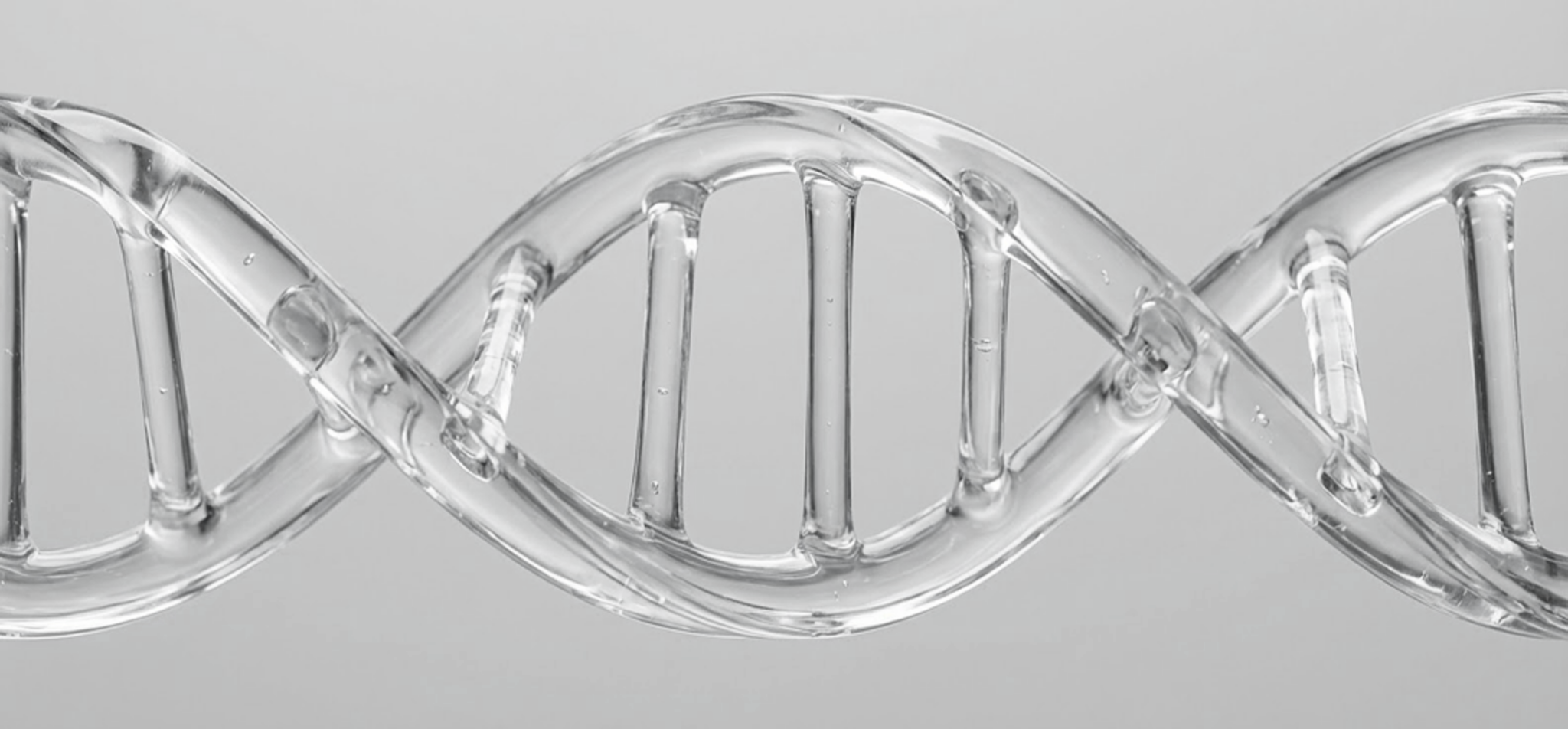
What if your genes weren’t a life sentence, but a conversation?
For decades, genetics was seen as something pre-written — a fixed inheritance, assigned at birth, quietly determining our health, our energy, and the way we age.
That view now feels outdated. Contemporary science points to a reality that is more subtle, more nuanced — and above all, more empowering: our genes are not fixed. They are constantly being interpreted.
Every day, our lifestyle reshapes that interpretation. What you eat, how you sleep, your stress levels, your environment, the state of your gut: all of these send signals capable of switching certain biological programs on — or slowing them down.
This field of research has a name: epigenetics. And it is fundamentally changing the way we think about health, ageing, and longevity.
Epigenetics refers to the mechanisms that regulate gene expression without altering the structure of the genes themselves.
In other words, the DNA remains the same — but the way it is used changes.
These mechanisms act like dimmer switches. Some genes are fully expressed, others are muted, and others remain silent.
This phenomenon is now well established, notably through landmark studies published in Nature and PNAS, showing that environment and behaviour directly shape genetic activity [1,2].
One of the most striking examples remains identical twins: genetically the same, yet progressively different on a biological level over time.
The reason is not genetic. It is epigenetic.
Ageing is not simply the accumulation of time. It also reflects a gradual breakdown in the body’s regulatory systems.
Over the years, certain genes linked to inflammation become more active. Others, involved in cellular repair or protection, become less efficient. This epigenetic drift is now recognised as one of the central mechanisms of biological ageing [3]. It helps explain why two people of the same age can present vastly different levels of vitality, health, and ageing.
The question is no longer simply, “How old are you?” but rather, “How is your biology ageing?”
Scientific advances have made this reality measurable. Epigenetic clocks, developed in particular by Steve Horvath, make it possible to estimate biological age using precise molecular markers [4].
They reveal something essential: ageing is neither strictly linear nor entirely irreversible.
Certain interventions — nutritional, metabolic, behavioural — may slow down, and in some cases modulate, specific markers of ageing [5].
In other words, your biological trajectory is not fixed. It is shaped over time.
Seen through this lens, food is no longer just about calories. It becomes a language. Certain nutrients interact directly with gene expression:
These interactions are now well documented in the scientific literature, particularly in research on nutrition and epigenetics [6,7]. Every meal becomes a form of biological instruction.
The epigenome does not respond to food alone. It is shaped by a range of factors that are often underestimated.
The gut microbiome, for example, produces metabolites capable of directly influencing gene expression, notably through epigenetic mechanisms such as histone deacetylase inhibition [8].
Chronic stress, via cortisol, alters the activity of genes involved in inflammation and immune regulation [9].
Sleep, in turn, regulates the expression of thousands of genes involved in metabolism and cellular repair [10].
It is these silent but constant interactions that define the biological terrain.
From this perspective, Cellular Nutrition® offers a genuine shift in paradigm. The goal is no longer to correct a symptom in isolation, but to restore the coherence of the biological signals regulating the body.
The objective is clear: to create a cellular environment that supports optimal gene expression.
That means acting simultaneously on several fronts:
— supporting mitochondrial function
— modulating inflammation
— balancing the microbiome
— stabilising metabolic and hormonal signals
Because biology does not operate in silos. It responds through networks. And those networks are highly sensitive to synergy.
Within this framework, N°12 AGE is designed as a targeted response to the mechanisms involved in cellular ageing.
Its approach is built around several key levers:
— modulation of oxidative stress
— support for cellular repair mechanisms
— influence on longevity pathways, particularly those involved in metabolic and inflammatory regulation
Compounds such as polyphenols have shown the ability to interact with certain epigenetic pathways linked to longevity, particularly through sirtuins [6].
AGE does not aim to “slow time down.” It aims to improve the way the body responds to it.
Before any optimisation can happen, biological coherence matters.
OPTIMAL works on the fundamentals:
— mitochondrial energy production
— stress regulation
— neurochemical balance
— the gut–brain axis
These parameters directly influence the epigenetic environment. A body that is fatigued, inflamed, or out of balance sends unfavourable signals to gene expression.
Restoring energy and stability therefore becomes a prerequisite for any real longevity strategy.
Weight regulation is a perfect illustration of epigenetic logic. The body does not store energy based on calories alone, but according to the metabolic signals it perceives.
SLIM acts precisely on those signals:
— improved insulin sensitivity
— modulation of blood sugar regulation
— influence on the metabolic microbiome
— activation of energy-oxidation pathways
Compounds such as berberine have notably been shown to activate AMPK, a key enzyme in cellular energy regulation [11].
The goal is not to force weight loss, but to restore the kind of biological environment in which it can actually happen.
Epigenetics marks a quiet but profound turning point. It shows that health depends not only on what we inherit, but on what we do with that inheritance.
Longevity is no longer an abstract idea. It becomes a strategy.
You cannot control your DNA. But every day, you influence the way it is expressed.
That is where the essential lies.
That is precisely what Cellular Nutrition® is designed to do: not to force the body, but to restore the conditions it needs to function at its best.
[1] Bird A. Perceptions of epigenetics. Nature. 2007.
https://www.nature.com/articles/nature05913
[2] Fraga MF et al. Epigenetic differences in monozygotic twins. PNAS. 2005.
https://www.pnas.org/doi/10.1073/pnas.0500398102
[3] López-Otín C et al. The hallmarks of aging. Cell. 2013.
https://www.cell.com/fulltext/S0092-8674(13)00645-4
[4] Horvath S. DNA methylation age. Genome Biology. 2013.
https://genomebiology.biomedcentral.com/articles/10.1186/gb-2013-14-10-r115
[5] Fahy GM et al. Reversal of epigenetic aging. Aging Cell. 2019.
https://onlinelibrary.wiley.com/doi/full/10.1111/acel.13028
[6] Li Y et al. Polyphenols and epigenetics. Nutrition. 2011.
https://www.sciencedirect.com/science/article/pii/S0899900710004755
[7] Anderson OS et al. Nutrition and epigenetics. Annual Review of Nutrition. 2012.
https://www.annualreviews.org/doi/10.1146/annurev-nutr-071811-150711
[8] Donohoe DR et al. Microbiome and epigenetics. Cell. 2012.
https://www.cell.com/fulltext/S0092-8674(12)01448-8
[9] Zannas AS et al. Stress and epigenetics. Nature Neuroscience. 2015.
https://www.nature.com/articles/nn.4045
[10] Takahashi JS. Circadian rhythms and gene expression. Nature Reviews Genetics. 2017.
https://www.nature.com/articles/nrg.2016.150
[11] Hardie DG. AMPK and metabolic regulation. Nature Reviews Molecular Cell Biology. 2015.
https://www.nature.com/articles/nrm4000