DIETARY SUPPLEMENTS

Découvrez 08 - Slim
Your ally for a slimmer figure and healthy weight

Journal
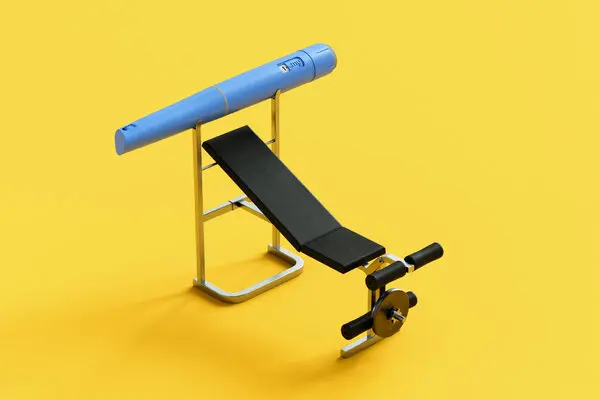
Since the arrival of Ozempic and other GLP-1 medications, one question keeps coming up:
“Do you lose muscle while losing weight on Ozempic?”
The topic has become highly controversial.
Some claim that Ozempic “melts muscle.”
Others believe these concerns are largely exaggerated.
As is often the case in medicine, the truth is more nuanced.
Yes, part of the weight lost with semaglutide can come from lean mass, which includes muscle mass [1].
But that does not mean Ozempic directly destroys muscle tissue.
It’s important to understand what is really happening.
Body-composition studies performed with semaglutide show that weight loss primarily comes from fat mass, particularly visceral fat [1].
However, a reduction in lean mass is also observed.
Depending on the study, lean mass may account for approximately 20% to 40% of the total weight lost [2,3].
These numbers may sound concerning.
However, they need to be interpreted carefully.
Lean mass is not the same thing as skeletal muscle.
It also includes:
The most recent data suggest that part of the reduction in lean mass may actually reflect decreases in body water and fat deposits within organs, rather than massive losses of skeletal muscle.
Yes.
This point is fundamental.
Regardless of the method used:
significant weight loss is generally accompanied by some degree of lean-mass reduction [4].
This phenomenon is therefore not specific to Ozempic.
The real question is:
How much muscle is lost, and how can we minimize it?
For many years, muscle was viewed primarily as an organ responsible for movement.
Today, we know it plays a much broader role.
Muscle contributes to:
Numerous studies have also shown that muscle mass is one of the strongest predictors of longevity and metabolic health [6].
Preserving muscle is therefore not simply an aesthetic concern.
It is a major health priority.
Paradoxically, yes.
Despite some reduction in lean mass, several studies show that the proportion of lean mass relative to total body weight actually increases during treatment [1].
In other words, fat loss is generally greater than lean-mass loss.
As a result, the lean-mass-to-fat ratio tends to improve.
This explains why some researchers believe that semaglutide improves overall body composition despite concerns about muscle loss.
Because certain populations are more vulnerable:
In these individuals, excessive muscle loss could have important consequences:
These concerns have led several research teams to investigate strategies designed to better preserve muscle during GLP-1 treatment.
Recent studies are even exploring combination therapies specifically aimed at limiting lean-mass loss.
Not necessarily.
The available evidence suggests that the muscle loss observed during treatment with Ozempic is primarily a consequence of weight loss itself rather than a direct toxic effect of the medication on muscle tissue [2,7].
The right question is therefore not:
“Does Ozempic cause muscle loss?”
The better question is:
“How can you lose body fat while preserving as much muscle as possible?”
That is exactly what we will explore in the next section of this article.
Contrary to popular belief, the body does not lose only fat when it loses weight.
Significant weight loss is generally accompanied by some reduction in lean mass, including skeletal muscle [4].
This phenomenon is observed with:
The goal is therefore not to avoid all lean-mass loss, which is often impossible.
The goal is to minimize it as much as possible.
Ozempic works by reducing hunger and increasing satiety.
As a result, many people naturally eat much less.
This reduction in calorie intake is one of the main reasons the medication promotes weight loss.
However, it can also lead to:
In some individuals, appetite decreases so dramatically that meeting nutritional requirements becomes difficult.
Muscle is an extremely dynamic tissue.
It is constantly being broken down and rebuilt.
To maintain muscle mass, the body requires adequate amounts of protein and amino acids [8].
When food intake declines substantially, protein intake often falls as well.
This can contribute to:
Several experts now recommend paying particular attention to protein intake in people using GLP-1 medications, especially those who already have low muscle mass or are at risk for sarcopenia.
Recent data also suggest that inadequate protein intake may be associated with greater lean-mass loss during treatment with semaglutide.
Muscle is one of the primary determinants of resting energy expenditure.
The more muscle a person has, the more calories they burn at rest [5].
When some of that muscle mass is lost, energy expenditure tends to decline.
This reduction is usually modest, but it can contribute to making long-term weight-loss maintenance more difficult.
It also adds to the other metabolic adaptations that occur following substantial weight loss.
Beginning in midlife, we gradually lose muscle mass as part of the aging process.
This phenomenon is natural.
However, it tends to accelerate:
This progressive decline in muscle mass contributes to what is known as sarcopenia [9].
As a result, losing a substantial amount of muscle may have far greater consequences for a 60-year-old than for a 25-year-old.
Sarcopenia refers to the progressive loss of muscle mass and muscle function associated with aging [9].
It is linked to:
Preserving muscle mass has therefore become a major public-health priority.
In someone who already has relatively little muscle mass, any additional loss of lean tissue can have meaningful functional consequences.
This is one reason why many research groups are currently investigating strategies aimed at preserving muscle during treatment with GLP-1 medications.
Several therapies specifically designed to limit lean-mass loss are even under development.
Fortunately, the most recent evidence remains reassuring.
Even when some reduction in lean mass occurs, several studies show that the proportion of lean mass relative to total body weight tends to improve, reflecting an overall improvement in body composition.
The real question is therefore probably not:
“Do you lose muscle on Ozempic?”
The real question is:
“How can you preserve as much muscle as possible during significant weight loss?”
That is precisely what we will explore in the final section of this article.
The good news is that several strategies can significantly limit muscle loss during weight reduction.
These strategies are built around four main pillars:
Protein requirements vary from person to person.
They depend on several factors, including:
Many scientific societies suggest that protein intake above the minimum recommended dietary allowance may be beneficial during weight loss, particularly in adults over 40 and in individuals at risk for sarcopenia [10].
Protein plays several essential roles:
When appetite decreases significantly with Ozempic, paying close attention to protein intake becomes particularly important.
Muscle follows a simple rule:
What is used is preserved.
Resistance training sends a signal to the body that muscle tissue remains necessary.
It is probably the most effective strategy currently available for limiting muscle loss during weight reduction [11].
Strength training also helps:
Absolutely.
Physical activity provides benefits that go far beyond weight loss alone.
Exercise contributes to:
People who successfully maintain weight loss over the long term are generally those who remain physically active [13].
Sleep plays a fundamental role in:
Sleep deprivation has been associated with:
Sleep quality should therefore be considered an essential component of any strategy aimed at preserving muscle.
Over the past decade, muscle has increasingly been recognized as a true longevity organ.
Low muscle mass is associated with:
Conversely, healthy muscle mass is associated with:
Preserving muscle is therefore about far more than appearance.
It is also a major investment in long-term health.
Yes.
Although it is difficult to avoid all lean-mass loss during significant weight reduction, it is possible to minimize it considerably.
The most effective strategies appear to combine:
Ozempic does not “melt muscle.”
Like any significant weight-loss intervention, it can be accompanied by some reduction in lean mass, including muscle mass.
The real question is therefore not whether you should fear Ozempic.
The real question is how to optimize the quality of the weight loss.
Current scientific evidence suggests that it is possible to preserve a large proportion of muscle mass by combining:
Muscle is one of the strongest predictors of health, longevity, and metabolic resilience.
It therefore deserves to be considered a major objective of any weight-loss strategy.
Yes. Part of the weight lost may come from lean mass, just as with any significant weight-loss intervention [1].
No. Current evidence does not suggest a direct toxic effect of Ozempic on muscle tissue.
By maintaining adequate protein intake, staying physically active, and performing resistance training.
Particular attention to protein intake is often recommended, especially after age 40 and in people at risk for sarcopenia [10].
Yes, and it is strongly encouraged to help preserve muscle mass.
Muscle contributes to energy expenditure, metabolic health, and long-term weight maintenance.
Yes. Muscle retains a remarkable ability to adapt and grow when stimulated through adequate protein intake and appropriate training.
Dr. Valérie Espinasse is a Doctor of Pharmacy, specialist in Predictive and Preventive Medicine, and expert in micronutrition.
For more than twenty years, she has helped patients optimize their health through an approach grounded in cellular biology, precision nutrition, functional medicine, and preventive healthcare.
Through her proprietary Cellular Nutrition® framework, Dr. Espinasse develops strategies designed to support the biological mechanisms involved in metabolism, muscle health, low-grade inflammation, gut microbiome health, and metabolic resilience.
Over the course of her career, she has supported more than 20,000 patients and conducted more than 15,000 advanced biological assessments.
[1] Garvey WT et al. Changes in Body Composition With Semaglutide Treatment.
https://pubmed.ncbi.nlm.nih.gov/38629387/
[2] Wilding JPH et al. Once-Weekly Semaglutide in Adults With Overweight or Obesity.
https://pubmed.ncbi.nlm.nih.gov/33567185/
[3] Rubino DM et al. Effect of Continued Weekly Subcutaneous Semaglutide on Weight Loss Maintenance.
https://pubmed.ncbi.nlm.nih.gov/33755728/
[4] Weinheimer EM et al. The Effect of Weight Loss on Lean Body Mass.
https://pubmed.ncbi.nlm.nih.gov/20300080/
[5] Wolfe RR. The Underappreciated Role of Muscle in Health and Disease.
https://pubmed.ncbi.nlm.nih.gov/24586743/
[6] Srikanthan P, Karlamangla AS. Muscle Mass and Mortality in Older Adults.
https://pubmed.ncbi.nlm.nih.gov/24561114/
[7] Heymsfield SB et al. Body Composition and Weight Loss.
https://pubmed.ncbi.nlm.nih.gov/31127824/
[8] Phillips SM. Nutritional Supplements in Support of Resistance Exercise to Counter Age-Related Sarcopenia.
https://pubmed.ncbi.nlm.nih.gov/29207481/
[9] Cruz-Jentoft AJ et al. Sarcopenia: Revised European Consensus on Definition and Diagnosis.
https://pubmed.ncbi.nlm.nih.gov/30312372/
[10] Bauer J et al. Evidence-Based Recommendations for Optimal Dietary Protein Intake in Older People.
https://pubmed.ncbi.nlm.nih.gov/23867520/
[11] Westcott WL. Resistance Training Is Medicine.
https://pubmed.ncbi.nlm.nih.gov/22777332/
[12] Booth FW et al. Exercise and Chronic Disease Prevention.
https://pubmed.ncbi.nlm.nih.gov/22895303/
[13] Swift DL et al. The Role of Exercise and Physical Activity in Weight Loss and Maintenance.
https://pubmed.ncbi.nlm.nih.gov/25911622/
[14] Dattilo M et al. Sleep and Muscle Recovery.
https://pubmed.ncbi.nlm.nih.gov/24434764/
[15] Landi F et al. Sarcopenia and Mortality Among Older Adults.
https://pubmed.ncbi.nlm.nih.gov/27324808/