DIETARY SUPPLEMENTS
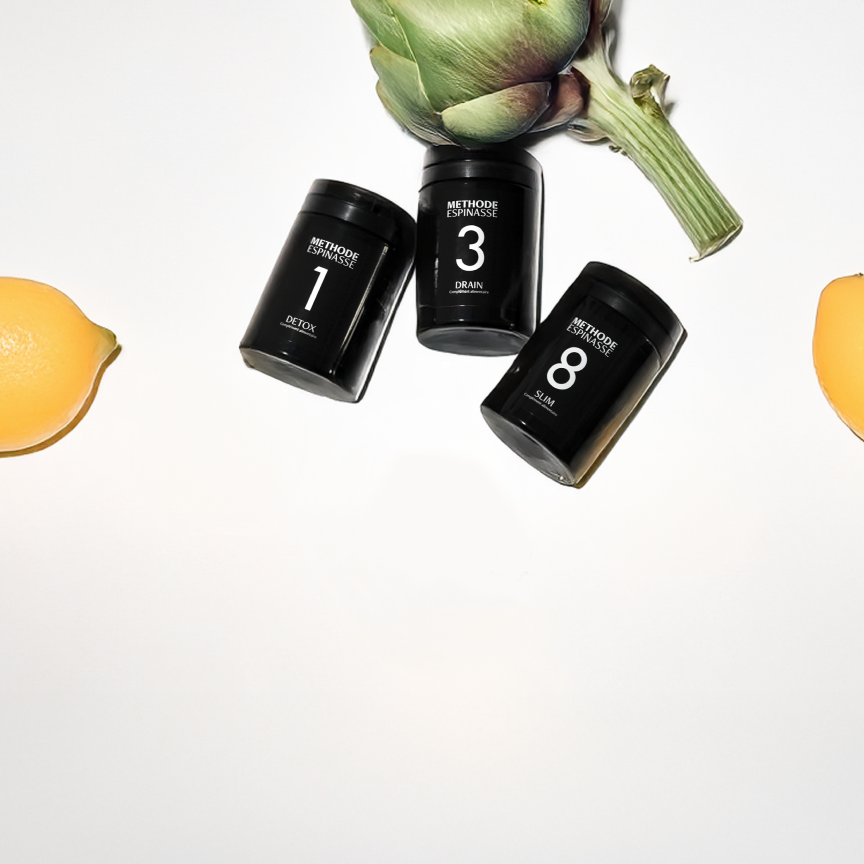
Découvrez 08 - Slim
Your ally for a slimmer figure and healthy weight

Journal
The weight loss supplement industry is massive.
Fat burners. Appetite suppressants. Detox formulas.
Most promise fast results.
Most fail.
Why?
Because weight loss is not just about calories.
It’s about how your body processes energy — at the cellular level.
Modern research shows that sustainable fat loss depends on:
— blood sugar regulation
— insulin sensitivity
— metabolic flexibility
— gut microbiome balance
— mitochondrial function
If these systems are not working, no supplement will fix the problem.
What are the best supplements for weight loss?
The most effective supplements for weight loss are those that target metabolism, not just calories:
— Berberine (improves insulin sensitivity and activates AMPK)
— Probiotics (reduce belly fat and improve metabolic health)
— Gymnema sylvestre (reduces sugar cravings)
— Polyphenols (support metabolism and reduce inflammation)
These compounds work by restoring metabolic function rather than forcing fat loss.
Most supplements rely on outdated strategies:
— increasing calorie burn
— suppressing appetite
— reducing water weight
These approaches ignore the biology of weight gain.
Research shows that weight regulation is driven by complex systems, including:
— insulin signaling
— mitochondrial efficiency
— gut microbiome
— inflammation
Without addressing these, results are temporary at best.
Unstable blood sugar leads to insulin spikes → fat storage.
Stable glucose leads to:
— fewer cravings
— better energy
— improved fat burning
Insulin resistance is one of the main drivers of weight gain [1].
Your ability to switch between burning carbs and fat.
When impaired:
— fat burning decreases
— energy becomes unstable
Your gut bacteria influence:
— fat storage
— energy extraction
— inflammation
Certain strains (like Lactobacillus gasseri) have been shown to reduce belly fat [2].
Low-grade inflammation promotes fat storage and insulin resistance [3].
Mitochondria determine how efficiently your body produces energy and burns fat [4].
Berberine is one of the most researched supplements for weight loss and metabolism.
It has been shown to:
— improve insulin sensitivity
— reduce blood sugar
— activate AMPK (fat-burning pathway)
Some studies even compare its effects to metformin in certain populations [5].
The gut microbiome is a key regulator of weight.
Specific strains can:
— reduce abdominal fat
— improve metabolic health
— lower inflammation
Lactobacillus gasseri is one of the most studied for belly fat reduction [2].
Gymnema helps:
— reduce sugar cravings
— lower sugar intake
— improve glucose control
This makes it highly effective for people struggling with cravings [6].
Found in foods like green tea, berries, and cacao.
They support:
— fat oxidation
— inflammation reduction
— gut microbiome balance [7]
— traditional fat burners
— water-loss supplements
— aggressive appetite suppressants
These may produce short-term effects, but rarely lead to sustainable fat loss.
No supplement works without the right diet.
Protein (stabilizes blood sugar):
— eggs
— fish
— chicken
— Greek yogurt
Fiber (feeds microbiome):
— vegetables
— legumes
— oats
Healthy fats:
— olive oil
— avocado
— nuts
Polyphenols:
— berries
— green tea
— dark chocolate
— sugar
— refined carbs
— ultra-processed foods
— liquid calories
👉 Biggest mistake:
eating carbs alone → leads to glucose spikes.
Weight loss is not controlled by a single mechanism.
It involves:
— pancreas
— liver
— muscle
— gut microbiome
This is why combining multiple pathways is more effective than relying on one ingredient.
The Cellular Nutrition® protocol N°8 SLIM is designed to target the core biological drivers of weight gain.
It combines:
— berberine → blood sugar + AMPK activation
— gymnema → reduced sugar cravings
— targeted probiotics → gut–metabolism balance
This allows it to act on:
— insulin sensitivity
— metabolic flexibility
— fat storage
— energy regulation
Instead of forcing fat loss, N°8 SLIM restores the biological conditions that make it possible.
Weight loss does not start in the gym.
It starts in your cells.
When your metabolism works properly:
— fat becomes accessible
— energy stabilizes
— cravings decrease
That’s when weight loss becomes sustainable.
The best supplements for weight loss are not the ones that promise fast results.
They are the ones that fix your metabolism.
If you want real, lasting fat loss, you need to target:
— blood sugar
— insulin
— gut microbiome
— metabolic signaling
The Cellular Nutrition® protocol N°8 SLIM is built around this exact principle.
Berberine is one of the most effective due to its impact on blood sugar, insulin sensitivity, and metabolism.
Yes, certain strains like Lactobacillus gasseri can reduce belly fat and improve metabolic health.
Some effects begin within weeks, but meaningful changes typically take 4–12 weeks.
Most fat burners have limited long-term effectiveness because they do not address metabolic dysfunction.
Yes. The Cellular Nutrition® protocol N°8 SLIM targets the core biological mechanisms involved in fat storage and metabolism.
[1] Insulin resistance
https://pubmed.ncbi.nlm.nih.gov/29904145/
[2] Lactobacillus gasseri
https://pubmed.ncbi.nlm.nih.gov/20216555/
[3] Chronic inflammation
https://pubmed.ncbi.nlm.nih.gov/30065258/
[4] Mitochondrial metabolism
https://pubmed.ncbi.nlm.nih.gov/35842501/
[5] Berberine study
https://pubmed.ncbi.nlm.nih.gov/18442638/
[6] Gymnema sylvestre
https://pubmed.ncbi.nlm.nih.gov/34467577/
[7] Polyphenols
https://pubmed.ncbi.nlm.nih.gov/38287652/