DIETARY SUPPLEMENTS
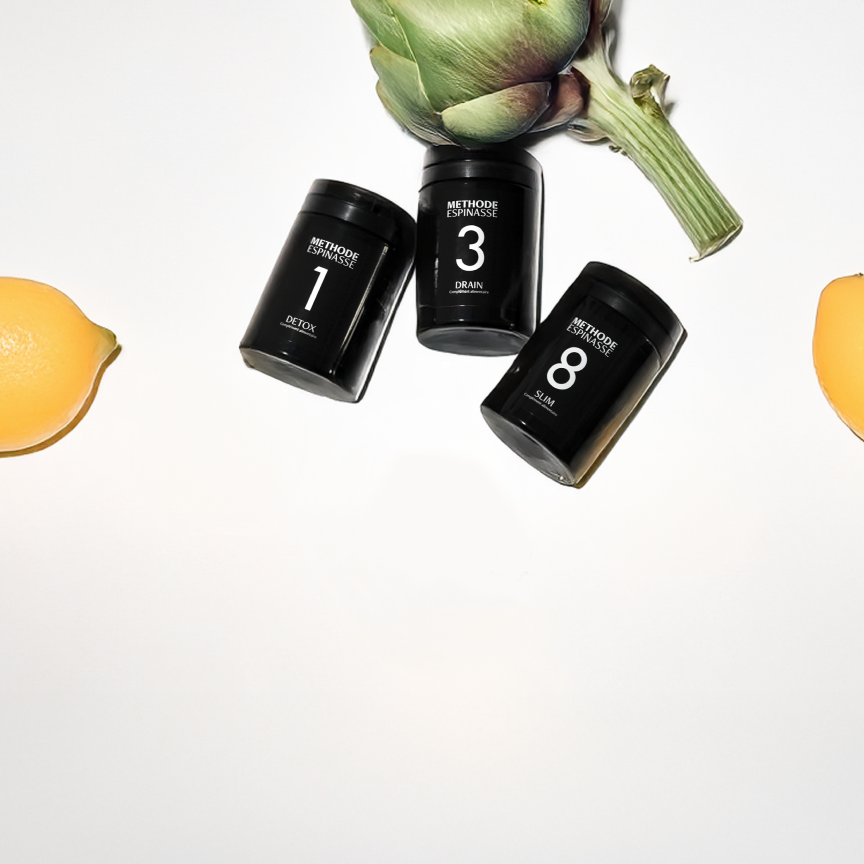
Découvrez 08 - Slim
Your ally for a slimmer figure and healthy weight

Journal

For decades, dietary fats were judged mainly through the lens of calories and cholesterol [1]. Today, research paints a far more nuanced picture: lipids are not just fuel—they are structural components of cell membranes, key regulators of inflammation, metabolic sensitivity, and the quality of signals transmitted to the cell [2–6].
In other words, not all vegetable oils are created equal. Their impact depends on three core criteria: fatty acid profile, heat stability, and degree of processing [7–9].
The real question is no longer whether to “eat fat,” but which oil to choose based on how you actually use it—cooking, dressing, occasional use, or daily intake.
A vegetable oil is not neutral. It acts as a repeated biological signal. Depending on its composition and how it is used, it can either support a stable cellular environment or gradually contribute to a more oxidative and inflammatory terrain [5,10].
In practice:
Monounsaturated fat–rich oils (olive oil, avocado oil) are the most stable and versatile. They are suitable for daily use, including gentle cooking.
Omega-3–rich oils (rapeseed/canola, walnut, flaxseed) support inflammatory balance but are highly fragile and must be used raw only.
Omega-6–rich oils (sunflower, corn, soybean, grapeseed), especially when refined and heated, become problematic when consumed in excess—a common pattern in modern diets [7,11].
A critical—and often overlooked—point: how you use an oil completely determines its impact. An oil that is beneficial raw can lose its value when exposed to inappropriate heat [8,9].
If we had to simplify: extra virgin olive oil is the best everyday oil.
Rich in oleic acid, naturally stable, and packed with antioxidant polyphenols, it protects both the oil itself and, after ingestion, the body’s lipid structures [12]. This unique combination explains its consistent association with improved metabolic and cardiovascular health across dietary models [3,12].
Best uses:
Why it works:
In practice: this is your baseline oil. The more consistently it is used, the more coherent your lipid environment becomes over time.
Avocado oil is less essential nutritionally—but highly useful from a culinary and thermal perspective.
It shares a similar monounsaturated profile with olive oil but tolerates higher temperatures more effectively [9].
Best uses:
What it really brings:
It doesn’t outperform olive oil biologically, but it helps limit oil degradation during cooking, which is already a major advantage.
In practice: a functional oil, useful depending on your cooking style.
Cold-pressed rapeseed oil is valuable for one key reason: it helps restore omega-3 intake in diets that are typically imbalanced [5,7].
Omega-3 fatty acids support better inflammatory regulation and more balanced lipid signaling [10,11].
Best uses:
Critical limitation:
It is highly heat-sensitive. Even mild cooking degrades its fatty acids and cancels its benefits [8,9].
In practice: an excellent complementary oil, but never for cooking.
Walnut oil—and especially flaxseed oil—are rich in plant-based omega-3s.
Biologically valuable, but extremely unstable [8,9].
Best uses:
Limitations:
They oxidize very easily:
Poor storage (open bottles, light exposure) rapidly reduces their value.
In practice: these are targeted nutritional additions, not everyday staples.
Sunflower, corn, soybean, and grapeseed oils are now ubiquitous.
They are very high in omega-6 fatty acids. The issue is not their existence—these fats are essential—but their excessive presence in modern diets [5,7].
Why limit them?
When they are:
They promote a more oxidative environment and persistent inflammatory signaling [8–11].
Where they are most common:
In practice: these are often consumed unconsciously and excessively.
This is likely the most important—and least understood—point.
When oils are heated (e.g., sunflower or rapeseed oil in a pan), they can produce oxidized compounds (aldehydes, lipid peroxides) that interact with membranes and mitochondria [10,14].
These effects are not immediate—but cumulative over time.
Simple rules:
An oil can never be evaluated independently of its real-world use.
Two oils with the same name can be fundamentally different.
A virgin oil (extra virgin olive oil, cold-pressed rapeseed oil) still contains:
A refined oil (industrial sunflower, soybean, corn oils) is:
In practice: always choose:
Rather than multiplying oils, the most coherent approach is:
This simplicity mirrors dietary patterns associated with greater longevity: fewer oils, better chosen, used consistently [12].
The real question is not: “What is the best oil?” But rather: “Which oil, for which use—and with what consistency over time?”
Vegetable oils influence:
Used correctly, they become a subtle yet powerful lever for metabolic health. Used poorly—especially when refined and overheated—they silently contribute to low-grade inflammation and cellular ageing.
Extra Virgin Olive Oil
Primary use: daily base
Use for: dressings + gentle cooking
Avoid: prolonged high heat
Why: rich in monounsaturated fats and polyphenols → stable, low oxidation, anti-inflammatory profile
Avocado Oil
Primary use: cooking
Use for: higher heat, grilling
Avoid: unnecessary daily use
Why: highly heat-stable → limits oxidation
Rapeseed (Canola) Oil
Primary use: raw
Use for: dressings, cold dishes
Avoid: any heating
Why: provides omega-3 → improves fatty acid balance
Walnut Oil
Primary use: occasional
Use for: cold seasoning, small amounts
Avoid: heat, long storage
Why: omega-3 rich but highly unstable
Flaxseed Oil
Primary use: targeted nutritional use
Use for: raw only, very small amounts
Avoid: heat, air, light exposure
Why: extremely rich in omega-3 but ultra-fragile
Sunflower Oil (Refined)
Primary use: limit
Avoid: cooking, frying, daily use
Why: very high omega-6 → pro-inflammatory in excess
Corn / Soybean Oil
Primary use: strongly limit
Avoid: cooking, processed food reliance
Why: excess omega-6 + refining → inflammatory environment
Grapeseed Oil
Primary use: avoid in routine
Avoid: cooking (high oxidation sensitivity)
Why: very high omega-6 + unstable
[1] Keys, A. et al. (1965). Serum cholesterol response to changes in dietary lipids.
https://www.sciencedirect.com/science/article/pii/0026049565900137
[2] Simons, K. & Ikonen, E. (1997). Functional rafts in cell membranes.
https://www.nature.com/articles/42408
[3] Mozaffarian, D. et al. (2010). Dietary fats and cardiovascular disease.
https://www.ahajournals.org/doi/10.1161/CIR.0b013e3181c9b2d3
[4] Calder, P.C. (2015). Omega-3 fatty acids and inflammation.
https://pubmed.ncbi.nlm.nih.gov/252341
[5] Lands, W.E.M. (2005). Dietary fats and health.
https://pubmed.ncbi.nlm.nih.gov/16387724
[6] Stillwell, W. & Wassall, S.R. (2003). Membrane properties and lipid composition.
https://pubmed.ncbi.nlm.nih.gov/14580707
[7] Simopoulos, A.P. (2002). The importance of the omega-6/omega-3 ratio in cardiovascular disease and other chronic diseases.
https://pubmed.ncbi.nlm.nih.gov/12442909
[8] Shahidi, F. & Zhong, Y. (2010). Lipid oxidation and improving the oxidative stability of food lipids.
https://ift.onlinelibrary.wiley.com/doi/10.1111/j.1750-3841.2010.01657.x
[9] Choe, E. & Min, D.B. (2006). Mechanisms and factors for edible oil oxidation.
https://pubmed.ncbi.nlm.nih.gov/16403635
[10] Ayala, A. et al. (2014). Lipid peroxidation: production, metabolism, and signaling mechanisms of malondialdehyde and 4-hydroxy-2-nonenal.
https://www.hindawi.com/journals/omcl/2014/360438/
[11] Serhan, C.N. et al. (2008). Resolution of inflammation: state of the art.
https://faseb.onlinelibrary.wiley.com/doi/10.1096/fj.07-103933
[12] Covas, M.I. et al. (2006). The effect of polyphenols in olive oil on heart disease risk factors.
https://pubmed.ncbi.nlm.nih.gov/17113676
[13] Monteiro, C.A. et al. (2019). Ultra-processed foods: what they are and how to identify them.
https://pubmed.ncbi.nlm.nih.gov/30744710
[14] Grootveld, M. et al. (2014). Health effects of oxidized heated oils and aldehydes.
https://pubs.rsc.org/en/content/articlehtml/2014/fo/c3fo60270c
[15] Frankel, E.N. (2014). Lipid Oxidation (2nd ed.).
https://www.sciencedirect.com/book/9780857097927/lipid-oxidation
[16] Halliwell, B. & Gutteridge, J.M.C. (2015). Free Radicals in Biology and Medicine (5th ed.).
https://global.oup.com/academic/product/free-radicals-in-biology-and-medicine-9780198717478