DIETARY SUPPLEMENTS

Découvrez 08 - Slim
Your ally for a slimmer figure and healthy weight

Journal
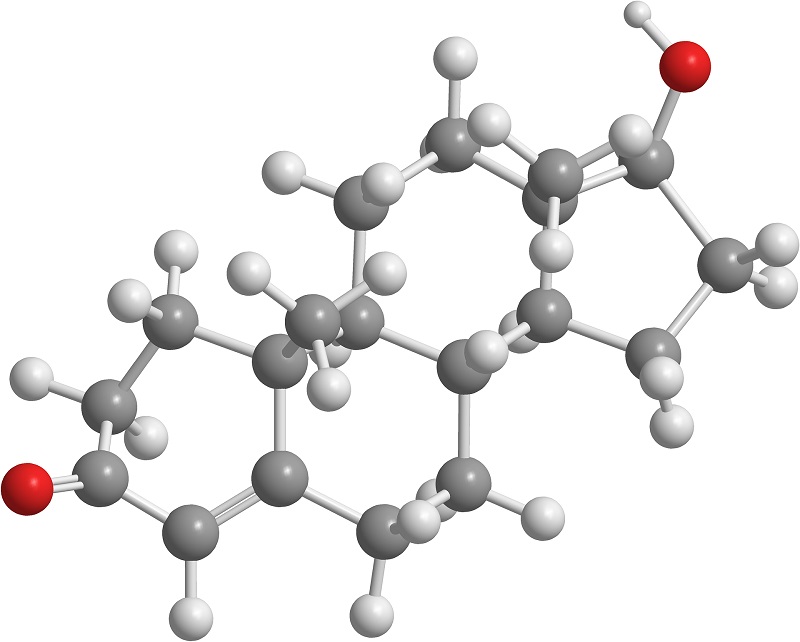
Testosterone is often reduced to muscle mass and sexual performance.
In reality, it is a key systemic regulator, involved in:
Over the past two decades, scientific literature has documented a steady decline in testosterone levels in men, independent of age, pointing to environmental and metabolic drivers [1,2].
This is no longer just a hormonal issue. It is metabolic, inflammatory, and systemic.
Testosterone is primarily produced by Leydig cells, under the control of the hypothalamic–pituitary–gonadal (HPG) axis.
Its regulation depends on:
Recent research shows that testosterone production is strongly influenced by metabolic health, particularly insulin resistance and excess body fat [3].
A portion of testosterone is also converted into DHT via 5α-reductase, playing key roles in local tissues such as hair follicles.
The balance between testosterone, DHT, and estrogen is central to male physiology.
Visceral fat is one of the strongest predictors of low testosterone in men.
It acts through several mechanisms:
A major review in Nature Reviews Endocrinology confirms that abdominal obesity is a leading driver of functional hypogonadism [4].
This creates a vicious cycle:
Testosterone becomes a marker of metabolic health.
Insulin resistance is strongly associated with low testosterone.
It disrupts:
Studies show that improving insulin sensitivity leads to higher testosterone levels [5].
This confirms that testosterone cannot be separated from overall metabolic function.
Cortisol acts as a direct antagonist to testosterone.
Under chronic stress:
Endocrine studies show that elevated cortisol is associated with significantly lower testosterone levels [6].
Stress impacts testosterone both directly and indirectly through:
Chronic low-grade inflammation directly affects testosterone production.
It:
Research in immunometabolism published in Cell shows that inflammatory cytokines directly modulate endocrine function [7].
Inflammation is a key driver of modern testosterone decline.
Low testosterone can present as:
These symptoms reflect a broader metabolic and hormonal imbalance.
An effective strategy targets core physiological mechanisms.
Restore hormonal balance through metabolism
Visceral fat is one of the most powerful drivers of low testosterone. It acts as an endocrine organ, increasing aromatase activity (testosterone → estrogen), promoting inflammation, and worsening insulin resistance.
Reducing belly fat often leads to a rapid improvement in hormonal profile.
In practice, this means avoiding extreme calorie restriction, which can suppress testosterone, and instead focusing on a moderate, sustainable calorie deficit. Meal structure plays a key role. A protein- and fat-based breakfast, such as eggs, helps prevent early glucose spikes, while sugary foods in the morning promote insulin surges and fat storage.
A simple nutritional structure — protein, fiber, and healthy fats at each meal — supports progressive visceral fat loss and improves testosterone levels.
Stabilize blood sugar and reduce hyperinsulinemia
Testosterone is closely linked to glucose metabolism. Chronic insulin resistance reduces hormone production and lowers free testosterone levels.
The goal is not just to cut sugar, but to stabilize glycemic response.
Simple strategies make a major difference. The order of food intake impacts blood sugar — starting meals with fiber and protein reduces glucose spikes. Eliminating snacking is another key lever, as each intake triggers an insulin response.
Introducing a moderate overnight fast (12–14 hours) can significantly improve insulin sensitivity without excessive metabolic stress.
These adjustments help restore a metabolic environment favorable to testosterone production.
Optimize sleep and reduce allostatic load
Cortisol directly suppresses testosterone. Chronic stress reduces hormone production while promoting fat storage and inflammation.
Sleep is the primary lever. Testosterone production is closely tied to deep sleep, making 7–8 hours per night essential. Late or irregular sleep patterns directly impair hormonal balance.
Beyond sleep, reducing allostatic load — the cumulative burden of chronic stress — is critical. Constant screen exposure, cognitive overload, and lack of recovery maintain elevated cortisol levels.
Simple interventions such as post-meal walking, morning light exposure, and breathing exercises help regulate this system effectively.
Restore a favorable hormonal environment
Chronic low-grade inflammation disrupts insulin signaling, impairs mitochondrial function, and directly affects testosterone production.
Nutrition is the primary driver. Ultra-processed foods, refined sugars, and industrial oils promote inflammation, while omega-3 fatty acids, polyphenols, and fiber-rich foods support metabolic balance.
The gut microbiome plays a key role. A diverse diet including fiber and fermented foods helps improve microbial composition and reduce metabolic endotoxemia.
Reducing inflammation is a prerequisite for restoring hormonal balance.
Support testosterone production at the cellular level
Testosterone synthesis depends on key micronutrients.
Deficiencies can limit hormone production.
Critical nutrients include:
Protein quality is also essential. Sulfur-containing amino acids support tissue structure and metabolic function.
A diet rich in whole proteins, healthy fats, and micronutrients supports optimal hormonal production.
A Cellular Nutrition® approach focuses on restoring biological coherence.
The SLIM protocol supports testosterone indirectly by:
The HAIR protocol contributes to androgen balance by:
This integrated approach targets not just the hormone itself, but its biological environment.
Low testosterone in men is not just age-related.
It reflects a systemic imbalance involving:
Increasing testosterone naturally requires restoring these systems.
In this context, testosterone becomes a marker of overall health, not just a hormone to “boost.”
What causes low testosterone in men?
Primarily belly fat, insulin resistance, stress, and inflammation.
Can you increase testosterone naturally?
Yes, by improving metabolism, sleep, and stress management.
Does weight affect testosterone?
Yes, especially visceral fat.
Does stress lower testosterone?
Yes, through cortisol, which directly suppresses production.
[1] Travison T.G. et al. (2007)
https://pubmed.ncbi.nlm.nih.gov/17062768/
[2] Levine H. et al. (2017)
https://academic.oup.com/humupd/article/23/6/646/4035689
[3] Grossmann M. (2011)
https://pubmed.ncbi.nlm.nih.gov/21632400/
[4] Kelly D.M., Jones T.H. (2013)
https://www.nature.com/articles/nrendo.2013.104
[5] Pitteloud N. et al. (2005)
https://pubmed.ncbi.nlm.nih.gov/15713727/
[6] Cumming D.C. et al. (1983)
https://pubmed.ncbi.nlm.nih.gov/6348068/
[7] Hotamisligil G.S. (2017)
https://www.cell.com/immunity/fulltext/S1074-7613(17)30359-8