DIETARY SUPPLEMENTS
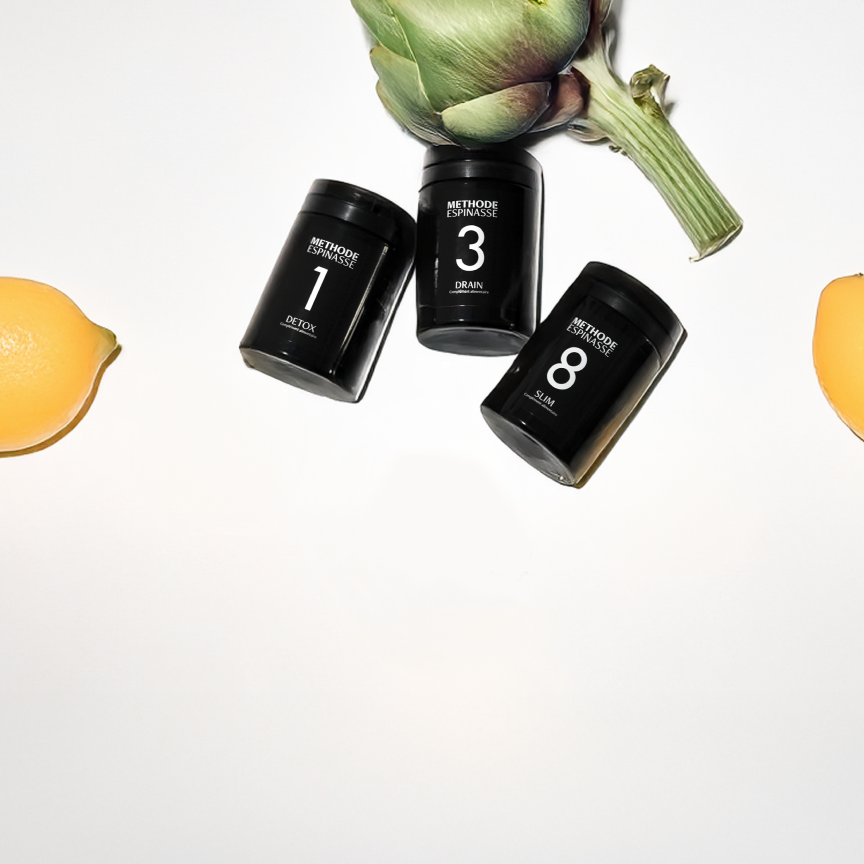
Découvrez 08 - Slim
Your ally for a slimmer figure and healthy weight

Journal
For decades, hormone balance has been framed as a question of levels:
Too much estrogen.
Too little progesterone.
Hormonal “imbalance.”
This model is incomplete.
Emerging research shows that hormone health is not just about how much estrogen your body produces — but how it is metabolized, recycled, and eliminated.
And that process is largely controlled by your gut microbiome.
At the center of this interaction is a critical, yet under-recognized system: the estrobolome.
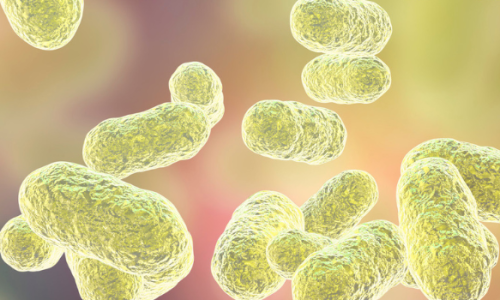
The estrobolome refers to the collection of gut bacteria capable of metabolizing estrogens.
These microbes produce key enzymes — particularly β-glucuronidase — which regulate whether estrogen is eliminated from the body or reabsorbed into circulation [1][2].
In other words:
Your gut microbiome directly determines your true estrogen exposure.
Estrogen metabolism follows a tightly regulated biological pathway known as enterohepatic circulation.
Estrogens are processed in the liver and conjugated to facilitate elimination.
They are secreted into the bile and transported to the gut.
At this stage, gut bacteria decide their fate:
— High β-glucuronidase activity → estrogens are deconjugated and reabsorbed
— Low activity → estrogens are eliminated
This mechanism is a central regulator of systemic hormone levels [1][3].
Disruptions in the gut microbiome — known as dysbiosis — can alter estrogen metabolism in two major ways:
Excess reactivation and recirculation of estrogens
Associated with:
— PMS (premenstrual syndrome)
— breast tenderness
— heavy or irregular cycles
— mood swings
— water retention
Excess elimination of estrogens
Associated with:
— perimenopause symptoms
— fatigue, low mood
— vaginal dryness
— hot flashes
The estrobolome does not operate in isolation.
It interacts with multiple biological systems:
Gut dysbiosis increases pro-inflammatory cytokines, which alter hormone signaling and receptor sensitivity [4].
The microbiome influences serotonin and GABA production — key regulators of mood and PMS symptoms [5].
Chronic stress reshapes the microbiome and disrupts estrogen metabolism via cortisol signaling.
Hormonal symptoms are not purely endocrine.
They are multi-systemic.
PMS is now understood as a neurobiological sensitivity to hormonal fluctuations, influenced by inflammation and the gut microbiome [6].
Characterized by hormonal instability, not just decline.
The gut microbiome plays a key role in how the body adapts to these fluctuations [7].
Associated with:
— reduced estrogen levels
— microbiome shifts
— increased inflammation
— metabolic changes
Highlighting the importance of the gut–liver–hormone axis [4][8].
Modern research reframes hormone optimization:
It is no longer about “adding hormones.”
It is about:
— regulating estrogen metabolism
— optimizing detox pathways
— supporting the gut microbiome
— stabilizing neuroendocrine signaling
This is where a Cellular Nutrition® approach becomes critical.
A comprehensive approach to hormone balance must act on multiple levels:
Botanicals such as Vitex agnus-castus help modulate prolactin and support progesterone balance [9].
Targeted probiotics help regulate β-glucuronidase activity and estrogen metabolism [3][5].
Reducing low-grade inflammation improves hormone signaling and symptom expression.
Supporting stress resilience reduces hormonal volatility.
Hormone balance is not just an endocrine issue.
It is a microbiome-driven, systems-level process.
The key question is no longer: “How much estrogen do you produce?” But: “How does your body process and regulate it?”
And your gut microbiome is a central part of that answer.
The estrobolome is the collection of gut bacteria involved in estrogen metabolism and detoxification.
By supporting liver function, improving gut health, and optimizing microbiome balance.
Yes. The gut microbiome directly regulates estrogen levels, inflammation, and neurotransmitters.
Often a combination of impaired estrogen detox, gut dysbiosis, and hormonal sensitivity.
[1] Plottel CS, Blaser MJ. Microbiome and malignancy: the estrogen connection. mBio. 2011.
https://journals.asm.org/doi/10.1128/mBio.00275-11
[2] Kwa M et al. The intestinal microbiome and estrogen receptor-positive breast cancer. JNCI. 2016.
https://academic.oup.com/jnci/article/108/8/djw029/2457793
[3] Baker JM et al. Estrogen–gut microbiome axis. Cell Host & Microbe. 2017.
https://www.cell.com/cell-host-microbe/fulltext/S1931-3128(17)30352-6
[4] Franceschi C et al. Inflammaging and immune system. Nature Reviews Immunology. 2018.
https://www.nature.com/articles/s41577-018-0023-6
[5] Cryan JF, Dinan TG. Gut–brain axis. Physiological Reviews. 2012.
https://journals.physiology.org/doi/full/10.1152/physrev.00018.2011
[6] Schmidt PJ et al. Premenstrual syndrome hormone sensitivity. NEJM. 2017.
https://www.nejm.org/doi/full/10.1056/NEJMoa1605508
[7] Santoro N. Perimenopause physiology. The Lancet. 2016.
https://www.thelancet.com/journals/lancet/article/PIIS0140-6736(16)30250-2/fulltext
[8] Mosconi L et al. Menopause brain metabolism. Scientific Reports. 2021.
https://www.nature.com/articles/s41598-021-90084-y
[9] van Die MD et al. Vitex agnus-castus clinical effects. Phytomedicine. 2013.
https://www.sciencedirect.com/science/article/pii/S0944711313000419