DIETARY SUPPLEMENTS

Découvrez 08 - Slim
Your ally for a slimmer figure and healthy weight

Journal
Weight loss supplements are everywhere. Fat burners, appetite suppressants, metabolism boosters, detox formulas — the promises are endless. Faster results, effortless fat loss, better energy, reduced cravings.
And yet, despite massive global use, results remain disappointing for most people.
This gap between expectation and reality is not a coincidence. It is now clearly documented in scientific literature.
Large-scale meta-analyses consistently show that most weight loss supplements produce minimal and often clinically insignificant results.
A systematic review published in the International Journal of Obesity concluded that the evidence supporting weight loss supplements is weak and insufficient for clinical recommendation [1]. More recently, a meta-analysis of 67 randomized controlled trials found that even the most studied compounds — including chitosan, glucomannan, and conjugated linoleic acid — lead to only modest reductions in body weight, typically under 2 kg [2].
Other reviews confirm that the overall quality of evidence remains limited, with inconsistent outcomes and poor long-term sustainability [3]. Clinical guidance from institutions such as the Mayo Clinic further emphasizes that very few supplements demonstrate meaningful or lasting effects [4].
This does not mean all supplements are ineffective. Certain mechanisms are well documented.
Compounds such as caffeine or green tea extract can modestly increase thermogenesis and fat oxidation. Soluble fibers like glucomannan may enhance satiety. Some ingredients can improve specific metabolic markers.
For example, evidence-based reviews show that green tea extracts can produce small but measurable weight loss effects [5].
However, these effects are limited, highly context-dependent, and rarely sufficient on their own.
The fundamental problem lies in how most supplements are designed.
They follow a reductionist model: one mechanism → one ingredient → one expected outcome
But weight regulation does not work that way.
Data from The Lancet and global cohort studies demonstrate that metabolic health is always multifactorial, involving:
— insulin resistance
— chronic low-grade inflammation
— gut microbiome imbalance
— hormonal regulation
— stress and cortisol
— sleep quality
Weight is not controlled by a single lever. It is controlled by a system [6].
Modern research shows that difficulty losing weight is rarely due to a single deficiency.
Instead, it reflects a combination of biological factors:
— impaired glucose and insulin regulation
— chronic inflammation
— microbiome dysregulation
— mitochondrial inefficiency
— stress-related hormonal disruption
Within this framework, adding a single compound does not significantly alter the system.
This is precisely what the Global Burden of Disease study highlights: metabolic risk emerges from long-term patterns of combined exposures, not isolated factors [6].
The reasons are now clear:
— they target only one pathway
— they ignore the gut microbiome
— they do not address inflammation
— they fail to regulate hormonal systems
— they do not restore metabolic flexibility
The result is predictable: limited impact, inconsistent results, and short-lived effects.
Modern nutrition science has introduced a critical concept: biological synergy.
This refers to the ability of multiple compounds to interact and produce effects that are stronger — or fundamentally different — than when used alone.
But true synergy goes beyond nutrients themselves. It involves:
— metabolic signaling pathways
— gut microbiome interactions
— inflammatory status
— mitochondrial function
— hormonal regulation
The effectiveness of any intervention depends on how it integrates into this biological network.
The most effective approaches to weight loss no longer rely on isolated ingredients.
They focus on:
— improving insulin sensitivity
— reducing chronic inflammation
— restoring microbiome balance
— supporting mitochondrial energy production
— enhancing metabolic flexibility
Supplements can play a role — but only when designed within this framework.
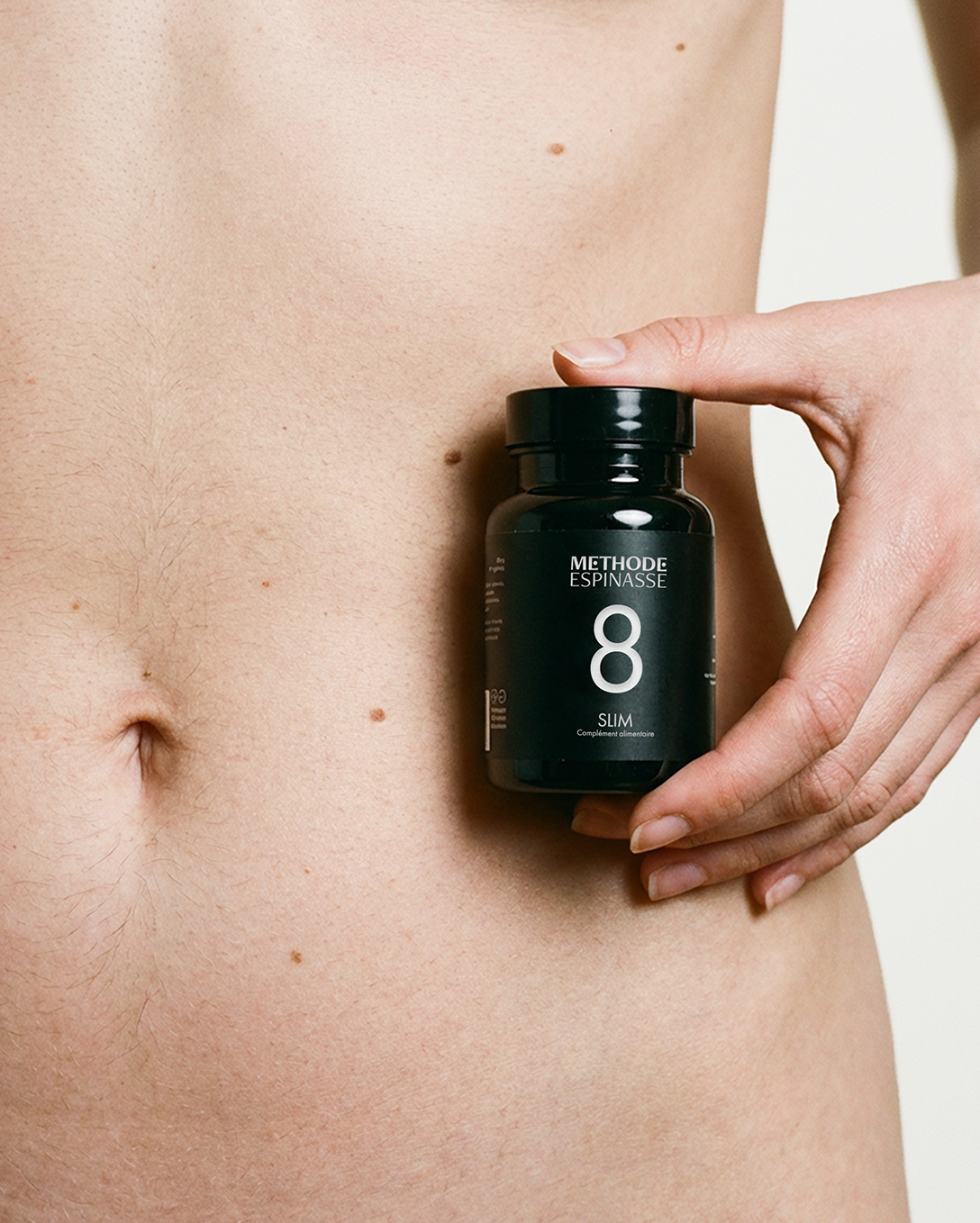
Unlike traditional fat burners, SLIM is designed as a multi-target metabolic system, addressing the core biological drivers of weight gain rather than a single mechanism.
By acting simultaneously on metabolic, hormonal, and digestive pathways, SLIM targets the underlying biological processes involved in resistant weight gain and glycemic imbalance. It supports metabolic flexibility — the body’s ability to efficiently switch between glucose and fat as energy sources — which is essential for sustainable fat loss. SLIM helps stabilize blood sugar levels, reduce insulin spikes, and limit sugar cravings, key drivers of abdominal fat storage and metabolic fatigue. At the same time, it activates fat oxidation pathways and lipolysis, promoting gradual mobilization of fat stores while preserving lean mass, energy, and overall vitality. By integrating the gut–liver–metabolism axis, SLIM also contributes to reducing low-grade inflammation and optimizing the metabolic microbiome, two critical factors in long-term weight regulation. This systemic approach supports fat loss without disrupting physiological balance, while improving digestive function, emotional stability, and metabolic performance.
— Activation of AMPK and mitochondrial fat oxidation (berberine, coleus)
— Improved insulin sensitivity and reduced intestinal glucose absorption (gymnema, berberine)
— Increased lipolysis and thermogenesis
— Modulation of the metabolic microbiome
— Support for liver detoxification and lipid metabolism
Berberine acts as a powerful metabolic regulator by activating AMPK, often described as the body’s “metabolic master switch,” improving insulin sensitivity and reducing hepatic glucose production. Clinical data show effects comparable to metformin on glycemic control, along with improvements in lipid profiles and inflammatory markers [7].
Gymnema sylvestre reduces sugar absorption and cravings while supporting pancreatic beta-cell function and insulin regulation, contributing to improved glycemic control and fat mass reduction [8].
Coleus forskohlii increases intracellular cAMP levels, stimulating lipolysis and promoting fat mobilization and thermogenesis, while supporting lean mass preservation [9].
Targeted probiotics contribute to metabolic balance by modulating gut microbiota composition, reducing intestinal permeability, and improving insulin sensitivity, in line with recent findings on microbiome-driven metabolic regulation [10].
This is where the paradigm shifts.
Cellular Nutrition® does not aim to “burn fat” through isolated mechanisms. It focuses on organizing coherent biological signals that regulate metabolism at the cellular level.
This includes:
— targeting multiple pathways simultaneously
— creating functional synergy between ingredients
— integrating microbiome, inflammation, and metabolism
— modulating key signaling pathways such as AMPK and mTOR
Each formulation becomes a biological system, not a collection of ingredients.
Modern science is clear.
Weight loss supplements are not inherently ineffective — but most are based on an outdated model.
Weight regulation is not a single-variable problem. It is a systems biology issue.
In 2026, the real question is no longer: “What supplement should I take to lose weight?” But rather: “How does my body regulate energy, metabolism, and fat storage at the cellular level?”
That is where real, sustainable results begin.
[1] Onakpoya I., Posadzki P., Ernst E. (2004) The efficacy of weight loss supplements: a systematic review and meta-analysis of randomized controlled trials, International Journal of Obesity. https://pubmed.ncbi.nlm.nih.gov/15051593/
[2] Bessell E., et al. (2021) Efficacy of dietary supplements for weight loss: systematic review and meta-analysis, International Journal of Obesity. https://pubmed.ncbi.nlm.nih.gov/33976376/
[3] Wharton S., et al. (2020) Dietary supplements for weight loss: systematic review and meta-analysis, Obesity. https://onlinelibrary.wiley.com/doi/10.1002/oby.23110
[4] Mayo Clinic (2023) Weight-loss supplements: Do they work? https://www.mayoclinic.org/healthy-lifestyle/weight-loss/in-depth/weight-loss/art-20046409
[5] Hawaii Pacific Health (2021) Evidence-based review of supplements used in weight loss. https://www.hawaiipacifichealth.org/healthier-hawaii/eat-healthy/evidence-based-review-of-popular-supplements-functional-foods-used-in-weight-loss/
[6] GBD 2017 Diet Collaborators (2019) Health effects of dietary risks in 195 countries, The Lancet. https://www.thelancet.com/journals/lancet/article/PIIS0140-6736(19)30041-8/fulltext
[7] Zhang Y., et al. (2010) Berberine in metabolic diseases, Metabolism. https://pubmed.ncbi.nlm.nih.gov/20378826/
[8] Leach M.J., Kumar S. (2012) Gymnema sylvestre for diabetes, Journal of Clinical Biochemistry and Nutrition. https://pubmed.ncbi.nlm.nih.gov/22465040/
[9] Godard M.P., et al. (2005) Effects of forskolin on body composition, Obesity Research. https://pubmed.ncbi.nlm.nih.gov/16129715/
[10] Wastyk H.C., et al. (2021) Gut-microbiota-targeted diets modulate human immune status, Cell. https://www.cell.com/cell/fulltext/S0092-8674(21)00754-6