DIETARY SUPPLEMENTS
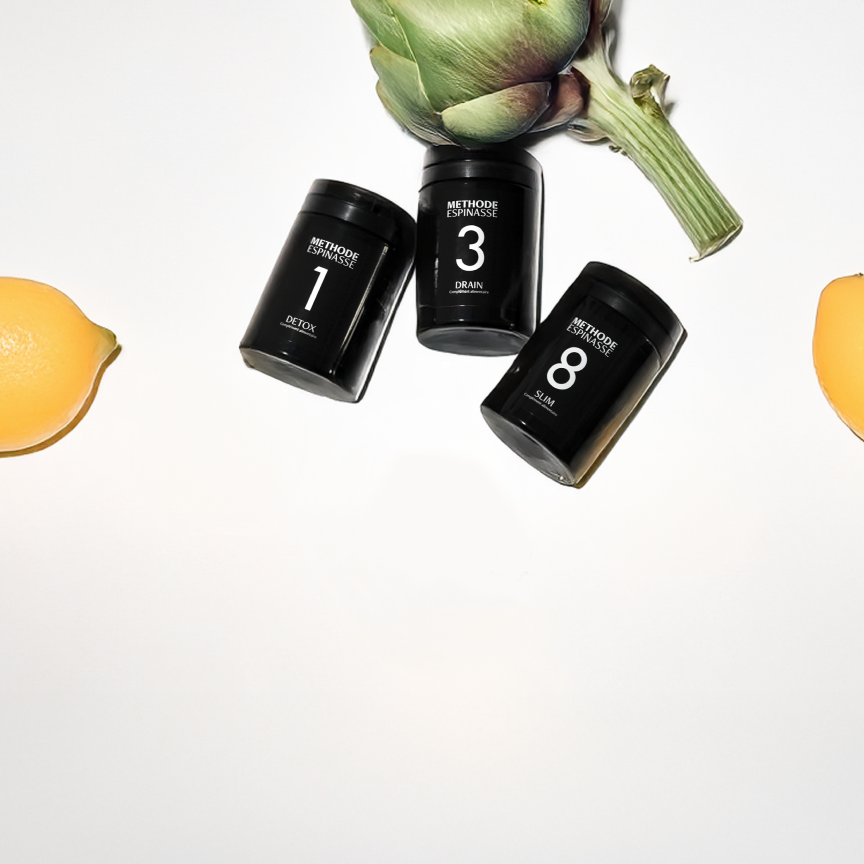
Découvrez 08 - Slim
Your ally for a slimmer figure and healthy weight

Journal
The supplement industry has never been bigger. From weight loss to gut health, energy, immunity, and longevity, millions of people take supplements every day.
Yet one question keeps coming up: do supplements actually work?
The answer is more nuanced than most marketing claims suggest.
Because modern science has fundamentally changed how we understand nutrition — and most supplements haven’t caught up.
For decades, supplements have been based on a simple model:
A deficiency → one nutrient
Fatigue → a vitamin
A symptom → a single compound
This approach still dominates the market.
But it no longer reflects how human biology works.
Today, leading research shows that the body does not respond to isolated nutrients — it responds to integrated biological signals.
Major scientific publications now converge on one key idea:
Health is driven by systems, not single nutrients.
The updated Hallmarks of Aging published in Cell (2023) identifies key biological drivers of aging and health:
— dysregulated nutrient sensing
— mitochondrial dysfunction
— chronic low-grade inflammation
— microbiome imbalance [1]
This means your body is constantly interpreting a complex metabolic environment, not just absorbing nutrients.
At the cellular level, everything is interconnected.
Large-scale research published in The Lancet — including the Global Burden of Disease study — shows that nutritional risk is never driven by one factor alone [2].
Instead, it comes from patterns of intake over time:
— combinations of deficiencies and excesses
— interactions between diet, metabolism, and inflammation
— long-term exposure to imbalanced nutritional environments
In other words:
nutrition acts as a multi-layered biological signal.
This is where most supplements fail.
They are designed around isolated ingredients, while the body operates through interconnected systems.
Clinical evidence supports this.
The PREDIMED trial (New England Journal of Medicine) showed that cardiovascular benefits came from a complete dietary pattern, not a single nutrient [3].
Large Harvard cohort studies confirm the same: long-term health outcomes are driven by overall dietary quality, not isolated compounds [4].
The conclusion is clear: taking one nutrient rarely produces meaningful results on its own.
Modern research now recognizes the importance of nutrient synergy — the interaction between multiple compounds that produce enhanced or different effects compared to isolated use [5].
But real synergy goes beyond nutrients themselves.
It involves:
— the gut microbiome
— enzymatic cofactors
— inflammatory status
— mitochondrial function
— metabolic context
This is reinforced by the concept of the food matrix effect, which shows that how nutrients are structured and delivered changes their biological impact [6].
In simple terms: it’s not just what you take — it’s how it works together.
So what makes a supplement effective in 2026?
Not higher doses. Not trendy ingredients.
The best supplements today are designed to:
— act on multiple biological pathways at once
— create functional synergy between ingredients
— support the gut microbiome
— regulate inflammation and metabolism
— interact with cellular signaling systems (AMPK, mTOR, etc.)
This is a completely different model.
The gut microbiome is now recognized as a central regulator of immunity, metabolism, and inflammation.
Major reviews in Nature Reviews Gastroenterology & Hepatology confirm its role in chronic disease [7].
Synbiotics — combining prebiotics and probiotics — are one of the clearest examples of functional synergy [8].
Mitochondria are not just “energy producers” — they regulate inflammation, cellular signaling, and aging.
Mitochondrial dysfunction is now considered a key driver of fatigue and metabolic decline [1].
Chronic low-grade inflammation is linked to most modern health issues, from weight gain to cardiovascular disease [9].
Targeting inflammation at the cellular level is now a core strategy.
Blood sugar regulation and metabolic flexibility are central to energy, weight management, and long-term health.
These processes are tightly linked to nutrient-sensing pathways like AMPK and mTOR [10].
This is where the concept of Cellular Nutrition® comes in.
Instead of focusing on isolated ingredients, it focuses on how nutrients interact within biological systems.
It aims to:
— structure coherent biological signals
— target cellular regulatory pathways
— integrate microbiome, inflammation, and metabolism
— create functional ingredient synergies
Each formulation is designed as a biological system, not just a list of ingredients.
The question is no longer whether supplements work.
The real question is: are they aligned with how your body actually functions?
Modern science is clear: health is not driven by isolated nutrients. It is driven by your body’s ability to process coherent, integrated signals at the cellular level.
In 2026, the best supplements are not the ones that give you more.
They are the ones that work with your biology.
[1] López-Otín C. et al. Hallmarks of Aging: An Expanding Universe. Cell, 2023.
https://www.cell.com/cell/fulltext/S0092-8674(22)01377-0
[2] GBD 2017 Diet Collaborators. Health effects of dietary risks in 195 countries. The Lancet, 2019.
https://www.thelancet.com/journals/lancet/article/PIIS0140-6736(19)30041-8/fulltext
[3] Estruch R. et al. Primary prevention of cardiovascular disease with a Mediterranean diet. NEJM, 2013.
https://www.nejm.org/doi/full/10.1056/NEJMoa1200303
[4] Wang D. et al. Optimal dietary patterns for prevention of chronic disease. Nature Medicine, 2023.
https://pubmed.ncbi.nlm.nih.gov/36914892/
[5] Townsend N. et al. Nutrient synergy: definition and evidence. Nutrients, 2023.
https://pubmed.ncbi.nlm.nih.gov/37899823/
[6] Fardet A. Food matrix effects. Nutrients, 2022.
https://pubmed.ncbi.nlm.nih.gov/35067754/
[7] Nature Reviews Gastroenterology & Hepatology. Gut microbiome in health and disease.
https://www.nature.com/articles/s41575-018-0063-2
[8] Swanson K.S. et al. Synbiotics consensus statement. Nature Reviews Gastroenterology & Hepatology, 2020.
https://www.nature.com/articles/s41575-020-0344-2
[9] Gregor M.F., Hotamisligil G.S. Inflammation and metabolic disease. The Lancet, 2011.
https://www.thelancet.com/journals/lancet/article/PIIS0140-6736(11)60827-5/fulltext
[10] Fontana L., Partridge L. Promoting health and longevity through diet. Cell, 2015.
https://pubmed.ncbi.nlm.nih.gov/24698685/