DIETARY SUPPLEMENTS
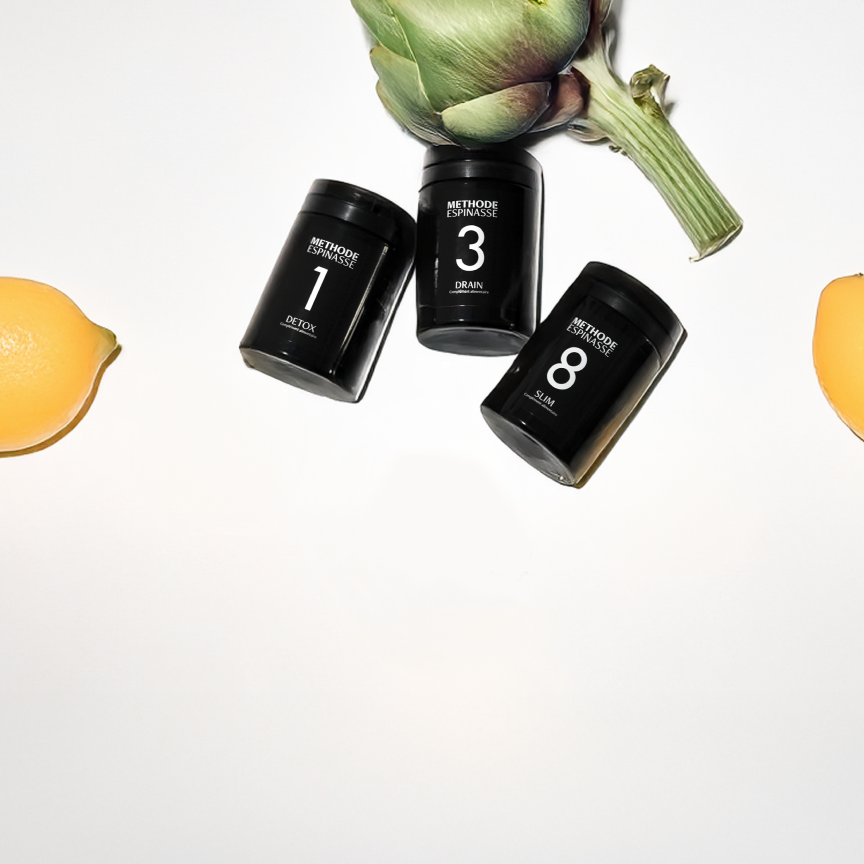
Découvrez 08 - Slim
Your ally for a slimmer figure and healthy weight

Journal
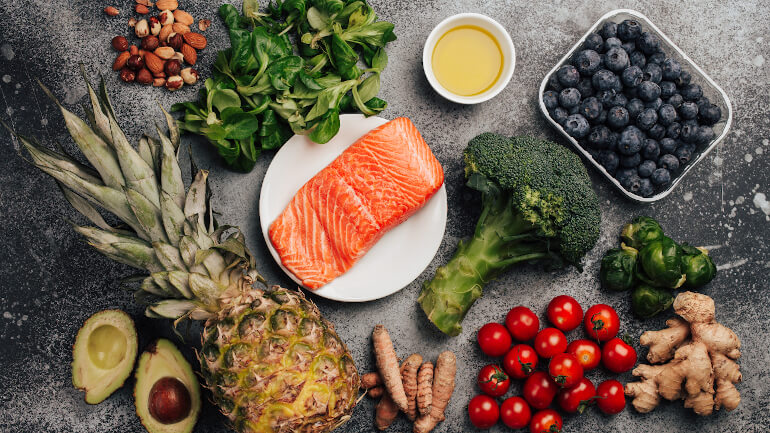
Chronic inflammation is now recognized as one of the key drivers of modern health issues.
Unlike acute inflammation, which is protective, low-grade chronic inflammation develops silently over time. It is associated with:
— weight gain
— insulin resistance
— cardiovascular disease
— digestive issues
— skin conditions
— accelerated aging
Among all lifestyle factors, diet is one of the most powerful levers to reduce inflammation naturally.
Some foods promote inflammation.
Others actively help regulate it at the cellular level.
Here are the best anti-inflammatory foods, supported by scientific evidence.
Vegetables are consistently associated with lower inflammation levels.
They provide:
— fiber
— vitamins and minerals
— polyphenols
Best examples:
— spinach, kale, broccoli
— zucchini, bell peppers
— carrots, beets
These compounds help reduce oxidative stress and modulate inflammatory pathways [1].
Fruits rich in polyphenols have well-documented anti-inflammatory effects.
Best examples:
— blueberries
— raspberries
— strawberries
— pomegranate
They help:
— reduce oxidative stress
— lower inflammatory cytokines
— support vascular health
Multiple studies show their ability to reduce inflammation markers [2].
Omega-3 fatty acids play a central role in inflammation control.
Best choices:
— salmon
— sardines
— mackerel
— herring
Benefits include:
— reduced inflammatory mediators
— improved insulin sensitivity
— cardiovascular protection
These effects are strongly supported by research [3].
Extra virgin olive oil is rich in polyphenols and monounsaturated fats.
It is associated with:
— reduced inflammation markers
— improved heart health
— better lipid profile
Example:
— use daily as a dressing for vegetables or salads
It is a key component of the Mediterranean diet [4].
Nuts and seeds provide:
— omega-3 fatty acids
— fiber
— antioxidant compounds
Best examples:
— walnuts
— almonds
— flaxseeds
— chia seeds
They support:
— inflammation regulation
— stable blood sugar
— satiety
Legumes are highly beneficial due to their impact on the gut microbiome.
Best examples:
— lentils
— chickpeas
— beans
They provide:
— fermentable fiber
— plant-based protein
— essential minerals
They promote the production of short-chain fatty acids, known for anti-inflammatory effects [5].
Green tea is rich in EGCG (epigallocatechin gallate), a powerful antioxidant.
Benefits include:
— reduced inflammation
— lower oxidative stress
— metabolic support
Example:
— 2 to 3 cups per day
Its effects are widely documented in scientific literature [6].
High-quality dark chocolate is rich in flavonoids.
To maximize benefits:
— choose ≥70% cocoa (ideally ≥80%)
— avoid high sugar content
Benefits:
— improved vascular function
— reduced inflammation
— microbiome support
Certain spices have strong anti-inflammatory properties.
Best examples:
— turmeric (curcumin)
— ginger
— cinnamon
They help:
— reduce inflammatory pathways
— lower oxidative stress
Example:
— add turmeric + black pepper to meals
Fermented foods help balance the gut microbiome.
Best examples:
— yogurt
— kefir
— sauerkraut
— kimchi
They contribute to:
— improved gut diversity
— reduced inflammation
The gut–inflammation connection is now well established [7].
An anti-inflammatory diet is not about one “superfood.”
It is about consistency and overall dietary patterns:
— high intake of whole, unprocessed foods
— rich in fiber and polyphenols
— balanced healthy fats
— low in ultra-processed foods
Example of a simple anti-inflammatory day:
— breakfast: yogurt + berries + nuts
— lunch: vegetables + fatty fish + olive oil
— dinner: legumes + vegetables + seeds
From a Cellular Nutrition® standpoint, these foods act as biological signals.
They influence:
— inflammation
— metabolism
— gut microbiome
— mitochondrial function
The goal is not to rely on one food,
but to create a coherent cellular environment.
Reducing inflammation is not about restriction.
It is about consistent, strategic food choices.
Each meal sends signals to your body.
Over time, those signals shape your inflammatory state, your metabolism, and your long-term health.
[1] Calder PC et al. Diet and inflammation.
https://pubmed.ncbi.nlm.nih.gov/20472033/
[2] Polyphenols and inflammation.
https://pubmed.ncbi.nlm.nih.gov/20156556/
[3] Omega-3 fatty acids and inflammation.
https://pubmed.ncbi.nlm.nih.gov/12442909/
[4] Mediterranean diet and inflammation.
https://pubmed.ncbi.nlm.nih.gov/18326600/
[5] Dietary fiber and inflammation.
https://pubmed.ncbi.nlm.nih.gov/25769363/
[6] Green tea and inflammation.
https://pubmed.ncbi.nlm.nih.gov/20156466/
[7] Microbiota and inflammation.
https://pubmed.ncbi.nlm.nih.gov/30309968/