DIETARY SUPPLEMENTS

Découvrez 08 - Slim
Your ally for a slimmer figure and healthy weight

Journal
There’s a quiet paradox in the way the body responds to certain foods. Legumes—lentils, chickpeas, beans—are consistently associated with a healthy diet. High in fibre, rich in micronutrients, they tick every nutritional box. And yet, for many people, these are precisely the foods that trigger bloating, gas, and sometimes immediate digestive discomfort.
This reaction is neither subjective nor unpredictable. It is driven by a very specific digestive mechanism. Certain carbohydrates found in these foods—known as galacto-oligosaccharides (GOS)—require a particular enzyme to be properly broken down: alpha-galactosidase. The issue is simple: the human body produces very little of it. As a result, these sugars are not digested in the small intestine and instead reach the colon intact.
This is where the discomfort begins. Once in the colon, these undigested carbohydrates are fermented by gut bacteria, producing gases—hydrogen, methane and carbon dioxide—that lead to bloating and abdominal distension. This process is now well established. A clinical study showed that taking alpha-galactosidase significantly reduces breath hydrogen after a legume-rich meal, confirming a real reduction in intestinal fermentation rather than just a perceived improvement in symptoms [2].
In other words, the issue isn’t the food itself—it’s the body’s inability to break it down upstream.
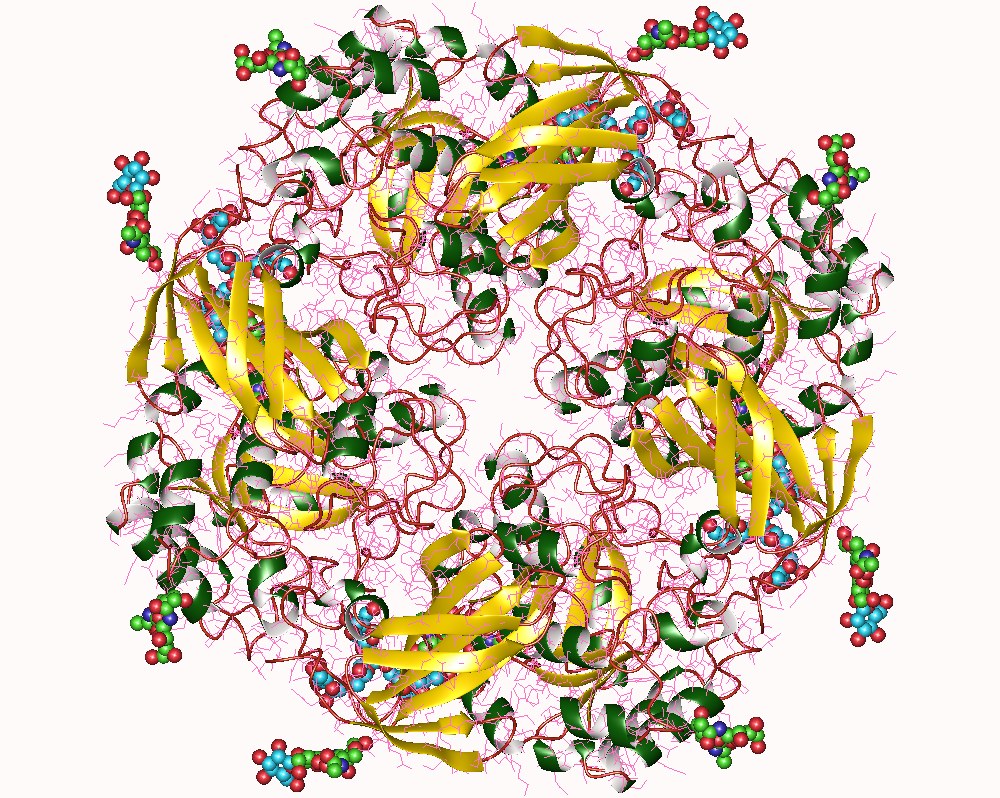
Alpha-galactosidase works precisely at that level. Taken with meals, it helps break down these carbohydrates in the small intestine before they reach the colon. By removing the substrate for fermentation, it mechanically reduces gas production. This effect was already demonstrated in early clinical trials, which showed a significant reduction in flatulence episodes following legume consumption [1].
This distinction matters: the enzyme doesn’t “soothe digestion”—it corrects a specific physiological bottleneck.
That said, alpha-galactosidase is not a universal digestive solution. The evidence is consistent when it comes to reducing gas production, but more variable when looking at broader digestive symptoms. In some individuals—particularly those sensitive to galacto-oligosaccharides—the effect is clear, as demonstrated in the study by Tuck et al. [3]. In others, especially in more complex conditions such as irritable bowel syndrome (IBS), results are mixed or absent [4,5].
Two additional findings help refine this perspective. First, paediatric data show that the enzyme also reduces gas-related symptoms in children, reinforcing that its effect is directly tied to the digestive mechanism itself rather than a specific adult profile [6]. Second, alpha-galactosidase has been shown to interfere with the action of certain medications such as acarbose, partially reducing its glucose-lowering effect [7]. This highlights an important point: the enzyme is not metabolically neutral—it actively alters carbohydrate digestion.
More recent research helps place alpha-galactosidase within a broader nutritional context. Galacto-oligosaccharides belong to the FODMAP family—fermentable carbohydrates known to trigger digestive symptoms. Reducing FODMAP intake has been shown to significantly improve symptoms in many patients [10]. However, such dietary strategies often come at the cost of reduced dietary diversity.
In this context, alpha-galactosidase offers a more targeted approach. Rather than eliminating entire food groups, it allows, in some cases, for improved tolerance by directly breaking down the specific carbohydrates responsible for fermentation [9]. This aligns with a more modern nutritional approach—one that prioritises tolerance and diversity over systematic restriction.
That said, this strategy remains specific. Current data clearly show that alpha-galactosidase primarily acts on GOS and does not address all FODMAP categories, which explains why its effectiveness depends on individual profiles and the types of foods consumed [8,11].
This is where the balance lies. Alpha-galactosidase is highly relevant when the mechanism is clearly identified—excess fermentation of specific carbohydrates. It is far less useful when digestive discomfort is driven by other factors, such as gut dysbiosis, low-grade inflammation or visceral hypersensitivity.
Within a Cellular Nutrition® framework, it should therefore be seen as a targeted, situational tool—useful to improve tolerance to certain foods, but not a substitute for addressing overall digestive health.
Alpha-galactosidase doesn’t “improve digestion” in a general sense. It corrects a very specific step. And that is precisely where its value lies: when used appropriately, it allows nutritionally valuable foods to be reintroduced with greater digestive comfort.
Ultimately, it highlights a broader truth: food tolerance is not just about what you eat, but about what your body is able to process.
[1] Ganiats TG et al. 1994
https://pubmed.ncbi.nlm.nih.gov/7964541/
[2] Di Stefano M et al. 2007
https://pubmed.ncbi.nlm.nih.gov/17151807/
[3] Tuck CJ et al. 2018
https://pubmed.ncbi.nlm.nih.gov/28809383/
[4] Hillilä MT et al. 2016
https://pubmed.ncbi.nlm.nih.gov/26133538/
[5] Böhn L et al. 2021
https://pubmed.ncbi.nlm.nih.gov/33619835/
[6] Di Nardo G et al. 2013
https://pubmed.ncbi.nlm.nih.gov/24063420/
[7] Lettieri JT et al. 1998
https://pubmed.ncbi.nlm.nih.gov/9663365/
[8] So D et al. 2024
https://pmc.ncbi.nlm.nih.gov/articles/PMC11255864/
[9] Nyyssölä A et al. 2020
https://www.sciencedirect.com/science/article/pii/S0924224419309252
[10] Gugelmo G et al. 2023
https://www.mdpi.com/2072-6643/15/3/658
[11] ClinicalTrials.gov — α-galactosidase & FODMAP digestion
https://clinicaltrials.gov/study/NCT05744700