DIETARY SUPPLEMENTS
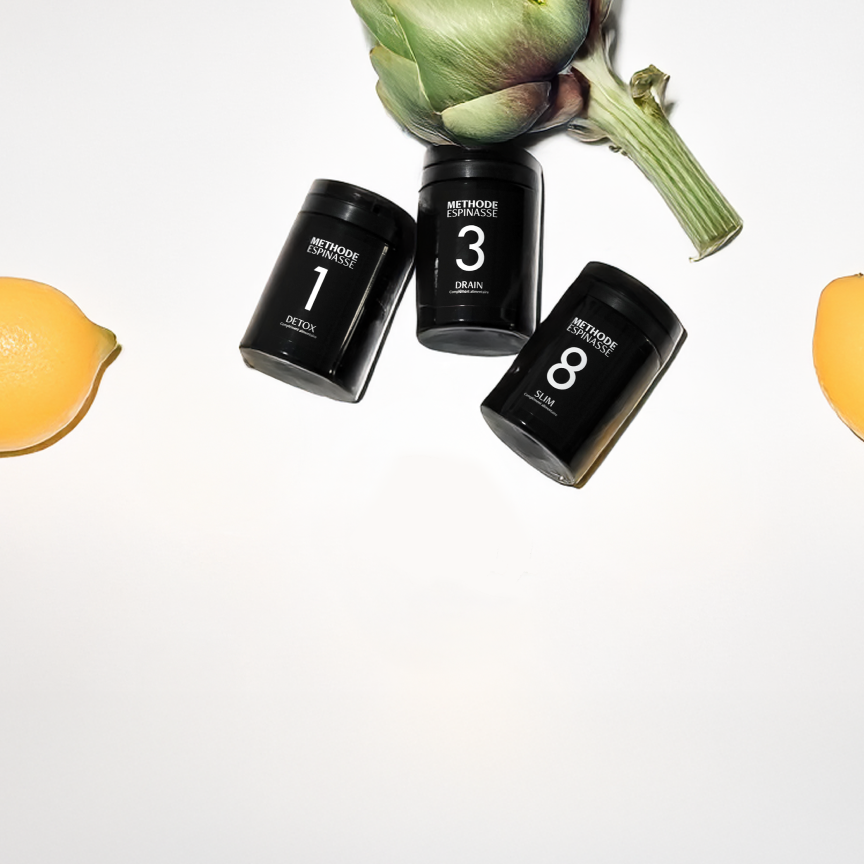
Découvrez 08 - Slim
Your ally for a slimmer figure and healthy weight

Journal
Declining estrogen, collagen loss, sagging skin, dryness, and wrinkles: understanding how hormonal changes during perimenopause and menopause affect skin structure—and which strategies may help maintain healthy, resilient skin.
Perimenopause marks a major hormonal transition in a woman’s life. Long before menstrual periods stop completely, fluctuations in estrogen and progesterone can trigger physiological changes that also affect the skin.
Skin may become noticeably drier, firmness may gradually decline, wrinkles may become more pronounced, and overall skin texture may begin to change.
These changes are not simply the result of getting older.
Female sex hormones, particularly estrogen, play a direct role in maintaining the skin’s structure, hydration, and mechanical properties.
The decline in estrogen following menopause is associated with reduced dermal collagen, decreased elasticity, and changes in the skin barrier [1,2].
Early research by Brincat and colleagues helped establish the relationship between hormonal status and skin collagen content [3].
More recent scientific reviews have further highlighted estrogen’s importance in fibroblast function, the extracellular matrix, and skin hydration [2,4].
Why do hormones have such a significant impact on the skin? When does collagen loss begin? And how can nutrition, skincare, and preventive strategies be adapted during perimenopause?
Perimenopause is the transitional period leading up to menopause.
It is characterized by changes in ovarian function and sometimes substantial hormonal fluctuations.
Menstrual cycles may become irregular, while symptoms such as sleep disturbances, hot flashes, mood changes, and changes in skin quality may begin to appear.
Menopause marks the permanent end of menstrual periods as a result of declining ovarian function.
It is generally confirmed after 12 consecutive months without a period, provided there is no other underlying cause [5].
Natural menopause typically occurs between ages 45 and 55.
However, it is important to distinguish the hormonal changes of perimenopause from those that occur after menopause.
During perimenopause, estrogen levels can fluctuate considerably.
After menopause, ovarian estrogen production remains consistently lower.
These two stages do not necessarily have identical effects on the skin.
Perimenopause is characterized by hormonal fluctuations, while postmenopause involves a sustained reduction in estrogen levels.
Estrogen is best known for its role in reproductive health.
However, its biological effects extend far beyond the reproductive system.
The skin contains estrogen receptors, including ERα and ERβ, which are expressed in different skin cell populations.
These receptors allow estrogen to influence the activity of keratinocytes, fibroblasts, melanocytes, and various skin structures [1].
Estrogen helps regulate several processes involved in skin health, including:
A review published in Dermato-Endocrinology describes estrogen’s wide-ranging effects on skin physiology and the consequences of declining estrogen levels with age [1].
The skin can therefore be considered a hormone-responsive tissue.
Collagen is the primary structural protein in the dermis.
It contributes to the skin’s mechanical strength and overall organization.
Type I and type III collagen are particularly important in the dermis.
Type I collagen primarily provides tensile strength, while type III collagen contributes to extracellular matrix organization and certain mechanical properties.
These proteins are produced largely by fibroblasts.
Estrogen influences several mechanisms involved in fibroblast activity.
It can affect the expression of extracellular matrix components and the processes involved in their renewal.
Estrogen also interacts with biological pathways that regulate the breakdown of dermal proteins.
Matrix metalloproteinases, or MMPs, are a family of enzymes involved in extracellular matrix remodeling.
Their activity is essential for normal tissue function.
However, changes in the balance between collagen synthesis and degradation can contribute to the gradual loss of dermal structure.
Research on estrogen-deficient skin describes changes in fibroblast activity, collagen, elastin, and matrix-remodeling enzymes [2].
Declining estrogen can therefore affect both the renewal and structural organization of skin collagen.
Collagen loss after menopause is one of the most extensively studied aspects of hormonal skin aging.
Frequently cited historical dermatology data suggest that women may lose approximately 30% of their skin collagen during the first five years after menopause.
After that, collagen loss may continue more gradually, with estimates approaching 2% per year in certain populations [6].
However, these figures require careful interpretation.
They are primarily based on historical research and do not represent a universal pattern for every woman.
The extent of collagen loss depends on factors such as baseline skin characteristics, age, genetics, smoking, sun exposure, and hormonal status.
A 1987 study published in the British Journal of Obstetrics and Gynaecology documented a decline in skin collagen content following menopause [3].
The researchers also investigated the relationship between these changes and hormonal status.
Their findings helped establish estrogen’s role in maintaining dermal collagen.
However, collagen loss associated with menopause must be distinguished from the decline that naturally occurs with chronological aging.
Both processes can overlap.
Skin firmness depends on several structural components.
Collagen contributes to the dermis’s mechanical strength.
Elastin helps the skin return to its original shape after stretching or compression.
Glycosaminoglycans contribute to extracellular matrix organization and hydration.
Hormonal changes can affect all of these components.
As collagen content declines, the dermis may gradually lose some of its structural strength.
Changes in elastin and the extracellular matrix can also affect the skin’s mechanical properties.
These processes help explain several visible signs of menopausal skin aging:
However, facial sagging is not determined by the dermis alone.
Changes in facial fat compartments, supporting ligaments, and bone structure also contribute to facial aging.
It would therefore be inaccurate to attribute all facial sagging exclusively to declining estrogen.
Dry skin is one of the changes frequently reported around menopause.
It may appear as tightness, a rougher texture, or increased skin discomfort.
Estrogen influences several mechanisms involved in skin hydration.
These include components of the extracellular matrix, particularly glycosaminoglycans.
Hyaluronic acid belongs to this family of molecules.
It has a strong capacity to bind water and contributes to tissue hydration.
Hormonal changes may also affect epidermal barrier function and certain mechanisms involved in water regulation [2,7].
However, it is important to distinguish two different conditions.
Dry skin generally involves insufficient surface lipids or changes in the skin barrier.
Dehydrated skin lacks water and can occur in any skin type.
Both conditions may occur simultaneously during menopause.
An effective approach should therefore support both hydration and skin barrier function.
Skin thickness depends on the structure of both the epidermis and the dermis.
The dermis contains collagen and elastin fibers that contribute to tissue structure.
Declining estrogen may be associated with reduced skin thickness.
Historical studies have documented differences in skin thickness and collagen content according to hormonal status in postmenopausal women [3,8].
These changes may contribute to greater skin fragility.
Some women notice that their skin bruises more easily or becomes more sensitive to mechanical stress.
Wound healing may also be influenced by hormonal changes.
Estrogen participates in several stages of tissue repair, including inflammation, cell proliferation, and extracellular matrix remodeling [1].
However, significant skin fragility, unexplained bruising, or wounds that heal poorly should be medically evaluated.
These symptoms should not automatically be attributed to menopause.
Wrinkles develop through a combination of biological and mechanical factors.
Declining collagen levels, changes in elastin, skin dryness, and alterations in deeper facial structures can all contribute to their appearance.
During the menopausal transition, some of these changes may become more noticeable.
Less hydrated skin can make fine lines appear more pronounced.
Reduced dermal thickness may also accentuate changes in skin texture.
Meanwhile, photoaging continues to play a major role.
Ultraviolet radiation contributes to the breakdown of extracellular matrix proteins and the development of wrinkles.
Menopause does not replace the other mechanisms of skin aging.
Instead, it adds a hormonal dimension to an already complex process.
A 2025 review published in the Journal of Cosmetic Dermatology discusses the relationship between declining estrogen, collagen loss, skin dryness, and changes in elasticity [4].
Sex hormones also influence certain pigmentation processes.
Melanocytes, the cells responsible for producing melanin, can respond to different hormonal signals.
However, pigmentation changes observed around menopause are not exclusively caused by hormonal fluctuations.
Cumulative sun exposure, inflammation, individual pigmentation characteristics, and certain medications may also play a role.
Dark spots and uneven pigmentation can become more noticeable with age.
It is important to distinguish between sun spots, melasma, and post-inflammatory hyperpigmentation.
These conditions have different underlying mechanisms and may require different treatments.
Sun protection is essential for preventing many forms of UV-related pigmentation.
Any new, changing, or unusual pigmented lesion should be evaluated by a dermatologist.
Acne is not limited to adolescence.
Some women experience adult acne, particularly during periods of hormonal fluctuation.
During perimenopause, changes in estrogen levels can alter the relative hormonal balance.
Androgens, which are also present in women, help regulate sebaceous gland activity.
Changes in this balance may contribute to breakouts.
However, not every woman develops acne during perimenopause.
Genetic, inflammatory, and environmental factors also play a role.
One particular challenge is that acne may occur alongside increasingly dry or sensitive skin.
Highly drying acne treatments may therefore be less well tolerated.
An individualized dermatological approach can address both breakouts and skin barrier sensitivity [6].
Oxidative stress occurs when the production of reactive species exceeds the biological mechanisms responsible for regulating them.
It contributes to several processes associated with cellular aging.
Estrogen influences certain signaling pathways involved in the response to oxidative stress.
Declining estrogen may therefore affect the biological environment of skin cells.
Fibroblasts are particularly sensitive to changes in their oxidative environment.
Excessive production of reactive species can interact with several mechanisms involved in the extracellular matrix.
Research on hormonal skin aging describes interactions among estrogen deficiency, fibroblast activity, oxidative stress, and collagen remodeling [1,2].
However, oxidative stress should not be understood as a process in which all oxidation is inherently harmful.
Certain reactive species play essential roles in normal cellular signaling.
The biological objective is therefore not to eliminate oxidation entirely, but to maintain functional balance.
Collagen synthesis depends on several cellular processes that require amino acids and specific micronutrients.
Nutrition therefore plays a role in maintaining normal skin function.
However, no single food can compensate for the hormonal changes associated with menopause.
A sound nutritional strategy begins with meeting the body’s nutritional needs.
Dietary protein provides the amino acids required to synthesize proteins throughout the body.
Sources include fish, eggs, legumes, tofu, and other plant-based foods.
Inadequate protein intake can compromise various tissue renewal processes.
Vitamin C contributes to normal collagen formation for the normal function of the skin.
It participates in reactions required for collagen maturation.
Kiwis, citrus fruits, bell peppers, broccoli, and berries can help provide dietary vitamin C.
Zinc contributes to the maintenance of normal skin and helps protect cells from oxidative stress.
Sources include shellfish, certain meats, legumes, and seeds.
Copper contributes to the maintenance of normal connective tissues.
It also participates in several enzymatic processes.
Sources include nuts, seeds, legumes, and certain types of seafood.
Vitamin E contributes to the protection of cells from oxidative stress.
Almonds, hazelnuts, certain seeds, and vegetable oils are dietary sources.
Essential fatty acids support the normal function of many cellular structures.
Fatty fish, walnuts, flaxseeds, and chia seeds can all be part of a varied diet.
The goal is not to find a food that can “boost” estrogen levels, but to support the nutritional requirements involved in normal skin function.
A balanced diet can help support metabolic, muscular, and bone health during the menopausal transition.
It can also provide the nutrients required for normal skin function.
Here is an example of a balanced day’s meals.
Eggs or a plant-based protein source, paired with whole-grain rye or buckwheat bread, a few walnuts, and fresh fruit.
This combination provides protein, complex carbohydrates, fats, and various micronutrients.
Fish or legumes, served with a variety of vegetables, quinoa or brown rice, and olive oil.
This meal combines protein, fiber, and fatty acids.
A piece of whole fruit and a handful of almonds or hazelnuts.
A vegetable-based dish with lentils or tofu, accompanied by a whole-grain carbohydrate source according to individual needs.
Dietary diversity matters more than repeatedly consuming a single ingredient marketed as especially beneficial for the skin.
Nutritional intake should also be adapted to individual requirements, physical activity, and overall health.
Oral collagen supplementation has been extensively investigated for its potential effects on skin hydration, elasticity, and visible signs of aging.
However, results must be interpreted in light of the specific formulations studied and the methodological quality of the research.
A 2025 meta-analysis published in The American Journal of Medicine examined 23 randomized controlled trials involving 1,474 participants [9].
The overall analysis found improvements in several skin parameters.
However, analyses accounting for study funding and quality did not find significant effects in higher-quality trials or studies without industry funding.
The authors concluded that clinical evidence remained insufficient to recommend collagen supplements for preventing or treating skin aging.
A subsequent 2026 meta-analysis published in the Journal of Cosmetic Dermatology, including 35 randomized controlled trials and 2,534 participants, found improvements in certain instrumental measurements of hydration and elasticity [10].
However, the evidence for wrinkle reduction and increased dermal density was less robust.
These findings do not establish that all collagen supplements have the same effects.
It is also important to distinguish hydrolyzed collagen peptides, which account for most of the research included in these meta-analyses, from other collagen forms and biomimetic matrices.
Furthermore, studies focusing specifically on perimenopausal women remain limited.
Collagen supplementation is an active area of research, but it should not be presented as a way to directly compensate for declining estrogen levels.
Hormonal changes may make it necessary to adjust your skincare routine.
The goal is to support the skin barrier, limit the effects of photoaging, and address changes in skin texture.
Sun protection is one of the most important measures for preventing UV-related skin aging.
The American Academy of Dermatology recommends regular use of broad-spectrum sunscreen with SPF 30 or higher [6].
Products containing humectants, such as glycerin or hyaluronic acid, can help improve the comfort of dehydrated skin.
Emollients and ingredients that support skin barrier function may also be beneficial for dryness.
Certain topical retinoids have clinical evidence supporting their use for photoaging and fine lines.
However, they can cause irritation, particularly when skin has become drier or more sensitive.
Their use should be adapted to skin tolerance, and prescription treatments should be supervised by a healthcare professional.
Depending on individual needs, a dermatologist may recommend procedures targeting skin texture, pigmentation, or certain signs of aging.
Results and risks vary according to the technique, skin type, and overall skin condition.
An effective menopausal skincare routine does not necessarily need to be more complicated.
It should simply be tailored to the skin’s changing needs.
The effects of menopausal hormone therapy on the skin have been studied for decades.
Some historical studies found higher collagen content in postmenopausal women receiving hormone therapy compared with similar women who were not receiving treatment [8].
A 2024 systematic review and meta-analysis involving 15 studies and 1,589 participants also reported improvements in certain skin parameters, including collagen content, skin thickness, and elasticity [11].
However, the evidence remains heterogeneous.
Treatments, study populations, and assessment methods differ across studies.
It is also essential to distinguish an observed effect on the skin from a medical indication for prescribing treatment.
Menopausal hormone therapy should not be initiated solely for cosmetic purposes or to prevent wrinkles.
Treatment decisions require an individualized medical assessment of symptoms, potential benefits, risks, and contraindications.
Skin changes can be discussed during a medical consultation, but they should not be considered in isolation.
The menopausal transition may be accompanied by changes in sleep, mood, and energy levels.
These factors can indirectly influence lifestyle habits and perceptions of skin quality.
Sleep disturbances may be associated with hot flashes and night sweats.
Appropriate management of menopausal symptoms can therefore support overall well-being.
Regular physical activity also plays an important role in maintaining muscle mass, metabolic health, and bone health.
A combination of aerobic exercise and strength training is generally recommended, depending on individual abilities.
However, there is no strong evidence that a particular exercise program directly restores facial collagen lost after menopause.
These habits should be viewed as part of an overall health strategy rather than specific treatments for hormonal skin aging.
The skin changes associated with perimenopause and menopause illustrate the complexity of the mechanisms involved in maintaining skin quality.
Declining estrogen can influence collagen synthesis, extracellular matrix organization, hydration, and certain cellular functions.
These changes occur alongside chronological aging and environmental factors.
The Cellular Nutrition® approach developed by Dr. Valérie ESPINASSE considers skin quality through several complementary nutritional pathways.
N°11 SKIN combines marine collagen, hyaluronic acid, astaxanthin, Centella asiatica, vitamins A and E, zinc, and probiotics.
This combination is part of a nutritional approach focused on hydration, radiance, and overall skin quality.
Vitamin A and zinc contribute to the maintenance of normal skin.
Vitamin E and zinc contribute to the protection of cells from oxidative stress.
However, these physiological functions do not demonstrate that the formula compensates for hormonal changes.
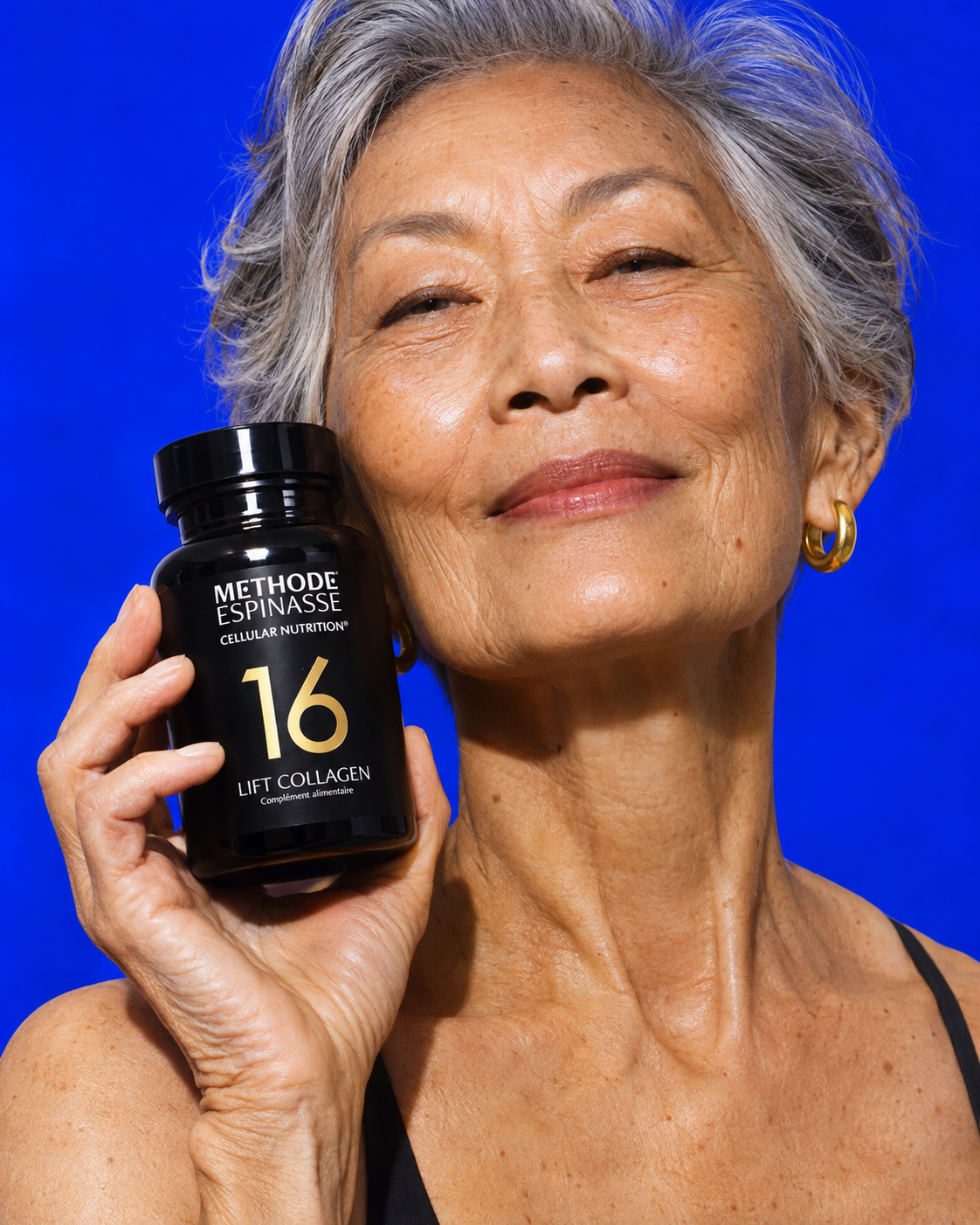
N°16 LIFT COLLAGEN is built around a natural biomimetic matrix derived from eggshell membrane.
The matrix contains native type I, V, and X collagens, elastin, hyaluronic acid, and glycosaminoglycans.
The formula also includes NADH, maritime pine bark extract, vitamins C and E, zinc, selenium, copper, vitamins A and B3, and the probiotics Bifidobacterium longum and Lactobacillus reuteri.
Vitamin C contributes to normal collagen formation for the normal function of the skin.
Vitamin E, zinc, selenium, and copper contribute to the protection of cells from oxidative stress.
The formulation therefore fits within a nutritional approach to the skin’s extracellular matrix.
However, studies on estrogen’s effects and research involving hydrolyzed collagen peptides do not constitute direct evidence of N°16 LIFT COLLAGEN’s effectiveness in perimenopausal women.
Any potential effects of the complete formula must be evaluated using product-specific data.
The goal of Cellular Nutrition® is not to replace hormones, but to integrate nutrition into a comprehensive approach to skin quality.
Skin changes can begin at different ages. Perimenopause typically occurs during a woman’s 40s, although the timing varies. Skin changes also depend on chronological aging and sun exposure.
Estrogen helps maintain the extracellular matrix and influences fibroblast function. Declining estrogen after menopause is associated with reduced dermal collagen content [1,3].
Historical estimates suggest that skin collagen loss may reach approximately 30% during the first five years after menopause. This figure is based on older studies and does not represent an identical pattern for every woman [6].
Declining estrogen can affect tissue hydration, glycosaminoglycans, and certain skin barrier mechanisms. These changes may contribute to dryness and discomfort [2,7].
Hormonal changes may contribute to collagen loss and changes in the skin’s mechanical properties. However, facial sagging also depends on fat compartments, ligaments, bone structure, and photoaging.
Adequate protein and micronutrient intake, consistent sun protection, and appropriate skincare can support normal skin function. However, these measures do not directly compensate for declining estrogen levels.
Foods that provide protein and vitamin C help meet the nutritional requirements involved in collagen synthesis. Fish, eggs, legumes, citrus fruits, kiwis, and bell peppers can all contribute to a balanced diet.
Some studies have found improvements in skin hydration and elasticity with hydrolyzed collagen peptides. However, results are inconsistent, and evidence remains insufficient to establish that supplementation compensates for hormone-related collagen loss [9,10].
Some studies have observed improvements in skin parameters with hormone therapy. However, hormone therapy should not be prescribed solely to improve skin firmness or prevent wrinkles. Treatment decisions require individualized medical evaluation [11].
Hormonal fluctuations may affect sebaceous gland activity, while changes in the skin barrier can contribute to dryness. Both conditions can therefore occur simultaneously.
Some changes associated with dehydration may improve with appropriate skincare. However, deeper wrinkles and structural facial changes require a different approach. No treatment can completely restore the skin to its previous state.
Adjustments may be helpful if your skin becomes drier, more sensitive, or less comfortable. Daily sunscreen, appropriate hydration, and dermatological treatments selected according to individual needs provide a sensible foundation.
Perimenopause and menopause are important stages in the physiological evolution of the skin.
Estrogen helps maintain collagen, hydration, skin thickness, and certain mechanical properties of the dermis.
Declining estrogen may therefore contribute to a gradual loss of firmness, increased dryness, and changes in skin texture.
However, hormonal skin aging should not be considered separately from other contributing factors.
Sun exposure, genetics, smoking, nutrition, and changes in deeper facial structures also influence how skin ages.
Scientific research is providing an increasingly detailed understanding of these interactions.
It highlights the importance of hormonal status in regulating the extracellular matrix and the limitations of approaches that reduce skin aging to declining collagen production alone.
A comprehensive preventive strategy therefore involves several elements: sun protection, appropriate skincare, balanced nutrition, physical activity, and medical guidance when necessary.
This broader perspective aligns with the approach developed by Dr. Valérie ESPINASSE through Cellular Nutrition®.
With N°11 SKIN and N°16 LIFT COLLAGEN, METHODE ESPINASSE places skin nutrition within a wider understanding of hydration, the extracellular matrix, and the biological mechanisms involved in maintaining skin quality.
Understanding the role of hormones in skin aging allows us to view perimenopause not simply as an acceleration of aging, but as a physiological transition that calls for a more targeted, individualized approach.
[1] Thornton MJ. Estrogens and aging skin. Dermato-Endocrinology. 2013;5(2):264–270.
https://doi.org/10.4161/derm.23872
[2] Menopause and the Skin: Old Favorites and New Innovations in Cosmeceuticals for Estrogen-Deficient Skin. Dermatology and Therapy. 2021;11:53–69.
https://doi.org/10.1007/s13555-020-00468-7
[3] Brincat M, Moniz CF, Kabalan S, et al. Decline in skin collagen content and metacarpal index after the menopause and its prevention with sex hormone replacement. British Journal of Obstetrics and Gynaecology. 1987;94(2):126–129.
https://doi.org/10.1111/j.1471-0528.1987.tb02338.x
[4] Managing Menopausal Skin Changes: A Narrative Review of Skin Quality Changes, Their Aesthetic Impact, and the Actual Role of Hormone Replacement Therapy in Improvement. Journal of Cosmetic Dermatology. 2025;24(Suppl 4):e70393.
https://doi.org/10.1111/jocd.70393
[5] World Health Organization. Menopause.
https://www.who.int/news-room/fact-sheets/detail/menopause
[6] American Academy of Dermatology Association. Caring for Your Skin in Menopause.
https://www.aad.org/public/everyday-care/skin-care-secrets/anti-aging/skin-care-during-menopause
[7] Menopause, Menstrual Cycle, and Skin Barrier Function. 2025.
https://pmc.ncbi.nlm.nih.gov/articles/PMC12206585/
[8] Brincat M, Moniz CF, Studd JWW, et al. Sex hormones and skin collagen content in postmenopausal women. British Medical Journal. 1983;287:1337–1338.
https://doi.org/10.1136/bmj.287.6402.1337
[9] Myung SK, Park Y. Effects of Collagen Supplements on Skin Aging: A Systematic Review and Meta-Analysis of Randomized Controlled Trials. The American Journal of Medicine. 2025;138(9):1264–1277.
https://doi.org/10.1016/j.amjmed.2025.04.034
[10] Oral Collagen Peptides and Skin Rejuvenation: A Systematic Review and an Updated Meta-Analysis of Randomized Controlled Trials. Journal of Cosmetic Dermatology. 2026;25(7):e71041.
https://doi.org/10.1111/jocd.71041
[11] Skin Rejuvenation in Women using Menopausal Hormone Therapy: A Systematic Review and Meta-Analysis. 2024.
https://pmc.ncbi.nlm.nih.gov/articles/PMC10796198/