DIETARY SUPPLEMENTS
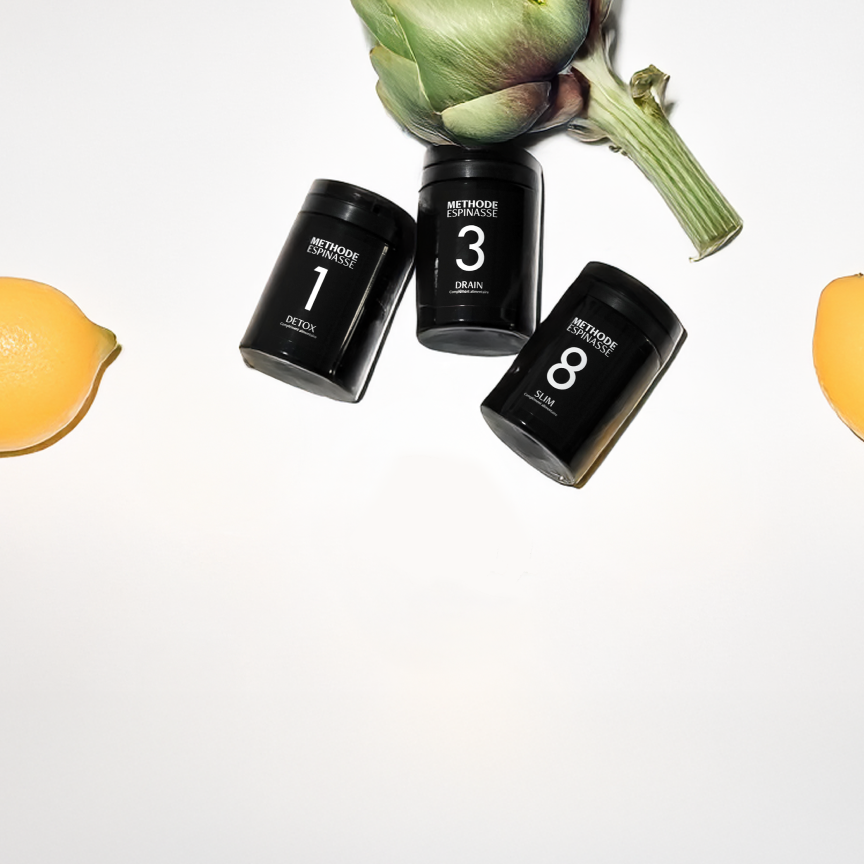
Découvrez 08 - Slim
Your ally for a slimmer figure and healthy weight

Journal
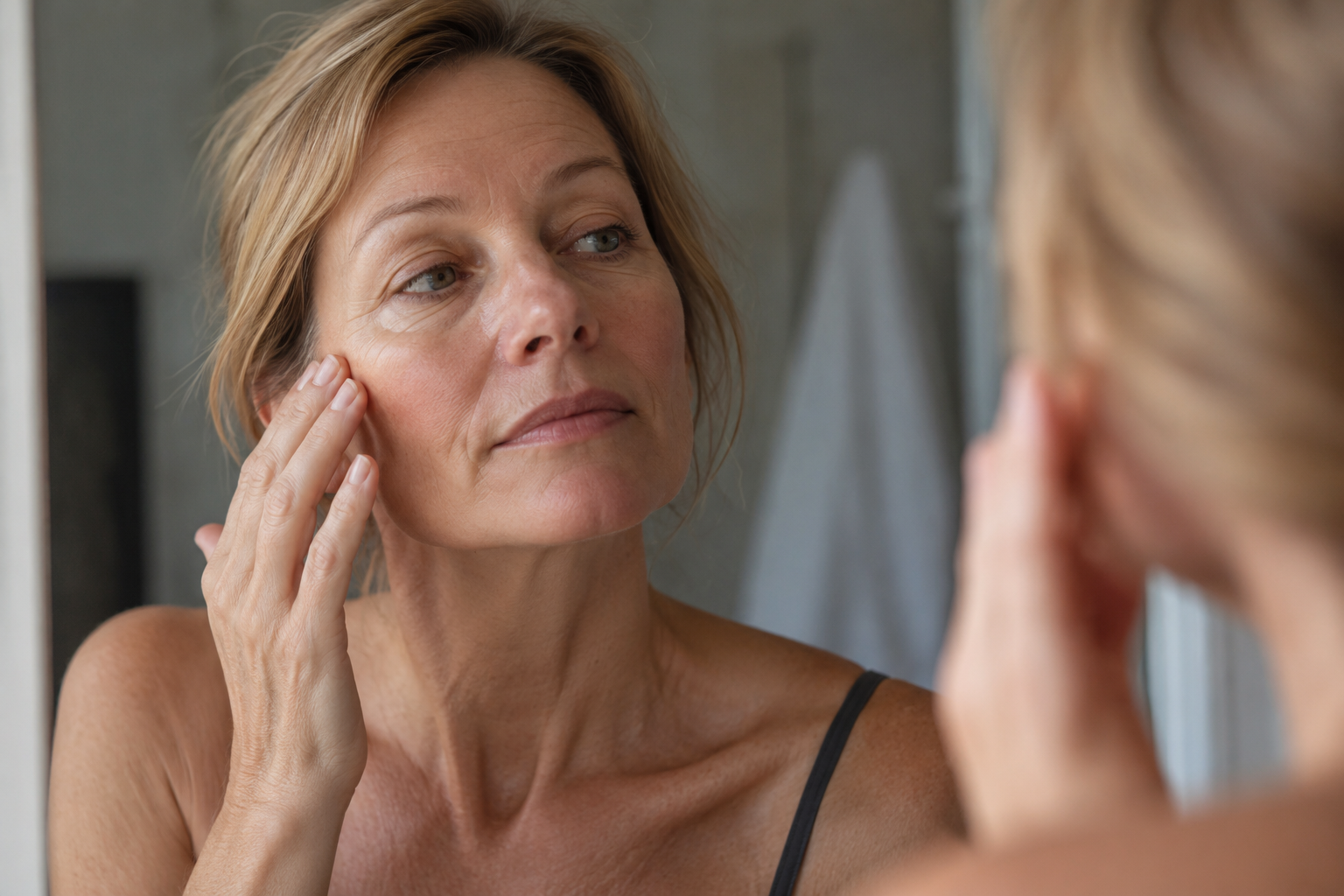
Somewhere in your 40s or 50s, it can feel as though your skin suddenly starts aging differently. It may become drier, thinner, and less plump. Fine lines and wrinkles can appear more pronounced, firmness begins to decline, and the skincare products that once seemed to work perfectly may no longer deliver quite the same results.
It is not just your imagination. Perimenopause and menopause represent a genuine biological transition for the skin.
Much of the explanation comes down to hormones—and estrogen in particular. The progressive fluctuations and decline in estrogen during perimenopause, followed by persistently lower levels after menopause, affect far more than reproductive function. The skin itself is a hormone-responsive organ. It contains estrogen receptors, and estrogen signaling is involved in multiple processes related to collagen, elastin, glycosaminoglycans, skin hydration, fibroblast activity, and tissue repair [1–4].
When the hormonal environment changes, skin biology changes with it. Eventually, those changes become visible in the mirror.
Yes. Skin aging obviously begins long before menopause and is influenced by a wide range of factors, including genetics, sun exposure, pollution, smoking, diet, stress, sleep, and chronological aging. But menopause introduces a relatively rapid hormonal shift that can accelerate certain changes in the skin.
Research has documented decreases in skin collagen content, skin thickness, elasticity, and water content after menopause [1,5,6]. Contemporary dermatology therefore recognizes menopause as an important period of accelerated skin aging, driven in part by declining estrogen levels [1,7].
This distinction matters. At the same chronological age, skin is not shaped only by how many birthdays someone has had. Hormonal age matters, too.
That helps explain why two women of the same age may experience very different skin-aging trajectories—and why some women notice a relatively sudden change in their skin during the menopausal transition.
We tend to associate estrogen with the ovaries, the menstrual cycle, and fertility. But its biological reach extends far beyond the reproductive system. Estrogen receptors are found across different skin compartments and cell types, including keratinocytes, fibroblasts, and melanocytes [3,4].
Fibroblasts are particularly important to understanding menopause-related skin changes. Located within the dermis, these cells help produce and renew major components of the extracellular matrix, including collagen. Think of this matrix as the skin’s microscopic structural framework: the biological architecture that helps give skin its strength, thickness, resilience, and mechanical properties.
Estrogen also influences glycosaminoglycans—including hyaluronic acid—as well as mechanisms involved in elasticity, vascularization, barrier function, and skin repair [3,4,8]. When estrogen levels fall, several of these processes can change at the same time.
That is exactly why menopause can become so visible on the skin: it does not affect just one component of skin biology. It affects multiple systems simultaneously.
It is one of the most striking statistics associated with menopause: skin collagen may decline by approximately 30% during the first five years after menopause [1].
The number is now widely cited in dermatology and throughout the beauty industry, but it needs context. It originates from a body of earlier research on postmenopausal skin and does not mean that every woman loses exactly 30% of her collagen beginning the day of her final period. The rate of skin aging varies significantly between individuals and is influenced by multiple biological, lifestyle, and environmental factors.
What the research supports much more consistently is a close relationship between estrogen deficiency and declining skin collagen. Skin-biopsy studies involving women across different ages and postmenopausal stages have documented significant age-related declines in collagen, particularly after the fourth decade and following menopause [9]. Earlier studies comparing postmenopausal women receiving or not receiving hormone therapy also identified substantial differences in skin collagen content [10].
A meta-analysis examining the effects of menopausal hormone therapy on the skin provides further evidence. Pooling 15 studies involving 1,589 women, researchers found significant increases in collagen content, skin thickness, and elasticity with hormone therapy [11].
This does not mean menopausal hormone therapy should be prescribed for cosmetic reasons. Whether it is appropriate is an individualized medical decision based on symptoms, potential benefits, risks, and a woman’s medical history. But the findings provide powerful biological evidence for one central point: when the estrogen environment changes, collagen and the mechanical properties of the skin change with it.
Collagen is a major structural component of the dermis. Imagine the dermal matrix as a microscopic scaffolding system: collagen fibers provide mechanical strength, while elastic fibers, glycosaminoglycans, and other components contribute to flexibility, resilience, and the skin’s water-rich environment.
Collagen production and organization naturally change with age. But declining estrogen adds another dimension to this process. Fibroblasts receive less estrogen signaling, while the balance between extracellular matrix synthesis and degradation shifts. Changes involving matrix metalloproteinases (MMPs)—enzymes capable of breaking down components of the extracellular matrix—are also implicated in the biology of estrogen-deficient skin [3,4].
On the outside, this microscopic biology becomes remarkably familiar: skin gradually looks less dense, less firm, and less elastic, while lines and wrinkles become more visible.
In other words, what we casually call “skin aging” reflects very real changes in the skin’s molecular architecture.
Collagen is only part of the story. One of the most commonly reported skin changes during menopause is dryness.
Once again, estrogen matters. Estrogen signaling is involved in maintaining glycosaminoglycans, including hyaluronic acid, an important component of the water-rich extracellular environment of the skin [3,8]. Hormonal changes can also affect skin-barrier function and sebum production, although the extent of these changes varies between individuals [3,4].
The result can be easy to feel and see: skin may retain water less effectively, become less comfortable or rougher, and lose some of the plumpness associated with well-hydrated skin.
This connection between estrogen and skin hydration also explains why menopause-related dry skin is not simply a matter of drinking more water. Healthy skin hydration depends on biological structures and molecules that capture, distribute, and retain water within the tissue.
Hyaluronic acid, the extracellular matrix, and the skin barrier are all part of that system.
Gently pinch younger skin and release it, and you can see one of its fundamental mechanical properties in action: its ability to quickly return to its original shape. That resilience depends on the complex organization of the dermis, including collagen and the network of elastic fibers.
With aging and declining estrogen, skin elasticity decreases [5,6]. Research on postmenopausal skin describes changes not only in collagen and elastin, but also in fibroblast activity and the wider extracellular matrix [3,4].
This can create the characteristic feeling that skin has suddenly lost some of its “bounce.” The phenomenon is not purely cosmetic or superficial: the biomechanical properties of the tissue itself are changing.
The meta-analysis of 15 menopausal hormone therapy studies also found a statistically significant improvement in skin elasticity alongside improvements in collagen content and skin thickness [11]. Again, the relevance here is primarily mechanistic: the findings demonstrate just how closely hormones, dermal architecture, and visible skin quality are interconnected.
Yes. Reduced skin thickness is among the documented changes associated with menopause [5,11].
Part of this change involves the dermis, much of whose volume depends on its extracellular matrix. A decline in collagen and changes in the organization of that matrix can therefore contribute to thinner and potentially more fragile skin.
This loss of thickness also helps explain why several signs of aging can appear to emerge at once: wrinkles may look deeper, skin can appear less dense, some blood vessels may become more visible, and the tissue may lose some of its mechanical resilience.
It is not simply that “skin gets older.”
Its three-dimensional structure is changing.
Because facial aging is not only about the skin.
As we age, facial fat compartments change, bone structures remodel, and ligaments and other supporting tissues evolve. During the menopausal transition, these gradual age-related changes are joined by a hormonal shift capable of affecting the quality of the skin itself.
Several processes can therefore occur at the same time: changes in facial volume and contours, collagen loss, dryness, reduced elasticity, and changes in skin texture.
This helps explain why many women describe the experience not as a slow, linear progression but as a tipping point: “My skin seemed to change in just a few years.”
There is a biological basis for that perception. Chronological aging continues, but at this particular stage of life it intersects with a major endocrine transition.
Modern skin-aging research goes far beyond collagen alone. Oxidative stress, chronic low-grade inflammation, cellular senescence, and changes in cell-to-cell communication are also involved in tissue aging.
Declining estrogen may influence certain antioxidant defense systems and inflammatory pathways [3,4]. At the same time, decades of accumulated environmental exposure—particularly UV radiation—continue to leave their mark on the dermal matrix.
This is where intrinsic aging, hormonal aging, and photoaging converge.
Postmenopausal skin is therefore not simply skin with “less estrogen.” It is skin entering a new hormonal environment after decades of exposure to its own unique exposome: sunlight, pollution, smoking where applicable, diet, stress, and other environmental and lifestyle factors.
Menopause acts on skin that already has its own biological history.
This may be one of the most important lessons from research into menopause and skin aging.
We tend to think about skin aging as a straightforward timeline: 30, 40, 50, 60. Biologically, however, hormonal age matters too.
A woman in perimenopause, a woman who has recently reached menopause, and a woman who has been postmenopausal for 15 years are not necessarily living in the same endocrine environment, even if their chronological ages are relatively close.
That is why beauty and skincare after 45 deserve something more precise than the generic label “mature skin.”
We need to understand what is actually changing:
Collagen. Hyaluronic acid. Elasticity. Skin thickness. Barrier function. Oxidative stress. Inflammation. And, above all, the hormonal environment influencing all of these mechanisms.
Once we understand that biology, the entire conversation around menopause skincare and healthy skin aging changes. Instead of simply correcting visible signs once they appear, we can ask a much more interesting question:
Can we support, from within, the biological mechanisms that help skin remain hydrated, dense, firm, and resilient?
That is exactly where beauty from within, nutricosmetics, skin supplements, and Cellular Nutrition® become especially relevant.
In Part 2, we will look at what the science says we can actually do: how to support collagen and skin hydration from within; what clinical trials tell us about oral collagen and oral hyaluronic acid; the roles of protein, antioxidants, micronutrients, and the microbiome; and why menopause may be one of the most important stages of life for adopting a targeted, inside-out approach to skin health.
Understanding why skin changes during menopause leads to an even more important question: What can we actually do about it? If declining estrogen affects collagen, hydration, elasticity, and the dermal matrix, are women simply expected to watch those changes happen?
No. We cannot stop skin aging, and no food, supplement, or cosmetic can replace the estrogen lost during menopause. But contemporary research points to several ways of supporting the mechanisms that influence skin quality, including protein and amino acids, collagen peptides, hyaluronic acid, micronutrients, antioxidants, the microbiome, sun protection, and lifestyle. Some of these interventions have produced objectively measurable improvements in skin hydration, elasticity, or wrinkles in controlled clinical trials [12–17].
This is where beauty from within becomes especially relevant. After menopause, caring for your skin is no longer just about addressing what you can see on the surface. It also means thinking about the biology behind what you see.
The paradox is obvious. At the same stage of life when declining estrogen accelerates the loss of skin collagen, collagen has become one of the most extensively researched categories in beauty supplements and nutricosmetics.
So what does the science say about collagen supplements for postmenopausal skin?
One randomized, double-blind, placebo-controlled trial specifically studied 36 postmenopausal women. For four weeks, participants consumed 5 g of marine collagen hydrolysate daily or a placebo. Skin elasticity was objectively measured using a Cutometer. Researchers found a significant improvement in elasticity on both cheeks in the collagen group compared with placebo. Interestingly, the difference was still detectable four weeks after supplementation ended [12].
Other studies conducted in broader populations point in the same direction. In a randomized, double-blind, placebo-controlled trial involving 100 women ages 30 to 60, daily supplementation with 1,650 mg of collagen peptides significantly improved skin hydration after four weeks, followed by improvements in elasticity and wrinkles after 12 weeks compared with placebo [13].
That does not mean every type of collagen, at every dose, will produce exactly the same results in every woman. A study involving older postmenopausal women with established dermatoporosis, for example, did not find a significant benefit from 5 g of oral collagen peptides over six months [14]. This distinction illustrates an important principle in clinical nutrition: supporting the physiology of aging skin is not necessarily the same as treating an established skin disorder.
Taken as a whole, however, the research has moved oral collagen well beyond beauty hype. Controlled trials show that supplementation can influence objectively measurable skin parameters.
If collagen addresses structure, hyaluronic acid brings us back to another major concern during menopause: dry skin and loss of plumpness.
Hyaluronic acid is naturally present in the extracellular matrix and plays an important role in its water-rich environment. Most people know it as a topical skincare ingredient or injectable filler. But oral hyaluronic acid supplements are now supported by a growing body of clinical research.
In one randomized, double-blind, placebo-controlled trial, 120 mg of hyaluronic acid per day for 12 weeks significantly improved stratum corneum hydration, elasticity, and several wrinkle parameters compared with placebo [15]. Another trial, also using 120 mg per day, had previously found a significant reduction in wrinkles with one of the molecular-weight forms investigated [16].
More recently, a randomized clinical trial involving 150 healthy adults investigated either 60 or 120 mg of sodium hyaluronate per day for 12 weeks. At 120 mg, researchers found significant improvements versus placebo in skin hydration and elasticity, alongside reductions in transepidermal water loss and periocular wrinkle depth [17]. A 2025 meta-analysis pooling seven randomized controlled trials likewise reported statistically significant improvements in skin hydration, elasticity, and wrinkle depth with oral hyaluronic acid [18].
These findings are particularly relevant to menopause skin. If declining estrogen affects the skin’s hydric environment and extracellular matrix, hydration can also be approached from the inside out.
Beautiful skin does not depend on two miracle ingredients. To produce structural proteins, maintain its barrier, and continually renew itself, skin depends on a much broader nutritional environment.
Collagen is a protein, which means its synthesis requires amino acids as well as essential cofactors involved in its production and maturation. Vitamin C, for example, is required for the hydroxylation of proline and lysine during collagen biosynthesis. Zinc participates in numerous enzymatic reactions and contributes to the maintenance of normal skin. Vitamin A is involved in cellular differentiation and epithelial physiology, while vitamin E contributes to protecting cells against oxidative stress.
After 45 or 50, the nutritional question should therefore extend beyond “What is the best anti-aging supplement?”
A more scientifically relevant question is: Does the skin have access to the nutrients and biological building blocks it needs to function optimally?
That distinction is fundamental. Cellular Nutrition® is not about searching for one magic molecule. It approaches skin as living tissue whose quality depends on multiple interconnected biological processes.
Supporting collagen synthesis and skin hydration is only one part of the equation. Another is addressing the processes that accelerate their deterioration.
UV radiation generates reactive oxygen species and activates signaling pathways that can increase the expression of matrix metalloproteinases, enzymes capable of breaking down collagen within the dermal matrix. Over time, sun exposure and intrinsic aging accumulate. During menopause, that accumulated damage meets a hormonal environment that is less supportive of dermal matrix maintenance.
This is where dietary antioxidants become particularly interesting. Their role is not to “eliminate all free radicals”—reactive oxygen species also participate in normal cellular signaling—but rather to contribute to a balanced redox environment.
Certain bioactive compounds are now being specifically investigated in skin supplements and nutricosmetics. Astaxanthin, for example, has been studied orally for its potential effects on skin hydration, elasticity, and the skin’s response to UV exposure [19,20]. Vitamin C, vitamin E, carotenoids, polyphenols, and other bioactive compounds form part of the broader nutritional environment in which skin has to function.
The takeaway is straightforward: supporting skin during menopause is not only about trying to make more collagen. It is also about protecting the biological environment in which collagen and the extracellular matrix exist.
This may be one of the most exciting emerging areas in menopause, skin, and healthy aging research.
The gut microbiome contains bacterial communities capable of participating in estrogen metabolism. The collection of microbial genes involved in these processes is commonly referred to as the estrobolome [21–23].
Some estrogens metabolized by the liver are conjugated and excreted into bile. Enzymes produced by certain gut bacteria, including β-glucuronidases, can deconjugate some of these metabolites, potentially allowing a portion of the estrogen to be reabsorbed into circulation. The gut microbiome can therefore participate—among many other mechanisms—in the metabolism and systemic availability of estrogens [21–23].
The relationship also works in the opposite direction: estrogen itself can influence the gut ecosystem. Several studies have reported changes in the microbiome across the menopausal transition, although researchers have not identified a single universal “menopause microbiome” [22–24].
A 2026 review examining diet, the gut microbiome, and estrogen physiology during menopause highlights this bidirectional relationship. The authors discuss the future potential of dietary, probiotic, prebiotic, and synbiotic strategies while emphasizing that human evidence is not yet sufficient to define a standardized microbiome intervention for menopause [24].
This introduces a far more integrated way of thinking about menopause: the ovaries, gut, microbiome, estrogen metabolism, inflammation, and skin do not necessarily operate as completely separate biological systems.
The gut-skin axis describes the biological relationships linking the intestinal microbiome with immune signaling, microbial metabolites, inflammation, barrier function, and skin physiology. The estrobolome may add another dimension to that relationship during and after menopause.
Research examining estrogen action, the gut microbiome, and dermal health has proposed potential interactions between gut bacteria, estrogen metabolism, and mechanisms involved in skin physiology [21]. This remains an emerging field. We are nowhere near being able to claim that a particular microbiome composition can restore premenopausal skin.
But the shift in perspective is significant.
Skin can be influenced by biological systems located far beyond its surface.
And that is precisely why an inside-out approach to menopause skin is becoming so compelling.
At 25, a beauty routine can easily revolve around glow, topical hydration, and sun protection. During menopause, the conversation becomes more complex.
Skin changes because its biology changes.
Lower estrogen. Changes in the dermal matrix. Collagen loss. Reduced ability to maintain hydration. Declining elasticity. Decades of cumulative UV exposure. A changing oxidative and inflammatory environment. And potentially, a gut microbiome that is itself being reshaped by the hormonal transition.
A modern approach to menopause skincare therefore needs to consider both the outside and the inside.
Topical skincare works from the surface. Daily photoprotection remains fundamental. Dermatology and aesthetic medicine can address other dimensions of skin aging. Nutrition adds another approach: providing nutrients and bioactive compounds from within that can support some of the biological mechanisms underlying skin quality.
This is the territory of Beauty 3.0.
This is precisely the context in which SKIN N°11, formulated by Dr. Valérie ESPINASSE according to the principles of Cellular Nutrition®, becomes particularly relevant.
Rather than focusing on a single pathway, its formulation addresses several dimensions of skin physiology by combining hyaluronic acid, marine collagen, astaxanthin, Centella asiatica, vitamin E, zinc, vitamin A, and probiotics.
Hyaluronic acid places hydration and the extracellular matrix at the center of the formula. Marine collagen introduces the structural dimension. Astaxanthin and vitamin E contribute to its antioxidant strategy. Centella asiatica complements the approach to skin quality. Vitamin A and zinc provide essential micronutrients involved in normal skin physiology. Finally, Bifidobacterium lactis and Lactobacillus casei bring the microbiome into this comprehensive beauty-from-within strategy.
SKIN N°11 provides 179.5 mg of hyaluronic acid, while several positive clinical trials of oral hyaluronic acid investigated a daily dose of 120 mg [15–17]. This comparison does not mean the results of those studies can be directly attributed to SKIN, nor does a higher dose automatically mean greater efficacy. It does, however, illustrate the central role given to hyaluronic acid within the formulation.
The strategy reflects what changing skin particularly needs as its hormonal environment evolves: supporting hydration, structure, antioxidant protection, and biological balance from within.
Menopause changes the skin. The scientific evidence is now substantial enough to say so with confidence. But understanding those mechanisms is precisely what allows us to move beyond a fatalistic view of skin aging after 45.
We understand why collagen declines. We increasingly understand how estrogen interacts with the dermal matrix. We can objectively measure changes in skin hydration and elasticity. Controlled trials show that certain orally administered nutrients and bioactive compounds can improve several of these parameters [12,13,15–20]. And emerging research is beginning to reveal far more complex interactions between nutrition, the gut microbiome, estrogen, inflammation, and skin health [21–24].
Beauty after 45 is therefore not about trying to recreate the exact skin you had at 25.
It is about understanding the new biology of your skin and giving it what it needs to function at its best.
That is a more modern approach to healthy aging and menopause beauty. More biological. More targeted. And ultimately far more interesting than simply “fighting wrinkles.”
Menopause does not mark the end of beautiful skin.
It marks a change in strategy.
SKINCARE FROM THE OUTSIDE. CELLULAR NUTRITION® FROM THE INSIDE.
[1] Menopause and the skin: old favorites and new innovations in cosmeceuticals for estrogen-deficient skin. Review of menopause-related skin changes, estrogen signaling, and approaches to estrogen-deficient skin.
[2] Thornton MJ. Estrogens and Aging Skin. Dermato-Endocrinology. Research examining estrogen receptors and the effects of estrogen signaling on skin aging.
[3] Thornton MJ. The Biological Actions of Estrogens on Skin. Review of the molecular and cellular mechanisms connecting estrogen with fibroblasts, keratinocytes, and skin physiology.
[4] Wilkinson HN, Hardman MJ. The Role of Estrogen in Cutaneous Ageing and Repair. Review of estrogen-related mechanisms involved in skin aging and repair.
[5] Brincat M, et al. Skin collagen changes in post-menopausal women receiving different regimens of estrogen therapy. Foundational research on collagen, skin thickness, and menopause.
[6] Piérard GE, et al. Effect of hormone replacement therapy on skin aging characteristics. Research examining the biomechanical properties of postmenopausal skin.
[7] Menopause, skin and common dermatoses. British Journal of Dermatology. Contemporary review of the dermatological consequences of the menopausal transition.
[8] Verdier-Sévrain S, Bonté F. Skin Hydration: A Review on Its Molecular Mechanisms. Research on skin hydration, glycosaminoglycans, and the molecular mechanisms involved in maintaining skin water balance.
[9] Shuster S, Black MM, McVitie E. The influence of age and sex on skin thickness, skin collagen and density. British Journal of Dermatology. Foundational research on changes in collagen and skin thickness with age.
[10] Brincat M, et al. Response of skin thickness and metacarpal index to estradiol therapy in postmenopausal women. Early research demonstrating the responsiveness of postmenopausal skin to the estrogen environment.
[11] Effects of menopausal hormone therapy on skin: systematic review and meta-analysis. Analysis of 15 studies involving 1,589 women and outcomes including collagen content, skin thickness, and elasticity.
[12] Kim DU, et al. Four-weeks daily intake of oral collagen hydrolysate results in improved skin elasticity, especially in sun-exposed areas: a randomized, double-blind, placebo-controlled trial. Trial in 36 postmenopausal women reporting significant improvements in cheek elasticity after marine collagen supplementation.
https://pubmed.ncbi.nlm.nih.gov/32009486/
[13] Oral intake of collagen peptide NS improves hydration, elasticity, desquamation, and wrinkling in human skin: a randomized, double-blinded, placebo-controlled study. Trial involving 100 women reporting significant improvements in skin hydration, elasticity, and wrinkles.
https://pubmed.ncbi.nlm.nih.gov/36916504/
[14] Efficacy and Safety of Topical or Oral Hydrolyzed Collagen in Women with Dermatoporosis: A Randomized, Double-Blind, Factorial Design Study. Trial in postmenopausal women with dermatoporosis that did not identify a significant benefit from oral collagen in this specific clinical population.
https://pubmed.ncbi.nlm.nih.gov/36547800/
[15] Oe M, Sakai S, Yoshida H, et al. Oral Hyaluronan Relieves Wrinkles and Improves Dry Skin: A 12-Week Double-Blinded, Placebo-Controlled Study. Nutrients. 2021;13:2220.
https://pubmed.ncbi.nlm.nih.gov/34203487/
[16] Oe M, et al. Oral Hyaluronan Relieves Wrinkles: A Double-Blinded, Placebo-Controlled Study Over a 12-Week Period.
https://pubmed.ncbi.nlm.nih.gov/28761365/
[17] Oral sodium hyaluronate improves skin hydration, barrier function and signs of aging: a randomized, double-blind, placebo-controlled trial in 150 healthy adults. Clinical trial assessing hydration, TEWL, elasticity, wrinkles, epidermal thickness, and dermal density.
https://pubmed.ncbi.nlm.nih.gov/41422283/
[18] Oral Hyaluronic Acid Supplement: Efficacy in Skin Hydration, Elasticity, and Wrinkle Depth Reduction. Meta-analysis of seven randomized controlled trials.
https://pubmed.ncbi.nlm.nih.gov/40911749/
[19] Effects of Astaxanthin Supplementation on Skin Health: A Systematic Review and Meta-Analysis of Randomized Controlled Trials. Analysis of evidence on skin hydration, elasticity, and skin aging.
https://pubmed.ncbi.nlm.nih.gov/34578794/
[20] Ito N, Seki S, Ueda F. The Protective Role of Astaxanthin for UV-Induced Skin Deterioration in Healthy People: A Randomized, Double-Blind, Placebo-Controlled Trial. Nutrients. 2018;10:817.
https://pubmed.ncbi.nlm.nih.gov/29941810/
[21] Estrogen Action and Gut Microbiome Metabolism in Dermal Health. Review examining the relationships between estrogen, the gut microbiome, the gut-skin axis, and dermal health.
https://pubmed.ncbi.nlm.nih.gov/35752663/
[22] From Gut to Hormones: Unraveling the Role of Gut Microbiota in (Phyto)Estrogen Modulation in Health and Disease. Review examining the estrobolome and microbial enzymes involved in estrogen metabolism.
https://pubmed.ncbi.nlm.nih.gov/38342595/
[23] The gut microbiota in menopause: Is there a role for prebiotic and probiotic solutions? Review of menopause-associated changes in the gut microbiome and the potential role of prebiotic and probiotic strategies.
https://pubmed.ncbi.nlm.nih.gov/40335047/
[24] Lim MJS, et al. Diet, the Gut Microbiome, and Estrogen Physiology: A Review in Menopausal Health and Interventions. Nutrients. 2026;18:1052. Recent review examining diet, the microbiome, the estrobolome, and estrogen physiology during menopause.
https://pubmed.ncbi.nlm.nih.gov/41978103/