DIETARY SUPPLEMENTS
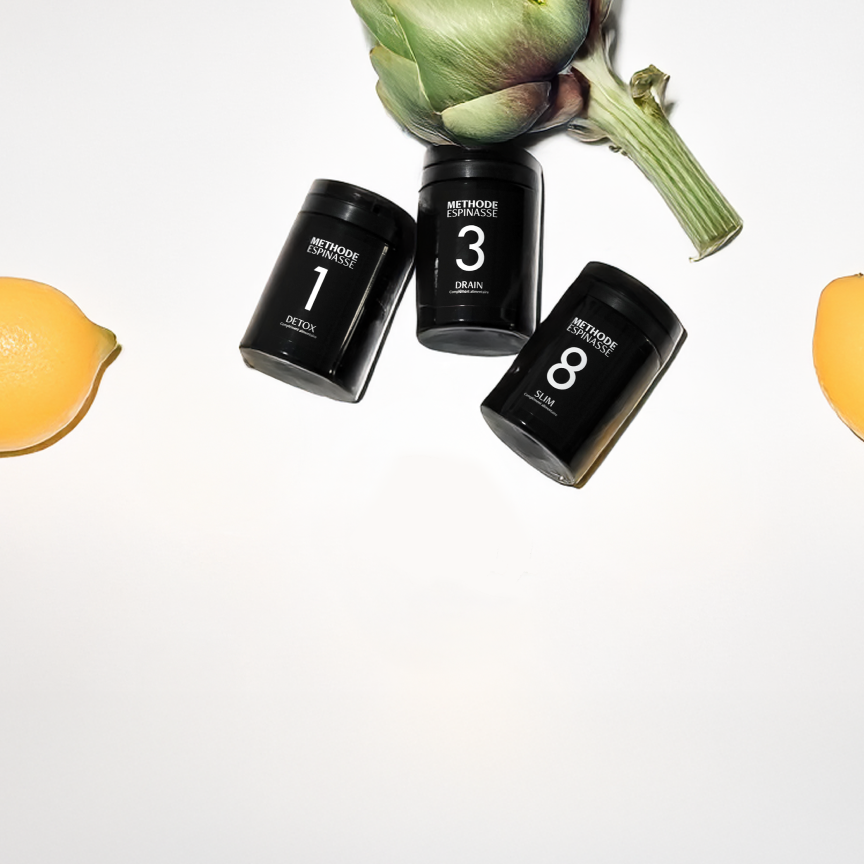
Découvrez 08 - Slim
Your ally for a slimmer figure and healthy weight

Journal
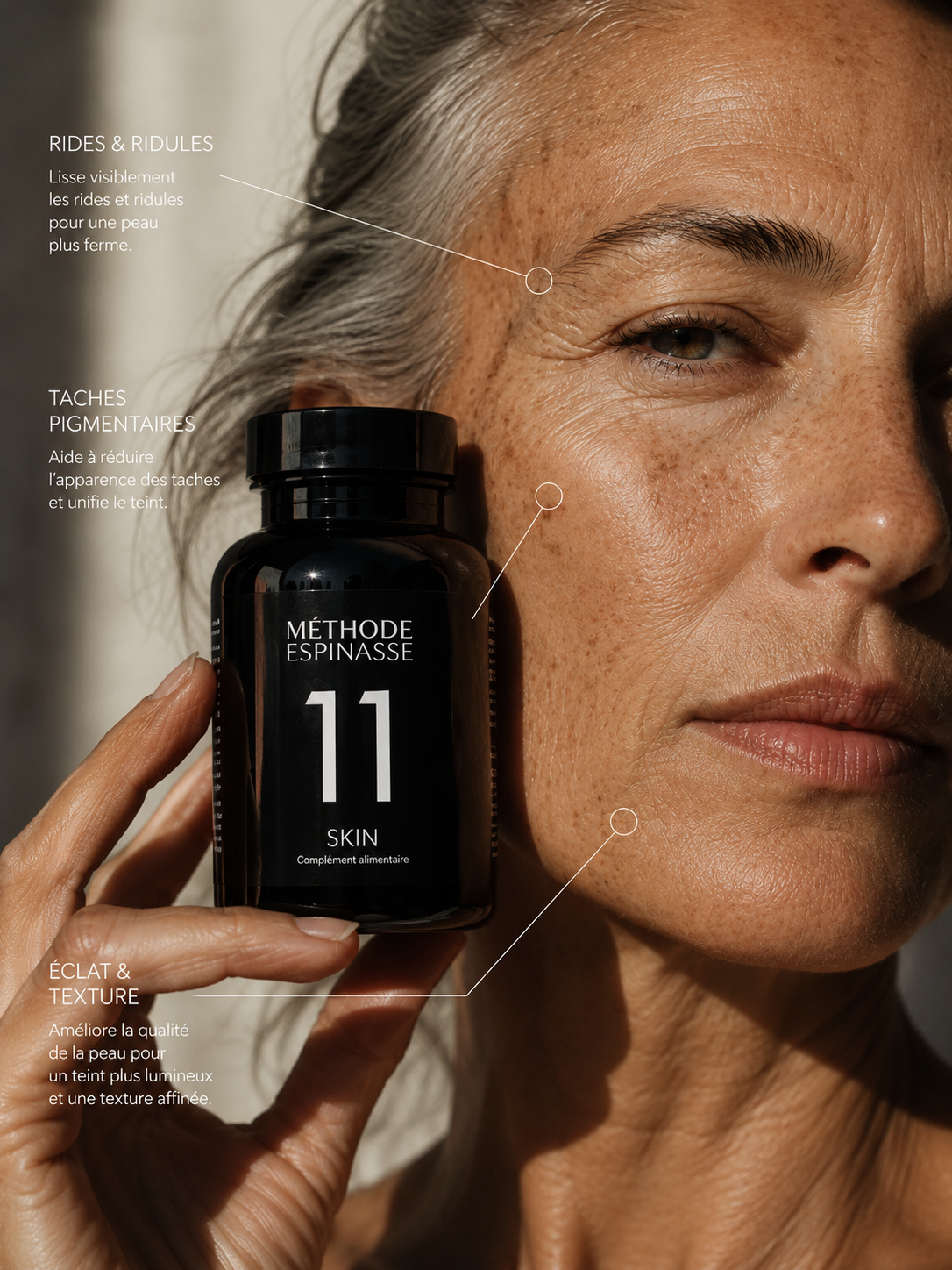
For decades, taking care of your skin essentially meant applying something to your skin. Moisturizers, serums, hyaluronic acid, antioxidants, retinol, peptides: skincare was built primarily around a topical, outside-in approach.
But skin is not an inert outer layer. It is a living, vascularized organ in a constant state of renewal, and its structure, hydration, elasticity, and protective mechanisms are also shaped by biological processes taking place inside the body.
That is precisely what is driving the rise of nutricosmetics, beauty nutrition, skin supplements, and beauty from within. And the question is no longer purely theoretical: Can we actually improve the appearance and quality of our skin from the inside out?
For certain ingredients and specific skin parameters, the scientific literature increasingly says yes.
Randomized, double-blind, placebo-controlled trials have measured improvements in skin hydration, elasticity, barrier function, and wrinkles following oral supplementation. Meta-analyses combining multiple clinical trials have also found significant benefits for several of the leading ingredients used in modern nutricosmetics [1–5].
In other words, inside-out beauty is no longer just a marketing concept. Its effects can be measured on the skin.
Hydrated, firm, resilient skin depends in part on the integrity of its extracellular matrix, the quality of the skin barrier, its ability to retain water, and structural proteins such as collagen. Oxidative stress, UV exposure, inflammation, and intrinsic aging also contribute to the visible changes we associate with skin aging.
That is why reducing beauty to what we apply to the surface of the skin means looking at only part of the picture.
Orally consumed nutrients and bioactive compounds obviously follow a very different pathway from topical skincare ingredients: digestion, absorption, circulation, and metabolism all come before their interactions with tissues. But clinical trials show that this route can lead to objectively detectable changes in specific skin parameters.
Hydration. Elasticity. Wrinkle depth. Transepidermal water loss. Texture. Dermal density.
Modern skin research can measure all of them.
And certain oral supplements can improve them.
This may be the most important point of all.
When a modern clinical trial concludes that an oral ingredient improves skin hydration or elasticity, researchers are not necessarily just asking participants, “Do you think your skin looks better?”
They can use sophisticated instruments to quantify different aspects of skin quality: corneometry to assess hydration, transepidermal water loss (TEWL) to evaluate barrier function, devices that measure the skin’s mechanical properties and elasticity, profilometry and imaging systems to quantify wrinkles, and techniques that assess epidermal thickness and dermal density.
A recent randomized, double-blind, placebo-controlled clinical trial involving 150 healthy adults provides a particularly compelling example. Over 12 weeks, researchers measured facial skin hydration, TEWL, elasticity, wrinkle depth, epidermal thickness, dermal density, and other skin parameters. With 120 mg of sodium hyaluronate per day, they observed significant improvements versus placebo in skin hydration and elasticity, along with reductions in TEWL and periocular wrinkle depth [1].
This goes beyond simply feeling that your skin “looks better.” These are changes that can be objectively measured.
Hyaluronic acid has become one of the most recognizable ingredients in skincare. Its relationship with water helps explain both its biological importance in tissues and its enormous popularity in topical cosmetics.
But one of the most interesting developments in beauty-from-within research involves something very different: oral hyaluronic acid supplementation.
In a randomized, double-blind, placebo-controlled study, 40 adults ages 35 to 64 received 120 mg of hyaluronic acid per day for 12 weeks or a placebo. At 12 weeks, the supplemented group showed significant improvements versus placebo in wrinkle assessment, stratum corneum water content, transepidermal water loss, and elasticity. Some differences in wrinkles, hydration, and elasticity were already significant at eight weeks [2].
Another double-blind trial involving 60 adults with crow’s-feet wrinkles also investigated 120 mg of oral hyaluronic acid per day. After eight weeks, one of the molecular-weight forms studied produced a significant reduction in wrinkles compared with placebo [3].
More recently, the 150-participant trial mentioned above further strengthened the evidence: again, 120 mg per day significantly improved several objective skin parameters versus placebo, including hydration, elasticity, TEWL, and periocular wrinkle depth [1].
The takeaway for inside-out skincare is particularly compelling:
HYALURONIC ACID ISN’T JUST SOMETHING YOU PUT ON YOUR SKIN. CONTROLLED CLINICAL TRIALS HAVE ALSO MEASURED SKIN BENEFITS WHEN IT IS TAKEN ORALLY.
This is where the formulation of SKIN N°11 becomes especially interesting.
SKIN provides 200 mg of sodium hyaluronate, delivering 179.5 mg of hyaluronic acid. By comparison, several of the positive clinical trials discussed above investigated a daily dose of 120 mg [1–3].
A higher dose does not automatically mean a greater effect, and results obtained with one form of hyaluronic acid cannot simply be mathematically transferred to another formulation. But the comparison helps explain why hyaluronic acid plays such a central role in the nutritional strategy behind SKIN.
The goal is clear: support skin hydration from within, at the level of skin physiology itself.
This is the first dimension of inside-out skincare according to METHODE ESPINASSE.
Collagen has become ubiquitous in the beauty industry. But behind the extraordinary consumer interest lies a substantial body of clinical research.
A 2023 meta-analysis included 26 randomized controlled trials involving 1,721 participants. The results showed that hydrolyzed collagen supplementation significantly improved skin hydration and elasticity compared with placebo [4].
Another meta-analysis covering 19 studies and 1,125 participants, 95% of whom were women, had already reported favorable findings for skin hydration, elasticity, and wrinkles. The authors concluded that 90 days of hydrolyzed collagen intake was effective across several of the skin-aging parameters studied [5].
This is important because it addresses one of the most common objections to collagen supplements: “Collagen gets digested, so how could it possibly affect the skin?”
Yes, ingested collagen is digested. That is exactly what the digestive system does with proteins. But that fact alone does not invalidate its biological relevance. The meaningful scientific question is whether oral collagen supplementation produces a measurable difference in humans.
Clinical trials and meta-analyses show that it can improve several measurable skin parameters [4,5].
A systematic review of randomized controlled trials investigating hydrolyzed collagen provides another useful perspective. Among the studies analyzed, skin hydration improved significantly versus the comparator in 10 of 15 trials, elasticity in 10 of 13, and wrinkle depth or volume in 9 of 10 [6].
Not every trial uses the same collagen peptides, dose, duration, population, or measurement method, and study quality varies. But the repeated positive findings across objective skin outcomes help explain why oral collagen has moved well beyond the status of a passing wellness trend.
It now sits firmly within the field of science-backed nutricosmetics and beauty supplements.
SKIN N°11 combines marine collagen and hyaluronic acid—two categories of ingredients for which clinical research has documented benefits across parameters directly related to visible skin quality.
One addresses structure.
The other addresses hydration.
And SKIN does not stop there.
Skin is constantly exposed to oxidative stress. UV radiation, pollution, and normal cellular metabolism all contribute to the production of reactive oxygen species. When redox balance becomes disrupted, these processes can contribute to mechanisms involved in premature skin aging.
This is where another key SKIN ingredient comes in: astaxanthin.
This carotenoid has been studied for its antioxidant properties and its potential role in skin health. A systematic review and meta-analysis investigating astaxanthin and skin aging identified nine randomized controlled human studies evaluating oral supplementation. The pooled analysis found that oral astaxanthin significantly improved skin hydration and elasticity compared with placebo [7].
The pooled effect on wrinkle depth was not statistically significant, which is why astaxanthin is particularly relevant here for hydration, elasticity, and antioxidant protection, rather than being reduced to a simplistic “anti-wrinkle” ingredient.
SKIN N°11 provides 4 mg of astaxanthin.
The logic behind the formulation is becoming clear: SKIN does not rely on a single hero ingredient. It combines several families of bioactive compounds designed around complementary dimensions of skin physiology.
HYDRATE. SUPPORT. PROTECT.
Centella asiatica has a long history of association with skin health. More recently, clinical research into oral supplementation has made it especially relevant to beauty-from-within and healthy skin aging.
In a randomized, double-blind, placebo-controlled trial involving 112 middle-aged women, participants received 200 mg of Centella asiatica extract per day or placebo for 12 weeks [8].
Researchers evaluated wrinkles using three-dimensional skin imaging and also measured hydration, TEWL, elasticity, and other skin parameters. The study reported improvements across several wrinkle-related parameters following supplementation, as well as differences versus placebo for certain skin outcomes [8].
Once again, the logic of beauty from within becomes tangible:
an orally consumed ingredient, a controlled intervention, followed by measurements taken directly from the skin.
SKIN N°11 contains Centella asiatica leaf extract, equivalent to 200 mg of dried plant material.
The skin and the gut may seem worlds apart. Yet research into the gut-skin axis suggests that the microbiome, immune signaling, inflammation, and skin-barrier function are biologically interconnected.
Clinical research has already shown that certain orally administered probiotic strains can modify measurable skin parameters. In a randomized, double-blind trial, supplementation with a strain of Lactobacillus paracasei reduced skin sensitivity and improved recovery of skin-barrier function, including changes assessed through transepidermal water loss [9].
It would not be scientifically accurate to transfer the results obtained with one probiotic strain to every other strain. Probiotic effects are highly strain-specific. But studies such as this establish an important principle for inside-out beauty:
changing the intestinal environment through oral supplementation can be associated with measurable changes in the skin.
SKIN N°11 incorporates this dimension through Bifidobacterium lactis and Lactobacillus casei, with 1 billion CFU of each strain.
Beauty becomes a system connecting skin, dermal matrix, hydration, antioxidants, micronutrients, and the gut microbiome.
We are arriving at a new definition of skincare.
Topical cosmetics remain essential. They can act directly on the skin surface and barrier. But they are no longer the only way to think about skin beauty.
Research into nutricosmetics, oral skincare, collagen supplements for skin, oral hyaluronic acid, skin hydration, skin elasticity, skin aging, probiotics for skin, and gut-skin health points to another route:
supporting from within some of the biological mechanisms that contribute to skin quality.
This is precisely the territory of Cellular Nutrition®, developed by Dr. Valérie ESPINASSE.
SKINCARE WORKS FROM THE OUTSIDE IN.
CELLULAR NUTRITION® WORKS FROM THE INSIDE OUT.
In Part 2, we’ll explore why SKIN N°11 was designed as a comprehensive, multi-ingredient formula rather than a single-ingredient beauty supplement; how hyaluronic acid, marine collagen, astaxanthin, Centella asiatica, vitamin A, vitamin E, zinc, and probiotics fit into one inside-out beauty strategy; how skin aging involves dehydration, changes in the dermal matrix, oxidative stress, photoaging, and inflammaging; why skin health and cellular health are intimately connected; and how Beauty 3.0 is redefining the boundary between nutrition and skincare.
Because visible beauty is not only about what happens at the surface.
It is also the visible expression of what happens within.
If research shows that certain nutrients and bioactive compounds can produce measurable changes in the skin, another question immediately follows: Why combine them?
Because skin aging is not driven by a single process.
As skin changes over time, multiple biological mechanisms overlap: changes in extracellular matrix proteins, reduced water-retention capacity, oxidative stress, cumulative UV exposure, altered barrier function, and inflammatory processes. Intrinsic aging combines with photoaging and the exposome—including UV radiation, pollution, smoking, stress, and other environmental factors—to progressively alter the architecture and appearance of the skin [10,11].
That is precisely why SKIN N°11 was not designed as a single-ingredient beauty supplement.
Formulated by Dr. Valérie ESPINASSE according to the principles of Cellular Nutrition®, SKIN combines hyaluronic acid, marine collagen, astaxanthin, Centella asiatica, vitamin E, zinc, vitamin A, and two probiotic strains in a comprehensive inside-out approach to skin beauty.
One formula. Multiple mechanisms. One goal: to support, from within, the biological foundations of hydrated, firm, resilient, radiant-looking skin.
Before skin looks smooth, plump, or radiant, it is an architecture.
Within the dermis, the extracellular matrix forms a complex network in which collagen, elastic fibers, glycosaminoglycans, and other structural components contribute to the skin’s mechanical properties.
As we age—and as skin accumulates chronic UV exposure—this architecture changes. Collagen synthesis declines, collagen degradation increases, and the organization of the dermal matrix is progressively altered. Activation of certain matrix metalloproteinases (MMPs) contributes to collagen fragmentation in photoaged skin [10,11].
Eventually, these biological changes become visible: wrinkles, loss of firmness, changes in texture, and skin laxity.
This is where beauty from within takes on its full meaning. If visible skin quality depends partly on biological structures beneath the surface, skincare can no longer be thought of exclusively from the outside in.
In SKIN N°11, marine collagen and hyaluronic acid address two fundamental dimensions of skin quality.
Collagen is a major structural protein of the dermal extracellular matrix. Hyaluronic acid is a glycosaminoglycan with an important role in the hydric properties of the extracellular matrix.
And as we saw in Part 1, clinical research on oral supplementation has moved well beyond theoretical mechanisms.
Controlled trials of oral hyaluronic acid have measured improvements in skin hydration, elasticity, barrier function, and certain wrinkle parameters [1–3]. Meta-analyses of hydrolyzed collagen supplements have likewise found favorable effects on skin hydration and elasticity, with positive findings for wrinkles reported across multiple trials [4–6].
This represents a major evolution in nutricosmetics and oral skincare: ingredients traditionally associated with the structure and hydration of the skin can also be approached from within.
SKIN N°11 brings both together.
STRUCTURE + HYDRATION. FROM WITHIN.
But skin quality is not only about structure. Skin also has to contend with its environment.
UV radiation is one of the major extrinsic drivers of skin aging. Exposure can promote the generation of reactive oxygen species and activate biological pathways involved in inflammation and extracellular matrix degradation [10,11].
This is why antioxidant protection represents another pillar of SKIN N°11.
The formula provides 4 mg of astaxanthin, a carotenoid studied for its antioxidant properties and potential role in skin health. As discussed in Part 1, a meta-analysis of randomized controlled trials found that oral astaxanthin significantly improved skin hydration and elasticity compared with placebo [7].
Other clinical research has examined its potential role in the skin’s response to UV exposure. In one randomized, double-blind, placebo-controlled trial, nine weeks of oral astaxanthin supplementation increased the minimal erythema dose—the amount of UV exposure required to produce visible redness—compared with placebo [12].
This does not turn a dietary supplement into sunscreen, nor does it replace SPF. But these findings reinforce an important concept: supporting the skin’s defenses can also be approached from within.
SKIN N°11 also contains Centella asiatica extract, equivalent to 200 mg of dried plant material.
Centella is particularly interesting because it sits at the intersection of several key areas in modern nutricosmetics: extracellular matrix biology, skin quality, and visible skin aging.
The randomized, double-blind, placebo-controlled study discussed in Part 1 evaluated oral Centella supplementation for 12 weeks in 112 middle-aged women [8]. Using three-dimensional skin imaging, researchers reported changes from baseline in several wrinkle-related parameters in the supplemented group, including an 11.1% reduction in mean wrinkle depth, a 14.4% reduction in the mean depth of the largest wrinkle, a 13.7% reduction in total wrinkle volume, and a 10.4% reduction in skin roughness [8].
Those percentages belong to the specific preparation tested and should not be directly transferred to SKIN. But they demonstrate something highly relevant to the inside-out beauty concept: targeted oral supplementation can be associated with visible, quantifiable changes in skin topography.
We are no longer simply talking about “nourishing the skin.”
Some changes can be photographed, analyzed, and measured.
Beautiful skin also depends on essential micronutrients.
SKIN N°11 provides 800 µg of vitamin A, 12 mg of vitamin E, and 10 mg of zinc, corresponding to the nutritional reference values specified for the formula.
Vitamin A plays an essential role in epithelial tissue differentiation and function. Zinc participates in a vast number of proteins and enzymes and contributes to the maintenance of normal skin. Vitamin E is a major lipid-soluble antioxidant that contributes to protecting cells from oxidative stress.
This trio adds another dimension to SKIN: beyond the headline ingredients associated with modern nutricosmetics, the formula also provides fundamental micronutrients involved in cellular and skin physiology.
That is precisely the philosophy behind Cellular Nutrition®: beauty cannot be separated from the biology that makes it possible.
This may be one of the most exciting areas in Beauty 3.0.
The gut contains a vast microbial ecosystem. The skin has its own microbiome as well. Between the two lies a network of interactions involving microbial metabolites, immune signaling, barrier function, and inflammation—relationships now widely discussed under the term gut-skin axis [13,14].
Clinical research is also beginning to show that certain oral probiotic interventions can alter measurable skin parameters.
In a randomized, double-blind, placebo-controlled trial involving 110 adults, supplementation with Lactobacillus plantarum HY7714 for 12 weeks was associated with a significant improvement in skin hydration compared with placebo. Researchers also reported improvements in wrinkles and certain measures of skin elasticity [15].
Again, probiotics are not interchangeable. Results obtained with one strain cannot simply be attributed to another. But the study establishes an important principle: the gut environment and oral probiotic supplementation can be relevant to a scientific strategy targeting skin quality.
SKIN N°11 contains Bifidobacterium lactis and Lactobacillus casei, with 1 billion CFU of each strain, bringing the microbiome and gut-skin axis into its broader approach.
We may be witnessing a fundamental shift in the way we think about skincare.
Beauty 1.0 was primarily cosmetic: cleanse, moisturize, protect, correct—from the surface.
Then came increasingly sophisticated topical formulations: retinoids, peptides, antioxidants, acids, photoprotection, and advanced delivery technologies. Skincare became more targeted, technical, and science-driven.
Beauty 3.0 adds another dimension.
THE INSIDE.
It does not replace traditional skincare. It complements it.
A cream and a skin supplement do not take the same route and do not approach the skin from the same direction.
One works outside in.
The other works inside out.
Together, they are redefining what a truly comprehensive approach to beauty can look like.
Look at the formula as a whole and its logic becomes clear.
HYALURONIC ACID — 179.5 mg
To place skin hydration and the extracellular matrix at the heart of the strategy.
MARINE COLLAGEN — 180 mg
To integrate the structural dimension of the dermal matrix.
ASTAXANTHIN — 4 mg
To provide targeted antioxidant support and help address oxidative stress.
CENTELLA ASIATICA — equivalent to 200 mg of dried plant material
To complement the formula’s approach to skin quality and structure.
VITAMIN E — 12 mg
To help protect cells against oxidative stress.
ZINC — 10 mg
To contribute to the maintenance of normal skin and normal cellular function.
VITAMIN A — 800 µg
To contribute to the maintenance of normal skin and support normal epithelial physiology.
BIFIDOBACTERIUM LACTIS + LACTOBACILLUS CASEI
To bring the microbiome and gut-skin axis into the broader inside-out strategy.
This is not a random collection of fashionable beauty ingredients.
It is a nutritional architecture built around multiple biological dimensions of the skin.
This may be the simplest way to understand SKIN N°11.
HYDRATE, with a strategy centered in particular on hyaluronic acid.
SUPPORT, by integrating marine collagen and Centella into an approach focused on the skin matrix.
PROTECT, with astaxanthin, vitamin E, and micronutrients involved in cellular physiology.
BALANCE, by bringing the gut microbiome into the conversation around skin quality.
This complementary approach matters because skin aging itself is multifactorial.
A wrinkle is not created by one mechanism. Dryness is not simply a matter of drinking more water. Dullness cannot be reduced to a single vitamin.
Skin is a system. SKIN N°11 was designed as one.
The scientific answer is increasingly compelling.
We now have randomized controlled trials and meta-analyses showing that certain orally administered ingredients can improve objective parameters of skin quality, including hydration, elasticity, barrier function and, for certain interventions, wrinkles and texture [1–8,15].
That represents a major shift.
For years, beauty supplements sat on the sidelines of traditional skincare. Clinical research now gives us reason to think differently:
The skin can respond to what we provide from within.
This does not mean a capsule replaces sunscreen, a balanced diet, sleep, or appropriate dermatological care.
It means something far more interesting:
Nutrition is part of skin biology.
And skin biology ultimately becomes visible.
This is the principle behind SKIN N°11, formulated by Dr. Valérie ESPINASSE.
Rather than approaching beauty as a purely aesthetic concern, Cellular Nutrition® focuses on the biological mechanisms involved in its expression: hydration, extracellular matrix support, antioxidant protection, micronutrition, the gut microbiome, and physiological balance.
SKIN brings together several categories of ingredients whose relevance to skin physiology and skin quality is documented in the scientific literature.
Its ambition is resolutely inside out: to support, from within, skin that looks more hydrated, supple, firm, resilient, and radiant.
Because beautiful skin is not only the result of what we put on it.
It also reflects what is happening beneath it.
In the dermis. In the microbiome. In our metabolism.
All the way down to our cells.
The line between nutrition and cosmetics is becoming increasingly fluid.
Topical skincare will continue to work at the surface. Advances in dermatology will continue to transform the way we protect and correct the skin. But a new generation of skin supplements, nutricosmetics, oral skincare, and beauty-from-within protocols is adding another dimension to the equation.
Not simply treating what we can see.
Biologically supporting the mechanisms that help skin look its best.
This is Beauty 3.0 according to METHODE ESPINASSE: an approach in which inner and outer beauty are no longer treated as separate worlds, but as complementary dimensions of the same biology.
Beauty that begins with physiology.
Beauty built from within.
Beauty that ultimately shows on the outside.
SKIN N°11. BEAUTY, FROM THE CELL OUT.
[1] Oral hyaluronan supplementation and skin aging: a randomized, double-blind, placebo-controlled clinical study. Clinical study in 150 adults assessing skin hydration, TEWL, elasticity, wrinkles, epidermal thickness, dermal density, and other skin parameters.
https://pubmed.ncbi.nlm.nih.gov/41422283/
[2] Oe M, Sakai S, Yoshida H, et al. Oral Hyaluronan Relieves Wrinkles: A Double-Blinded, Placebo-Controlled Study Over a 12-Week Period. Clinical, Cosmetic and Investigational Dermatology. 2021;14:779–789.
https://pubmed.ncbi.nlm.nih.gov/34203487/
[3] Oe M, Mitsugi K, Odanaka W, et al. Clinical research on oral hyaluronan and wrinkles.
https://pubmed.ncbi.nlm.nih.gov/28761365/
[4] Pu SY, Huang YL, Pu CM, et al. Effects of Oral Collagen for Skin Anti-Aging: A Systematic Review and Meta-Analysis. Nutrients. 2023. Meta-analysis of 26 randomized controlled trials involving 1,721 participants.
https://pubmed.ncbi.nlm.nih.gov/37432180/
[5] de Miranda RB, Weimer P, Rossi RC. Effects of Hydrolyzed Collagen Supplementation on Skin Aging: A Systematic Review and Meta-Analysis. International Journal of Dermatology. 2021;60(12):1449–1461.
https://pubmed.ncbi.nlm.nih.gov/33742704/
[6] Hydrolyzed collagen supplementation and skin outcomes: systematic review of randomized controlled trials. Review of outcomes including skin hydration, elasticity, and wrinkles.
https://pubmed.ncbi.nlm.nih.gov/?term=hydrolyzed+collagen+skin+randomized+systematic+review
[7] Effects of Astaxanthin Supplementation on Skin Health: A Systematic Review and Meta-Analysis of Randomized Controlled Trials.
https://pubmed.ncbi.nlm.nih.gov/34578794/
[8] Randomized, Double-Blind, Placebo-Controlled Trial of Oral Centella asiatica Supplementation on Skin Aging in Middle-Aged Women. Clinical trial using 3D wrinkle analysis and measurements of multiple skin parameters.
https://pubmed.ncbi.nlm.nih.gov/42196964/
[9] Guéniche A, Benyacoub J, Philippe D, et al. Research on Lactobacillus paracasei and skin barrier function.
https://pubmed.ncbi.nlm.nih.gov/?term=Lactobacillus+paracasei+skin+barrier+Gu%C3%A9niche
[10] Fisher GJ, Wang ZQ, Datta SC, Varani J, Kang S, Voorhees JJ. Pathophysiology of Premature Skin Aging Induced by Ultraviolet Light. New England Journal of Medicine. 1997;337:1419–1428.
https://pubmed.ncbi.nlm.nih.gov/9358139/
[11] Rittié L, Fisher GJ. Natural and Sun-Induced Aging of Human Skin. Cold Spring Harbor Perspectives in Medicine. 2015;5.
https://pubmed.ncbi.nlm.nih.gov/25561721/
[12] Ito N, Seki S, Ueda F. The Protective Role of Astaxanthin for UV-Induced Skin Deterioration in Healthy People: A Randomized, Double-Blind, Placebo-Controlled Trial. Nutrients. 2018;10(7):817.
https://pubmed.ncbi.nlm.nih.gov/29941810/
[13] O’Neill CA, Monteleone G, McLaughlin JT, Paus R. The Gut-Skin Axis in Health and Disease: A Paradigm with Therapeutic Implications. BioEssays. 2016;38(11):1167–1176.
https://pubmed.ncbi.nlm.nih.gov/27554239/
[14] Salem I, Ramser A, Isham N, Ghannoum MA. The Gut Microbiome as a Major Regulator of the Gut-Skin Axis. Frontiers in Microbiology. 2018;9:1459.
https://pubmed.ncbi.nlm.nih.gov/30042740/
[15] Lee DE, Huh CS, Ra J, et al. Clinical Evidence of Effects of Lactobacillus plantarum HY7714 on Skin Aging: A Randomized, Double-Blind, Placebo-Controlled Study. Journal of Microbiology and Biotechnology. 2015;25(12):2160–2168.
https://pubmed.ncbi.nlm.nih.gov/26428734/