DIETARY SUPPLEMENTS
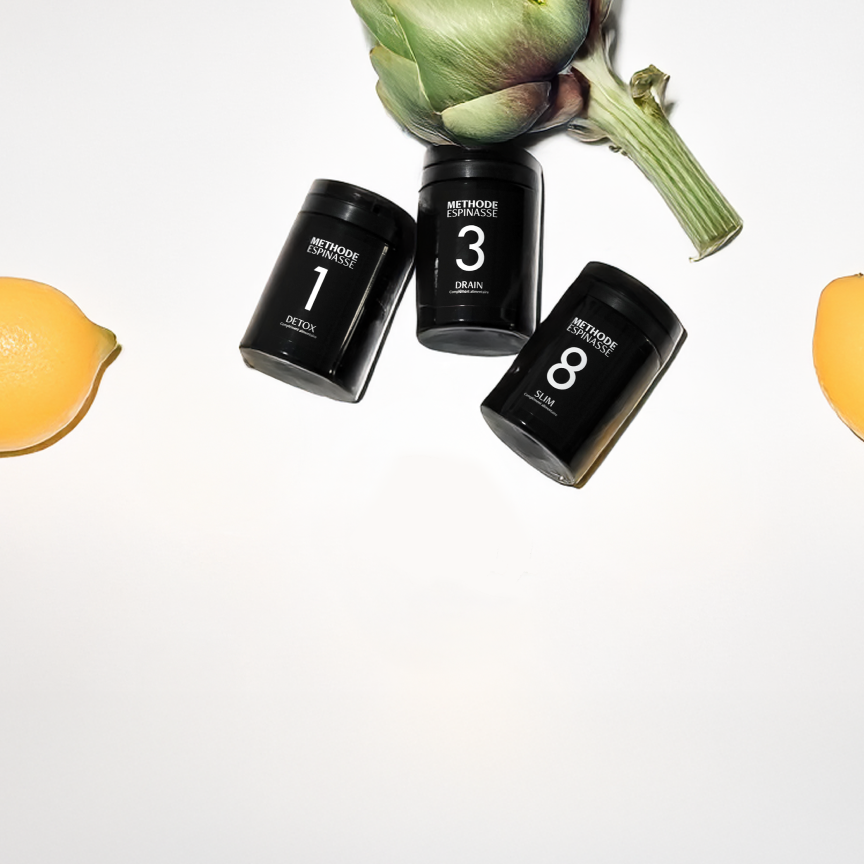
Découvrez 08 - Slim
Your ally for a slimmer figure and healthy weight

Journal

We tend to think of skin aging as something driven primarily by time. But a significant part of what we call “skin aging” is not simply the result of getting older. It also reflects decades of environmental exposure—especially exposure to ultraviolet radiation. UVA and UVB rays trigger a cascade of biological reactions in the skin involving oxidative stress, inflammation, cellular damage, and extracellular matrix remodeling. Over time, collagen becomes fragmented, the architecture of the dermis changes, elasticity declines, and wrinkles become more visible. This is photoaging.
We have long known how to address UV exposure from the outside: limit excessive sun exposure, wear protective clothing, and use appropriate sunscreen. But nutritional dermatology is now investigating another question: Can we also support the skin from within, helping it better withstand some of the biological stress caused by UV exposure?
This is where astaxanthin has attracted growing scientific interest. This red-orange pigment belongs to the carotenoid family and is notably produced by the microalgae Haematococcus pluvialis. Once consumed, astaxanthin is absorbed and transported throughout the body, where it has been studied for its antioxidant and anti-inflammatory properties. More importantly, we now have several randomized human clinical trials and a meta-analysis reporting measurable effects on skin parameters, particularly skin hydration and elasticity [1,2].
So the question is no longer simply, “Is astaxanthin an antioxidant?”
The far more interesting question is: Can an oral antioxidant actually change the way our skin responds to UV exposure and aging?
Sunlight is essential to life, but ultraviolet radiation is also one of the major environmental drivers of premature skin aging. UVA rays, which penetrate relatively deeply into the dermis, play an especially important role in photoaging. UVB rays, which are absorbed more strongly within the epidermis, are major contributors to sunburn and direct DNA damage. Through different but complementary mechanisms, both can contribute to the progressive deterioration of skin.
One of the major biological consequences of UV exposure is increased production of reactive oxygen species, or ROS. These molecules are a normal part of cellular physiology. But when they are produced in excess and overwhelm the body’s antioxidant defenses, oxidative stress develops.
In the skin, oxidative stress is not simply a matter of a few unstable molecules that need to be “neutralized.” It can alter cellular signaling pathways, promote inflammatory responses, damage lipids and proteins, and contribute to the activation of enzymes involved in extracellular matrix remodeling [3,4].
In other words, oxidative stress can eventually become visible.
Among the most extensively studied mechanisms involved in photoaging are the matrix metalloproteinases, or MMPs. These enzymes normally participate in extracellular matrix remodeling, but their expression can increase in response to different forms of cellular stress, including UV exposure.
MMP-1, also known as collagenase-1, is particularly important because it can initiate the breakdown of certain fibrillar collagens, including type I collagen—one of the major structural components of the dermis. Repeated UV exposure can therefore progressively disrupt the balance between collagen production and collagen degradation.
The biological cascade can be visualized relatively simply:
And the process may become self-reinforcing. A fragmented collagen matrix changes the mechanical environment surrounding fibroblasts, the cells responsible for producing key components of the extracellular matrix. As structural damage accumulates with age and environmental exposure, the skin’s ability to maintain its own architecture may itself become impaired.
It is precisely at this intersection of oxidative stress, inflammation, and extracellular matrix breakdown that astaxanthin becomes scientifically compelling.
Astaxanthin belongs to the xanthophyll family, a subgroup of carotenoids. It is responsible for the reddish-orange color found in organisms including salmon, trout, krill, and certain shellfish, which obtain it through the food chain.
One of the richest natural sources of astaxanthin is the microalgae Haematococcus pluvialis. When this microalgae is exposed to environmental stressors—intense light, nutrient deprivation, or other adverse conditions—it accumulates large amounts of astaxanthin. In a sense, the molecule forms part of the organism’s own response to environmental stress.
That origin helps explain why astaxanthin has attracted so much attention in nutritional science. But its scientific interest is primarily related to its distinctive molecular structure.
Astaxanthin is a lipid-soluble molecule with a long conjugated chain and polar groups at either end. This configuration influences the way it interacts with lipid environments and biological membranes. In experimental systems, astaxanthin can modulate oxidative reactions and interact with different reactive species.
But describing astaxanthin simply as a “free-radical scavenger” is increasingly outdated. Modern research is also examining its potential influence on inflammatory pathways, enzyme expression, and cellular responses to environmental stress [1,3].
The skin exists in a continuously oxidative environment. UV radiation, air pollution, cigarette smoke, and different forms of metabolic stress can all contribute to ROS production. The human body has sophisticated antioxidant defense systems—both enzymatic and non-enzymatic—but their capacity is not unlimited.
When the balance shifts persistently toward oxidation, multiple biological structures can be affected. Membrane lipids can undergo lipid peroxidation. Proteins can be modified. Mitochondria can become involved in self-perpetuating oxidative-stress loops. Inflammatory pathways can become activated. And within the dermis, the extracellular matrix can gradually be remodeled.
Visible skin aging is therefore, at least in part, the story of accumulated molecular damage and our cells’ ability to respond to it.
That is why research into oral antioxidants for skin now extends far beyond the simplistic idea of “fighting free radicals.” The real question is whether increasing the availability of certain nutritional compounds within the body can meaningfully influence biological pathways and ultimately produce measurable changes in the skin.
Experiments using human dermal fibroblasts exposed to UVA radiation provide one of the most interesting mechanistic explanations for the potential skin benefits of astaxanthin.
In these models, UVA exposure increases responses associated with MMP-1 and fibroblast elastase. Astaxanthin attenuated some of these responses at the gene-expression, protein-expression, and enzymatic-activity levels [3].
Other cellular models have also reported modulation of inflammatory mediators and MMP-related responses following UV exposure [4].
These findings obviously do not mean that taking an astaxanthin supplement simply “switches off MMP-1” in human skin. These are largely mechanistic findings obtained under experimental conditions, using concentrations and models that do not necessarily reproduce what happens after oral supplementation in humans.
But they provide important biological plausibility.
If UV exposure promotes oxidative stress, inflammation, and mechanisms involved in extracellular matrix degradation—and astaxanthin can modulate some of those responses—then an important clinical question follows:
Does the skin of someone taking oral astaxanthin actually respond differently when exposed to UV radiation?
Researchers have tested exactly that.
A randomized, double-blind, placebo-controlled clinical trial enrolled 23 healthy Japanese adults. For ten weeks, participants received either 4 mg of astaxanthin per day or placebo [5].
What makes this study especially interesting is how the researchers evaluated the effect.
They measured the Minimal Erythema Dose, or MED—the minimum amount of ultraviolet radiation required to produce visible redness of the skin. It provides an experimental way to assess skin sensitivity to UV exposure.
After nine weeks of supplementation, MED had increased in the astaxanthin group compared with placebo [5].
In other words, a greater amount of UV exposure was required to trigger the measured erythema response.
Researchers also examined what happened to skin hydration after UV exposure. The reduction in skin moisture following irradiation was smaller in the astaxanthin group than in the placebo group [5].
We are no longer talking solely about a petri-dish experiment.
We are looking at a measurable difference in how human skin responded to controlled UV exposure after several weeks of oral astaxanthin supplementation.
This distinction is essential.
An increase in MED during a clinical trial does not mean astaxanthin has an oral SPF. It does not allow 4 mg of astaxanthin to be translated into a sun protection factor. And it certainly does not justify reducing or replacing effective topical sun protection.
Sunscreen works at the surface of the skin to reduce the amount of ultraviolet radiation reaching the tissues. Oral astaxanthin is being investigated according to an entirely different principle: potentially modifying certain biological responses to environmental stress after systemic absorption.
The two strategies are not interchangeable.
And that is precisely what makes the emerging concept of nutritional photoprotection so interesting. The goal is not to replace external sun protection, but to investigate whether skin biology can also be supported from within.
OUTSIDE-IN: reduce UV exposure.
INSIDE-OUT: support the skin’s biological response to the stress that still reaches it.
Recent research has added another particularly interesting piece of evidence. A randomized, double-blind, placebo-controlled trial evaluated astaxanthin derived from Haematococcus pluvialis in Japanese adults [6].
Participants received 6 mg of astaxanthin per day for eight weeks. Once again, researchers evaluated the skin’s response to UV radiation, including changes in MED.
The findings pointed in the same direction as the earlier trial: MED increased following astaxanthin supplementation, alongside changes in redness induced by experimental UV exposure [6].
We therefore now have multiple controlled human trials suggesting that oral astaxanthin supplementation can modify the skin’s response to experimentally administered UV radiation.
That does not prove that astaxanthin, by itself, prevents decades of photoaging.
But biologically, the signal is highly interesting.
Photoprotection is only one part of the story.
Other human trials have directly investigated the outcomes most relevant to skin aging: wrinkles, skin hydration, elasticity, transepidermal water loss (TEWL), and skin texture.
One study involving 65 women ages 35 to 60 compared 6 mg and 12 mg of astaxanthin per day with placebo over 16 weeks [7]. During the study period, certain wrinkle and hydration parameters deteriorated in the placebo group while they were generally better maintained in the astaxanthin groups. Researchers also observed differences involving IL-1α, a mediator associated with inflammatory responses in the skin.
Other studies have reported improvements in parameters including elasticity, crow’s feet, hydration, and TEWL following astaxanthin supplementation [8,9]. However, individual trials remain relatively small, and several have methodological limitations or industry involvement.
That is exactly why one positive study is never enough.
The more important question is:
What happens when the available randomized controlled trials are analyzed together?
A systematic review and meta-analysis published in Nutrients examined the available human evidence on astaxanthin and skin aging [1]. Researchers identified 11 human studies, including nine randomized trials evaluating oral astaxanthin. Eight RCTs were eligible for inclusion in the meta-analysis.
The results are particularly interesting.
Compared with placebo, oral astaxanthin supplementation was associated with statistically significant improvements in:
However, when the available data on wrinkle depth were pooled, the difference was not statistically significant [1].
That distinction matters.
The current evidence does not establish that oral astaxanthin “erases wrinkles.” But it does support a more precise conclusion: pooled human clinical trials show a significant signal for improved skin hydration and elasticity.
And when those findings are considered alongside trials directly investigating the skin’s response to UV exposure, the overall picture becomes especially compelling.
Astaxanthin may not be interesting because it somehow “rejuvenates” skin overnight.
It may be interesting because it addresses a much more fundamental question:
How well can the skin maintain its properties when repeatedly challenged by environmental stress?
For decades, the language of anti-aging skincare has largely focused on correction: reducing a wrinkle once it is already visible, firming skin after elasticity has declined, or treating dryness once it becomes noticeable.
The biology of aging suggests another strategy: preserve the mechanisms that help maintain skin quality for as long as possible.
Manage oxidative stress. Support the extracellular matrix. Maintain hydration. Preserve elasticity. Modulate certain inflammatory responses. Reduce the biological impact of environmental aggressors.
It is a less dramatic promise in the short term, but one that is much closer to the emerging science of skin longevity and healthy skin aging.
And it reflects a broader shift taking place in beauty science: moving beyond skincare that addresses only what we can see and toward an approach that also considers the invisible biology that comes before the visible signs of aging.
In Part 2, we go deeper into the clinical evidence: What do the 4 mg, 6 mg, and 12 mg studies actually show? Does astaxanthin really reduce wrinkles? What do we know about TEWL and skin-barrier function? Is there an optimal astaxanthin dosage for skin? How long does astaxanthin take to work? What does the astaxanthin-plus-collagen study tell us about MMP-1 and type I procollagen? And why do the 4 mg of astaxanthin in SKIN N°11 become particularly interesting when combined with marine collagen, hyaluronic acid, and the rest of the formula?
Whenever an ingredient becomes popular, there is an almost automatic assumption that more must be better. If a small dose works, surely a higher dose should work even better. But clinical trials on astaxanthin for skin health tell a much more nuanced story. Studies investigating skin outcomes have generally used relatively modest doses, often ranging from 4 to 12 mg per day, taken consistently over several weeks [5–9].
The clinical trial directly investigating the skin’s response to UV exposure used 4 mg of astaxanthin per day for ten weeks and reported an increase in Minimal Erythema Dose (MED), along with better preservation of skin moisture following experimental UV irradiation [5]. Another trial used 6 mg per day for eight weeks and also found an increase in MED [6]. In the 16-week study involving 65 women, 6 mg and 12 mg per day were compared with placebo, with findings suggesting better maintenance of certain skin parameters in the supplemented groups [7].
There is therefore no convincing evidence that a very high astaxanthin dose is automatically better for skin. Instead, available studies suggest that measurable biological and skin effects have been observed across several doses—including 4 mg per day.
That distinction matters when evaluating astaxanthin supplements for skin. The relevance of an ingredient cannot necessarily be reduced to the largest number printed on a supplement label. Dose matters, but so do bioavailability, duration of supplementation, formulation, and the other ingredients with which it is combined.
Timing is another important part of the story. Astaxanthin does not work like a topical cosmetic that can immediately change the appearance of the skin through occlusion, surface hydration, or light reflection.
In clinical trials, changes were generally evaluated after several weeks of daily supplementation—six, eight, ten, twelve, or sixteen weeks depending on the study design [5–9].
That timeline makes sense within the broader concept of beauty from within. After ingestion, astaxanthin must first be absorbed in the gastrointestinal tract and transported throughout the body before it can participate in a complex biological environment. Any measurable skin effects therefore develop over time rather than appearing overnight.
We are talking less about an instant cosmetic transformation and more about progressive biological resilience.
This is also why the UV-response trials are so interesting. Researchers were not simply asking participants whether they thought their skin looked better. They were testing whether, after several weeks of supplementation, the biological response of the skin to a standardized environmental stressor had changed.
Hydration may sound less dramatic than collagen or wrinkles, but it is one of the fundamental determinants of skin quality.
Skin that maintains water effectively generally has better flexibility, comfort, and barrier function. Conversely, increased transepidermal water loss (TEWL) indicates greater water loss through the skin barrier.
And hydration is precisely one of the outcomes for which the meta-analysis found a significant benefit from oral astaxanthin supplementation [1].
The pooled result matters: SMD 0.53, p = 0.03 for skin hydration. In other words, the evidence does not consist solely of a handful of isolated positive studies. When multiple randomized trials were analyzed together, a statistically significant signal remained [1].
The 4 mg UV study adds another layer. Following experimental UV irradiation, the decline in skin moisture was smaller in participants taking astaxanthin than in those receiving placebo [5].
That suggests the question may not simply be whether astaxanthin “adds hydration.” It may also be whether supplementation can help the skin better preserve some of its properties when challenged by environmental stress.
Skin elasticity depends on the complex architecture of the dermis, involving collagen, elastin, glycosaminoglycans, fibroblasts, and the overall condition of the extracellular matrix.
In the meta-analysis, elasticity was the second skin parameter to show a statistically significant improvement with oral astaxanthin: SMD 0.77, p = 0.009 [1].
This is especially interesting because it aligns with experimental research involving ROS, MMP-1, and elastase. It does not prove that astaxanthin directly “rebuilds” collagen or elastin fibers. But it creates a compelling connection between two levels of evidence: cellular mechanisms that may help preserve the extracellular matrix on one hand, and measurable changes in the mechanical properties of human skin on the other.
That convergence between mechanism and clinical outcome is precisely what makes an ingredient scientifically interesting.
This is where the answer becomes more nuanced.
Several individual studies have reported favorable changes in wrinkles or crow’s feet following astaxanthin supplementation [7–9]. But when available wrinkle-depth data were pooled in the meta-analysis, the reduction did not reach statistical significance [1].
So based on current evidence, oral astaxanthin cannot be presented as a clinically established wrinkle-erasing supplement with the same degree of confidence as the findings for hydration and elasticity.
But that does not mean astaxanthin has no role in an anti-aging or skin longevity strategy. It means we need to define “anti-aging” more intelligently.
If the objective is to erase an already established deep wrinkle, the evidence is not strong enough to promise that result.
If the objective is to support skin hydration and elasticity while targeting biological pathways associated with oxidative stress and photoaging, the scientific case becomes considerably stronger [1,3–7].
Modern anti-aging may be less about erasing and more about preserving.
One clinical trial is particularly interesting when thinking about combination strategies.
Researchers studied 44 women with visible signs of photoaging who received a supplement combining 2 mg of astaxanthin with 3 grams of hydrolyzed collagen for 12 weeks [10].
Compared with placebo, the supplemented participants showed improvements in skin elasticity and TEWL. But what makes the study especially compelling is that researchers also performed tissue-level analyses.
They observed increased expression of type I procollagen, a precursor of type I collagen, together with decreased expression of MMP-1 and MMP-12 [10].
Biologically, the pattern is intriguing: a stronger signal associated with collagen production alongside reduced expression of enzymes involved in extracellular matrix remodeling and degradation.
But the study needs to be interpreted correctly. Participants received collagen and astaxanthin simultaneously, so these effects cannot be attributed to astaxanthin alone.
Instead, the study raises a much more interesting question for the next generation of nutricosmetics and beauty supplements: rather than searching for one ingredient that does everything, could it be more effective to combine ingredients targeting complementary mechanisms?
Support the structure. Protect the structure. Maintain the skin’s water environment. Target multiple mechanisms of skin aging simultaneously.
That is where the inside-out approach becomes particularly compelling.
The wording matters.
We do not currently have long-term human clinical evidence proving that astaxanthin supplementation directly prevents age-related collagen loss in the skin over many years.
But several lines of evidence converge.
We know that UV exposure and oxidative stress contribute to mechanisms involved in extracellular matrix degradation. We know that astaxanthin can modulate certain MMP-1-related responses in UVA-exposed cellular models [3,4]. We also know that a combined astaxanthin-collagen intervention in humans was associated with increased type I procollagen expression and reduced MMP-1 and MMP-12 expression [10].
Finally, clinical studies report effects on skin elasticity and the skin’s response to UV exposure [1,5–7].
The hypothesis that astaxanthin may contribute to a biological environment more favorable to preserving the extracellular matrix is therefore plausible and supported by several different levels of evidence.
But turning that hypothesis into the simplistic claim that “astaxanthin stops collagen breakdown” would go beyond what current science establishes.
The actual biology is more complex—and far more interesting.
No.
And that “no” is essential to understanding what nutritional photoprotection actually means.
Trials reporting an increase in MED suggest that after several weeks of supplementation, the skin’s response to standardized UV exposure may be modified [5,6]. They do not demonstrate that astaxanthin blocks enough UVA or UVB radiation to function as sunscreen.
Astaxanthin should therefore never be considered a substitute for topical sun protection.
The scientific logic is complementary:
SUNSCREEN → helps reduce the amount of UV radiation reaching the skin.
ASTAXANTHIN → may support certain biological responses to environmental stress from within.
The most coherent strategy is therefore not outside or inside.
It is outside + inside.
SKIN N°11, formulated by Dr. Valérie ESPINASSE according to the principles of Cellular Nutrition®, provides 4 mg of astaxanthin per daily serving.
That amount is particularly noteworthy because it matches the daily dose used in the randomized, double-blind clinical trial in which researchers observed an increase in MED and better preservation of skin moisture following UV irradiation after several weeks of supplementation [5].
That does not mean results obtained with an isolated ingredient can automatically be transferred to a multi-ingredient formulation. But it does mean that the astaxanthin dose in SKIN N°11 falls directly within a range studied in human skin clinical trials.
And in SKIN N°11, astaxanthin does not work in isolation.
The formula combines:
This formulation moves beyond the concept of a single “super antioxidant.” Instead, it brings together several dimensions of skin biology: hydration, extracellular matrix support, antioxidant protection, micronutrition, and the gut-skin axis.
The three hero ingredients in SKIN N°11 illustrate particularly well how modern beauty-from-within supplements are evolving.
Hyaluronic acid is studied for its role in skin hydration and the extracellular matrix environment.
Hydrolyzed collagen provides characteristic amino acids and peptides, some of which can become systemically available after digestion and may interact with fibroblast biology.
Astaxanthin introduces a third dimension: oxidative stress, environmental exposure, and biological protection.
Their complementary roles can be summarized simply:
HYDRATE — hyaluronic acid.
SUPPORT — marine collagen.
PROTECT — astaxanthin.
This is deliberately simplified, since each ingredient has considerably more complex biology. But it illustrates an essential point: aging skin does not have a single biological problem to solve.
Dehydration, collagen remodeling, oxidative stress, inflammation, UV exposure, hormonal changes, the microbiome, and skin-barrier function all interact.
An integrative approach therefore focuses less on finding a single “miracle ingredient” and more on addressing multiple dimensions of skin biology at the same time.
The inclusion of Bifidobacterium lactis and Lactobacillus casei in SKIN N°11 also connects the formula to a rapidly expanding field of research: the gut-skin axis.
The gut microbiome interacts with the immune system, metabolism, and multiple inflammatory pathways. Researchers are increasingly investigating how those interactions may influence skin-barrier function and a range of skin characteristics and conditions.
It would be premature to reduce this emerging science to a simplistic equation such as “probiotics = better skin.” Effects can be highly strain-specific and dependent on the population studied and the clinical endpoint being measured.
But the broader concept is fundamental:
The skin is not biologically isolated from the rest of the body.
Its appearance also reflects a systemic environment.
That is exactly the shift in perspective behind Cellular Nutrition®: treating visible beauty as the outward expression of a much broader internal biology.
The evidence now allows for a more precise answer than a simple yes or no.
Yes, clinical evidence shows that oral astaxanthin supplementation can influence certain measurable skin parameters. A meta-analysis of randomized trials found significant improvements in skin hydration and elasticity [1]. Controlled clinical trials have also reported increases in the amount of UV radiation required to trigger a measurable erythema response after several weeks of supplementation [5,6].
The evidence for wrinkles is less convincing. Some individual studies report positive outcomes, but the pooled effect on wrinkle depth was not statistically significant in the meta-analysis [1].
And none of these findings justify treating astaxanthin as an oral sunscreen or a replacement for SPF.
But they demonstrate something particularly important for the science of beauty from within: under certain conditions, nutritional interventions can be associated with objectively measurable changes in skin physiology.
The skin is not nourished solely by what we apply to its surface.
It is vascularized. Metabolically active. Immunologically complex. Connected to nutrition, the microbiome, hormones, and the environment.
Skin lives from within.
This may ultimately be the most important shift of all.
The goal is no longer simply to correct a wrinkle once it appears. Contemporary skin-aging research increasingly focuses on the mechanisms that precede visible signs: oxidative stress, chronic low-grade inflammation, cellular senescence, mitochondrial dysfunction, glycation, extracellular matrix deterioration, and skin-barrier dysfunction.
Within that framework, astaxanthin becomes particularly interesting.
Not as a miracle molecule capable of stopping time.
But as one of the nutritional compounds being studied for its potential to help skin better preserve its properties in the face of time and environmental exposure.
The question is no longer simply:
HOW DO WE LOOK YOUNGER?
It becomes:
HOW DO WE HELP SKIN AGE BETTER?
And that is precisely where the boundaries between nutrition, dermatology, prevention, and beauty begin to blur.
SKINCARE FROM THE OUTSIDE. CELLULAR NUTRITION® FROM THE INSIDE.
[1] Zhou X, et al. Effects of Astaxanthin on Skin Health: A Systematic Review and Meta-Analysis of Randomized Controlled Trials. Nutrients. 2021. Systematic review and meta-analysis of human studies evaluating skin hydration, elasticity, wrinkles, and other outcomes following astaxanthin supplementation.
https://pubmed.ncbi.nlm.nih.gov/34578794/
[2] Davinelli S, Nielsen ME, Scapagnini G. Astaxanthin in Skin Health, Repair, and Disease: A Comprehensive Review. Nutrients. 2018;10(4):522. Comprehensive review of mechanistic and clinical evidence surrounding astaxanthin, oxidative stress, inflammation, and skin health.
https://www.mdpi.com/2072-6643/10/4/522
[3] Suganuma K, Nakajima H, Ohtsuki M, Imokawa G. Astaxanthin Attenuates the UVA-Induced Up-Regulation of Matrix-Metalloproteinase-1 and Skin Fibroblast Elastase in Human Dermal Fibroblasts. Journal of Dermatological Science. 2010. Mechanistic research investigating the effects of astaxanthin on MMP-1 and elastase following UVA exposure.
https://pubmed.ncbi.nlm.nih.gov/20219323/
[4] Protective Effects of Astaxanthin on Skin Deterioration. Experimental evidence and review of mechanisms involving oxidative stress, inflammatory responses, UV exposure, and matrix metalloproteinases.
https://www.mdpi.com/2072-6643/10/4/522
[5] Ito N, Seki S, Ueda F. The Protective Role of Astaxanthin for UV-Induced Skin Deterioration in Healthy People—A Randomized, Double-Blind, Placebo-Controlled Trial. Nutrients. 2018;10(7):817. Trial involving 23 adults taking 4 mg/day for ten weeks, with evaluation of Minimal Erythema Dose and skin moisture following UV irradiation.
https://pmc.ncbi.nlm.nih.gov/articles/PMC6073124/
[6] Effects of Astaxanthin Supplementation on Ultraviolet-Induced Skin Responses: A Randomized, Double-Blind, Placebo-Controlled Trial. 2026. Clinical trial investigating 6 mg/day of Haematococcus pluvialis-derived astaxanthin for eight weeks, including assessment of Minimal Erythema Dose.
https://www.sciencedirect.com/science/article/pii/S1756464625004803
[7] Tominaga K, Hongo N, Karato M, Yamashita E. Cosmetic Benefits of Astaxanthin on Human Subjects. Randomized, double-blind, placebo-controlled research evaluating 6 mg and 12 mg of astaxanthin over 16 weeks in 65 women.
https://pmc.ncbi.nlm.nih.gov/articles/PMC5525019/
[8] Tominaga K, et al. Cosmetic Benefits of Astaxanthin on Human Subjects. Human studies investigating the effects of astaxanthin on wrinkles, elasticity, TEWL, and other skin parameters in women and men.
https://pubmed.ncbi.nlm.nih.gov/22428137/
[9] Astaxanthin, Oxidative Stress and Skin Aging. Study involving adults over age 40 taking 4 mg/day, with assessment of plasma malondialdehyde and skin morphology parameters.
https://pubmed.ncbi.nlm.nih.gov/29246280/
[10] Yoon HS, Cho HH, Cho S, et al. Supplementing With Dietary Astaxanthin Combined With Collagen Hydrolysate Improves Facial Elasticity and Decreases Matrix Metalloproteinase-1 and -12 Expression: A Comparative Study With Placebo. Journal of Medicinal Food. 2014. Twelve-week trial combining 2 mg of astaxanthin with 3 g of hydrolyzed collagen in 44 women with signs of photoaging.
https://pubmed.ncbi.nlm.nih.gov/24955642/
[11] Camera E, et al. Astaxanthin, Canthaxanthin and β-Carotene Differently Affect UVA-Induced Oxidative Damage and Expression of Oxidative Stress-Responsive Enzymes. Experimental research on carotenoids and UVA-induced oxidative stress.
https://pubmed.ncbi.nlm.nih.gov/?term=Astaxanthin+Canthaxanthin+beta-carotene+UVA+oxidative+damage
[12] Poon F, Kang S, Chien AL. Mechanisms and Treatments of Photoaging. Photodermatology, Photoimmunology & Photomedicine. Review of photoaging mechanisms including ROS, inflammation, collagen alterations, and extracellular matrix remodeling.
https://pubmed.ncbi.nlm.nih.gov/?term=Poon+Kang+Chien+Mechanisms+Treatments+Photoaging
[13] Fisher GJ, Wang ZQ, Datta SC, et al. Pathophysiology of Premature Skin Aging Induced by Ultraviolet Light. New England Journal of Medicine. Foundational research into the molecular mechanisms of human photoaging and UV-induced collagen degradation.
https://pubmed.ncbi.nlm.nih.gov/?term=Fisher+Pathophysiology+Premature+Skin+Aging+Ultraviolet+Light
[14] Fisher GJ, Quan T, Purohit T, et al. Collagen Fragmentation Promotes Oxidative Stress and Elevates Matrix Metalloproteinase-1 in Fibroblasts in Aged Human Skin. Research investigating collagen fragmentation, fibroblast function, oxidative stress, and MMP-1 in aged human skin.
https://pubmed.ncbi.nlm.nih.gov/?term=Collagen+Fragmentation+Oxidative+Stress+Matrix+Metalloproteinase-1+Fibroblasts+Aged+Human+Skin
[15] Rittié L, Fisher GJ. Natural and Sun-Induced Aging of Human Skin. Cold Spring Harbor Perspectives in Medicine. Reference review examining the differences and interactions between intrinsic skin aging and photoaging.
https://pubmed.ncbi.nlm.nih.gov/?term=Rittie+Fisher+Natural+Sun-Induced+Aging+Human+Skin